
I will be giving a talk in the “Työkaluja nuorten hyvinvointiin” seminar (Tools for the well-being of the Young People) in Oulu, 26.4.2012. My (Finnish language) talk is focused on the many roles of games and social media in the lives of today’s young people, and titled “Pelit, sosiaalinen media, internet – nuorten hyvinvointia edistämässä vai heikentämässä?” Link to the web page: http://www.tuunaamopo.fi/sivu/fi/koulutus4/
Author: frans
Professor of Information Studies and Interactive Media, esp. Digital Culture and Game Studies in the Tampere University, Finland. Occasional photographer and gardener.
Examination committees, Spring 2012
I am honoured to be invited to act as an examiner/member of the examination committee in several interesting thesis works this Spring. My upcoming events include these:
- Karl Bergström (PhD), University of Gothenburg, Sweden, 23rd May 2012
- Ulf Hagen (Lic.), Stockholm University, Sweden, 1st June 2012
- Johanna Lilja (PhD), University of Tampere, Finland, 15th June 2012
- Douglas Rushkoff (PhD), Utrecht University, The Netherlands, 25th June 2012
There is much to read, but I always find this kind of examinations also learning processes for myself, so I’m looking forward to them all.
Keynote in ITK conference
I will be presenting the closing keynote in ITK conference in Hämeenlinna, tomorrow, 20th April 2012. The (Finnish language) talk is titled “Myrskyn silmässä: pelillisen viestinnän riemu ja riesa” (In the Eye of the Storm: The Pleasure and Pain of Playful Communication). Link: http://www.itk.fi/2012/ohjelma/puhuja/323
Role-Playing in Games seminar
The second of our major game studies events this Spring term takes place after the Easter: Role-Playing in Games seminar. The program is online and features 17 working paper presentations on topics ranging from theories, experiences and interpretations of role-playing to its applications in education:
http://roleplayingames.wordpress.com/2012/04/03/seminar-programme/
Our invited commentators this year are Torill Mortensen and J. Tuomas Harviainen.
Installing Windows 8 Consumer Preview
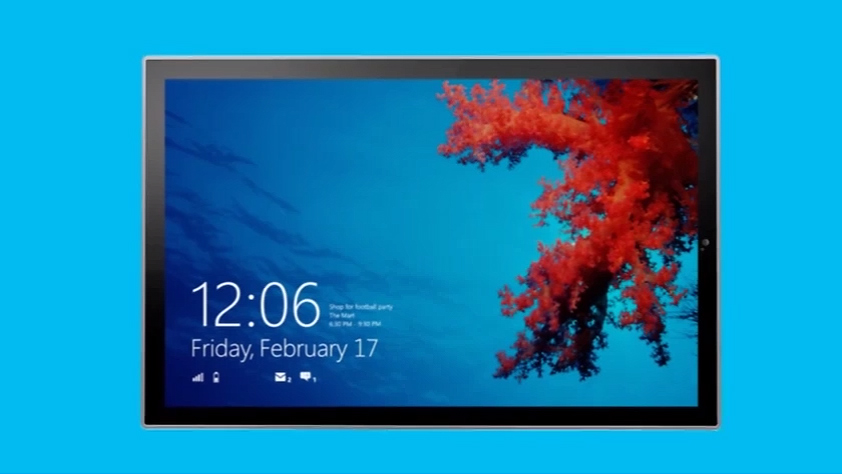 It seems a beta version is “Consumer Preview” these days, well that is just fine for me. I installed the new pre-release version of Windows 8 to an extra partition in my workstation last night, and a couple of notes:
- I ran into problem that appeared to be related to BIOS settings. The error code was “Windows cannot install required files. The file may be corrupt or missing. Make sure all required files for installation are available and restart the installation. Error code 0x80070570.” Actually, what you needed to do was downgrade the SATA settings in the BIOS from “AHCI” to “IDE” (may also appear as “ATA”) to get the installation running.
- Also, the new graphical boot loader of Windows 8 may not play nice with your graphics card. It took me some trial and error to find out that the bootloader insisted on giving the graphics output only through the DVI adapter of the motherboard, not from the graphics card. And, on the other hand, when the Windows 8 booted for the first time, the image could only be found through the HDMI connector in the graphics card, not from the motherboard DVI. Some tweaking may thus be in order.
The new OS itself looks promising — it makes good use of usability and user experience innovations that are coming from mobile devices and Metro UI of Windows Phone 7 OS. The downside of backwards compatibility is that since there are effectively two versions — touch oriented Metro, and traditional Desktop one — of most features and tools in the OS, things can get somewhat confusing. It will be interesting to see how things will look like in about a year, after some new, touch-enabled PC hardware have come out. There are nice videos, and the download area available at the Microsoft site here: http://windows.microsoft.com/fi-FI/windows-8/consumer-preview
Privacy policy of this site
 I think it is always nice to know what is the privacy policy of the services you are using; particularly today, as new shadowy schemes of user tracking/selling of user information come to daylight all too often.
To the best of my knowledge, this website (www.fransmayra.fi) obeys the privacy policy of my service provider, which is WordPress.com and Automattic as the operating company. The basis is that in this kind of blog site one is subject to anonymous/non-personally-identifying tracking, meaning becoming a number in the usage statistics. On the other hand, if you are a registered WordPress user, you might also be interested in the clause that mentions that WordPress/Automattic may release personally identifying information about your site usage, if it receives “governmental request”. On (yet) another hand, Automattic promises that it “will not rent or sell potentially personally-identifying and personally-identifying information to anyone”.
Just so that you know.
Dungeons, Dragons, and Digital Denizens
Spreading the word of a new book in the Approaches to Digital Game Studies series (I am at the editorial board):
Dungeons, Dragons, and Digital Denizens: The Digital Role-Playing Game
Dungeons, Dragons, and Digital Denizens is a collection of scholarly essays that seeks to represent the far-reaching scope and implications of digital role-playing games as both cultural and academic artifacts. As a genre, digital role playing games have undergone constant and radical revision, pushing not only multiple boundaries of game development, but also the playing strategies and experiences of players.
Divided into three distinct sections, this premiere volume captures the distinctiveness of different game types, the forms of play they engender and their social and cultural implications. Contributors examine a range of games, from classics like Final Fantasy to blockbusters like World of Warcraft to obscure genre bending titles like Lux Pain. Working from a broad range of disciplines such as ecocritism, rhetoric, performance, gender, and communication, these essays yield insights that enrich the field of game studies and further illuminate the cultural, psychological and philosophical implications of a society that increasingly produces, plays and discourses about role playing games.
More information: http://www.continuumbooks.com/books/detail.aspx?BookId=159141&SearchType=Basic
Playful world – Brush Monkey
I recently came across the KickStarter page of the project called Brush Monkey, a wireless-sensor-enabled toothbrush by Brian Krejcarek. Building a gamification experience out of brushing your teeth, as envisioned by Jesse Schell is thus becoming reality, do we want that or not. But what is really interesting about this technology is its ambition to make the small, sensor- and network-enabled devices so small that they can be attached to toys or any things of your daily life, and create an open API so that all kinds of developers can create their own small applications that provide fun and possibly also beneficial experiences. This is yet another step towards a more playful and creative world, or so we can hope. This is very early stages of user created content in the pervasive/ubiquitous technologies field, of course.
Internet- ja pelitutkimuksen maisterikoulutus
[Our Internet & Game Studies masters degree program is open for applications]
Internet- ja pelitutkimuksen (ent.hypermedia) maisterikoulutuksessa voi erikoistua tutkimaan vuorovaikutteista digitaalista mediaa, sen käyttöä ja suunnittelua. Opinnot keskittyvät internetin ja digitaalisten pelien kaltaisiin mediamuotoihin ja tarjoavat valmiuksia niiden analysoimiseen yhteisöllisten ja yksilöllisten käytäntöjen sekä käyttäjien kokemusten näkökulmasta. Opinnoissa pyritään kriittisesti tarkastelemaan ja ymmärtämään informaatioteknologian suunnittelua, käyttöä, sisältöjä ja merkityksiä. Keskeisiä opetuksessa tarkasteltavia aihealueita ovat internetin, sosiaalisen verkkomedian, avoimen tietoyhteiskunnan ja digitaalisten pelien tutkimukseen liittyvät kysymykset. Opinnoissa keskeistä on vahva tutkimusorientaatio. Opintojen kuluessa kehitetään valmiuksia suuntautua alueen jatko-opintoihin sekä toimimiseen asiantuntijana uusiin mediamuotoihin liittyvissä kysymyksissä. Vuorovaikutteinen ja verkottunut media on nopeasti laajeneva ja monimuotoinen tutkimuskenttä. Alueen opinnoissa menestyminen edellyttää oma-aloitteisuutta ja kykyä itsenäiseen ajatteluun sekä eri tieteenalojen tietämyksen luovaan soveltamiseen.
Erillisvalinnan hakuaika: 1.2.-29.2.2012 klo 16.15
Tarkemmat hakutiedot:
http://www.uta.fi/opiskelijaksi/hakukohteet/erillisvalinta/ipt.html
Tieteelliset seurat kyseenalaistavat tieteellisen julkaisutoiminnan arviointi- ja rahoitusmallit
[Spreading the word about the Finnish academic associations’ joint statement:] Kuusikymmentä tieteellistä seuraa on julkaissut kannanoton Monipuolisen ja -muotoisen tieteellisen julkaisutoiminnan puolesta. Siinä seurat kyseenalaistavat Julkaisufoorumi-hankkeen kaavailut luokitella tieteelliset julkaisut ja kirjakustantajat kolmeen luokkaan. Samoin seurat kyseenalaistavat tähän läheisesti liittyvän Opetus- ja kulttuuriministeriön esittämän yliopistojen uuden rahoitusmallin. Mukana julkilausumassa ovat muun muassa Westermarck-seura, Suomalaisen Kirjallisuuden Seura, Suomen Historiallinen Seura, Suomen Kasvatustieteellinen Seura, Suomen lääkäriseura Duodecim, Kulttuuritutkimuksen Seura ja Valtiotieteellinen yhdistys.
Sekä Julkaisufoorumi-hankkeen että yliopistojen uuden rahoitusmallin avulla tavoitellaan kannatettavia asioita: halutaan nostaa suomalaisen tieteellisen tutkimuksen ja julkaisutoiminnan laatua ja lisätä kansainvälisyyttä. Nyt kaavailuissa muodoissa molempiin esityksiin sisältyy kuitenkin piirteitä, jotka ovat räikeässä ristiriidassa julkilausuttujen tavoitteiden kanssa.
Julkaisufoorumin ja ministeriön rahoituskaavailujen katsotaan olevan lähtökohdiltaan kapea-alaisia ja mekaanisesti toteutettuja. Niissä ei oteta huomioon eri tieteenalojen julkaisuperinteitä ja -tarpeita, eivätkä ne perustu tieteen sisältä nouseviin kriteereihin. Molemmat mallit laiminlyövät tieteiden monipuolisuuden ja -muotoisuuden sekä eri alojen historialliset traditiot. Mallien pohjalta mahdollisesti syntyvät tieteen ja tutkimuksen ohjausmallit vinouttavat tutkimuksen kenttää ja vaikeuttavat luovan tieteellisen työn tekemistä.
Kannanotossa kysytään, miksi suomenkieliset tiedejulkaisut automaattisesti asetetaan alemmalle tasolle kuin kansainväliset, etenkin englantilaiset. Kotimaisen julkaisemisen aliarvostukselle ei ole mitään sisällöllisiä perusteita. Tutkimuksen laatu ei perimmiltään ole kielikysymys, ja kaikilla tieteenaloilla tarvitaan sekä kansallista että kansainvälistä julkaisemista. Tieto- ja tiedeinstituutioilla on myös yhteiskunnallisia tehtäviä, joita korkeatasoinen suomenkieliset julkaisut tiedeyhteisöjen ohessa myös palvelevat. Tiedejulkaisujen arvioiminen ja arvottaminen nyt suunnitteilla olevalla tavalla on epäoikeudenmukaista eikä täytä tarkoitustaan.
Kannanoton allekirjoittaneet seurat esittävät, että sekä Julkaisufoorumihankkeen että ministeriön rahoitusmallin lähtökohtia pohditaan vielä kerran perusteellisesti. Tärkeä kysymys on, nousevatko mallit todella tieteiden sisäistä tarpeista vai enemmän hallinnollista tai muista tieteen ulkopuolelta tulevista perusteista. Ehdottoman tarpeellista on hakea avoimesti ja tasapuolisesti kestäviä sekä kaikkia toimija- ja tutkimustahoja tyydyttäviä käytänteitä.
Tavoitteena tulee olla maamme monipuolinen ja -muotoinen tieteellisen tutkimuksen ja siihen liittyvän julkaisutoiminnan turvaaminen sekä kansallisesti että kansainvälisesti.
Lisätietoja asiasta antavat:
- Minna Autio, Nuorisotutkimusseuran puheenjohtaja, 040-8405810, minna.autio@helsinki.fi
- Markku Jahnukainen, Suomen kasvatustieteellisen seuran puheenjohtaja, mjahnuka@helsinki.fi
- Emilia Palonen, Valtiotieteellinen yhdistys, 040-5077198, emilia.palonen@helsinki.fi
- Risto Rinne, Suomen kasvatustieteellinen seura, (02)333 8811 rinne@utu.fi
 frans goes blog
You must be logged in to post a comment.