University of Tampere, Master’s Degree Programme in Internet and Game Studies

Please notice the application period for our new Master’s Degree Programme starting in 2013 will open at 3rd December 2012 and end at 31 January 2013.

Short Summary:

Master’s Degree Programme in Internet and Game Studies aims to provide an in-depth view to the fundamental character and development of games and Internet. Games have grown into an important form of culture and human interaction, expanding from entertainment to other areas of life. Internet and social media form an increasingly vital part of communication, social life and distribution of media and services. Degree Programme in Internet and Game Studies is particularly targeted at the questions of analysis, design and application of online services and digital games from user- and culturally focused perspectives. The programme directs students to develop academic skills like critical thinking, scientific writing and carrying out research projects while encouraging active and comprehensive involvement with the practical processes and phenomena related to games and Internet.

More information:

http://www.uta.fi/admissions/degreeprog/programmes/igs.html

Instruction for applicants:

http://www.uta.fi/admissions/degreeprog/applying.html

Detailed instruction – How to apply:

http://www.uta.fi/admissions/degreeprog/applying/howtoapply.html

“Playful mobile communication” published

My communication+game studies article “Playful mobile communication: Services supporting the culture of play” is now out in the special issue of Interactions: Studies in Communication & Culture (Volume 3, Number 1, 30 October 2012 , pp. 55-70), edited by professor Maarit Valo. It is behind paywall (that for some reason even I cannot cross with my university account), I’ll try and put an author’s version online soon. Meanwhile, here is the abstract:

Communication has many functions; from linguistics to social psychology, there is ample evidence that communication fundamentally defines our ways of being, which is the reason changes in communicational practices and technologies are particularly interesting. This article focuses on the recent developments in playful mobile communication, firstly discussing play and playful practices in general, then moving on to contextualize the discussion in terms of contemporary mobile technology. Not just restricted to formal game play (ludus) but also including more improvisational forms of being playful (paidia), mobile play allows us some creative distance from the routine ways of communicating and is consequently more free-form than the more immediately utilitarian communicative acts. Playfulness also has certain distinctive features and it is possible to identify and discuss playfulness as it is expressed in the design of new tools for communication, as well as in the communicative practices and attitudes dopted by the participants. This article provides an introduction to the study of playful communication, and proposes three key evaluation criteria for playfulness. It then proceeds to test these criteria in contemporary playful mobile communication services.

You can access the published version from this link: http://www.ingentaconnect.com/content/intellect/iscc/2012/00000003/00000001/art00005

J. Tuomas Harviainen’s PhD defense

Another interesting PhD dissertation will be publicly defended soon (Oct 18th) here in the University of Tampere:

Harviainen J. Tuomas, “Systemic Perspectives on Information in Physically Performed Role-play”. Acta Universitatis Tamperensis; 1764, ISBN: 978-951-44-8913-6, Electronic series: Acta Electronica Universitatis Tamperensis; 1237; ISBN of the electronic version: 978-951-44-8914-3; URN: http://urn.fi/urn:isbn:978-951-44-8914-3. Tampere: University of Tampere Press, 2012.

Abstract:

This dissertation examines information phenomena that take place in, and related to, physically performed pretence play. The emphasis is on one hand on the play experience and the elements constituting it, but underneath that all exist information processes which essentially define the perimeters of what can be done during play and how.

Being primarily a metatheoretical work, the dissertation draws on the empirics of earlier researchers and practitioners, further supported with the author’s own experiments and field observations. References are analyzed with the use of systematic analysis, a hermeneutical method for finding their key essences, which are then compared with other works. Through this process, new data emerges from the combinations of the old, as seemingly disparate concepts are shown to actually discuss the same things.

The primary research question of the dissertation is “What are the essential information systems traits of live-action role-playing situations, and how do those traits affect information behavior during play?” To understand that question, I explain how live-action role-playing can be defined and what the discursive limits of the phenomenon are. Through a look at how larping takes place also in activities such as historical re-enactment, sadomasochist roleplaying and post-modern magic, I show that the same processes exist in them, but with a different type of framing.

People inside a play-space require information, and their play consists of information behavior: active searches, ongoing searching, passive attention and passive searching are all utilized. Players interact with each other and the fictional environment through cognitive subject representations, constructed as extrapolations from information given by the organizers. This makes a larp a self-referential, multiple index entry information system. Within it, the play is its players’ primary frame of reference, and the activities within seem separate from mundane existence.

As parts of any inevitably missing information cannot be found inside the game-system, players use various strategies to handle the conflict between needing more information and not being able to access optimal sources for it without breaking the fictional reality. Their reliance on second-hand sources, particularly cognitive authorities – persons or groups presumed to be in the know – is heightened.

Players also protect the illusion, by engaging in boundary control, the act of screening what is allowed to cross the magic circle. Participants berrypick information so as not to disturb the illusion of play with direct searches to outside sources. They also blunt information that would cause problems to the activity at hand and its fiction, and they seek to follow the agreed upon rules of the play while supporting the immersion of others.

In a hermeneutical sense, role-playing consists of multiple texts that interact with each other. Some of them take place outside the fictional reality of play, others within, and some cross the magic circle, being transformed by it. Players constantly re-signify elements within the fictional reality, so as to keep it functional and interesting, thus creating evolving texts out of the re-significations and any meaningful actions they perform. The participants interpret such texts and reference to them in their own play. In order to be intriguing, many larps manipulate their players’ information uncertainty, in the form of an anomalous state of knowledge (ASK), to either extend the experience or to enhance learning.

To study and explain these issues I construct and introduce the sub-field of liminality informatics, the analysis of ritualistic, liminal activities as information systems. Liminal spaces do not just include key information processes – their very liminality requires those processes (as well as others) in order to exist.

All these phenomena also exist in information environments that are not connected to games or play. The play-context, however, makes them more prominent and visible than in many other cases, and thus easier to observe and analyze. The artificial nature of games, including the way a designer can manipulate their systems properties and internal documents, further emphasizes this. By analyzing the impact of the information environment in liminal games, it is possible to understand much more also about the influence of information environments in mundane life.


See: http://acta.uta.fi/english/teos.php?id=1000162

Markus Montola’s Doctoral Defense

While there have been earlier doctors coming from our Game Research Lab (Aki Järvinen, Olli Sotamaa), Markus Montola who today defends his doctoral dissertation is the first to come from within our own degree program, myself acting as the Kustos. Here is the abstract and link to download the electronic version of the thesis (defense is public and takes place at 12 o’clock in hall B1097):

On the Edge of the Magic Circle: Understanding Pervasive Games and Role-Playing

Markus Montola

Abstract

On the Edge of the Magic Circle studies two threads of contemporary western gaming culture: Role-playing and pervasive games. Recreational role-playing includes forms such as tabletop role-playing games, larps and online role-playing games, while pervasive games range from treasure hunts to alternate reality games. A discussion on pervasive role-playing connects these strands together.
The work has four larger research goals. First, to establish a conceptual framework for understanding role-playing in games. Second, to establish a conceptual framework for understanding pervasive games. Third, to explore the expressive potential of pervasive games through prototypes. And fourth, to establish a theoretical foundation for the study of ephemeral games.

The central outcome of the work is a theory complex that explains and defines role-playing and pervasive gaming, and allows them to be understood in the context of the recent discussion in game studies.

In order to understand these two borderline cases of games, the work establishes a theoretical foundation that highlights gameplay as a social process. This foundation combines the weak social constructionism of John R. Searle with the recent game studies scholarship from authors such as Jesper Juul, Jane McGonigal, Katie Salen and Eric Zimmerman.

Link to download the thesis: http://acta.uta.fi/haekokoversio.php?id=1000161

3 x Helsinki

I have sometimes used that my office is in the Tampere-Helsinki train, and this week it has felt to be true. Three consecutive travel days:

  • Tuesday: Skene games program start event in Korjaamo
  • Wednesday: short talk about contemporary game studies and discussion in the Suomi 2015 panel in Digi.fi event, Palace
  • Thursday: short talk about playfulness & gamification  in business simulation game (Liikkeenjohdon SM), Kämp Kansallissali.

The discussion is the salt of these kinds of quick visits, and luckily there were opportunities for that during this week. It is interesting to see what kind of different perspectives to games and play there are among game developers, researchers and business people from non-games related fields, for example. On the other hand, these discussions are also opportunities to get updated on how awareness of games and playful ways of doing things are  spreading in new and different fields of society.

Pelitutkimuksen vuosikirja 2012

[The Finnish Yearbook of Game Studies is out!] – Tiedote:

Väärinpelaaminen kiinnostaa pelitutkijoita

Pelitutkimuksen vuosikirja 2012 on ilmestynyt sähköisenä osoitteessa

http://www.pelitutkimus.fi/vuosikirja-2012

Vuosikirjassa tarkastellaan jälleen niin pelaamisen historiaa, nykytilannetta kuin tulevaisuuttakin. Pelitutkimuksen vuosikirja on vertaisarvioitu, avoin tiedejulkaisu. Pelitutkimus on sekä monitieteinen tutkimusala että nuori akateeminen oppiaine, jonka parissa toimivien tutkijoiden huomion keskiössä on digitaalisten pelien erityisluonne. Nyt julkaistussa, järjestyksessään neljännessä vuosikirjassa, käsitellään muun muassa antiikin Rooman lautapelejä, lukijoiden ja pelilehtien vuorovaikutusta, Suomen pelipiratismin historiaa, pelien kerrontaa ja luokittelua sekä internetshakkia.

Vuosikirjassa on julkaistu artikkelien lisäksi lyhyempiä katsauksia, jotka pureutuvat esimerkiksi kilpapelaamiseen, puheentunnistusteknologiaan sekä oppimisroolipeleihin. Lisäksi vuosikirjassa on television tekstiviestipelien tekemistä koskeva muistelmakirjoitus ja kaksi kirja-arviota.

Tämän vuoden vuosikirjassa useampaa tutkijaa on kiinnostanut väärinpelaamisen ja sääntöjen venyttämisen tutkiminen. Teema tulee esille niin internetshakkia käsittelevässä artikkelissa, NHL12-peliä käsittelevässä katsauksessa kuin kirja-arvioissakin. Väärinpelaaminen voi tarkoittaa vastustajien sanallista häirintää, pelin viivyttämistä, pelin puutteiden epäreilulta tuntuvaa hyväksikäyttöä tai kiellettyjen teknisten apuvälineiden hyödyntämistä. Väärinpelaaminen tai epäurheilijamainen käytös liittyvät siis myös digitaaliseen pelaamiseen silloin kuin voittoa tavoitellaan keinoja kaihtamatta.

Pelitutkimuksen vuosikirjan päätoimittaja on professori Jaakko Suominen Turun yliopistosta. Toimituskuntaan kuuluvat lisäksi professorit Raine Koskimaa (Jyväskylän yliopisto) sekä Frans Mäyrä (Tampereen yliopisto) ja yliopisto-opettaja Riikka Turtiainen (Turun yliopisto).

Lisätietoja: Jaakko Suominen, jaakko.suominen@utu.fi

Anthology on First Person Shooters: Guns, Grenades and Grunts

A new anthology of first person shooter studies is out in the Continuum game studies series:

“The second volume of Continuum’s Approaches to Digital Game Studies series, Guns, Grenades and Grunts gathers scholars from multiple disciplines to bring the weight of contemporary social theory and media criticism to bear on the public controversy and intellectually investigation of first-person shooter games. As a genre, FPS games have helped shepherd the game industry from the early days of shareware distribution and underground gaming clans to contemporary multimillion dollar production budgets, Hollywood-style launches, downloadable content, and worldwide professional gaming leagues. The FPS has been, and will continue to be a staple of the game market.”

More: http://www.continuumbooks.com/books/detail.aspx?BookId=167841&SubjectId=952&Subject2Id=1708

Talks on Playfulness, Finnish games culture

Neitoperho/The European Peacock (Inachis Io, photo: FM, 17.8.2012)

Yesterday, Sept 17, I gave two talks, one on the concepts of playfulness and gamification, and another on the Finnish game culture. The first one was on a closed seminar where people from YLE and elsewhere planning the new Tohloppi Mediapolis initiative were looking for ideas about interesting developments in media and ICT research, and I decided to focus on the fundamentals of what makes play phenomena playful. The afternoon talk was on a seminar of Finnish Cultural Foundation, the annual meeting of trustees. I chose to talk about the history of Finnish games and play, then go quickly through the early development of computer games, some talk about Assembly and the demoscene, concluding into some reflections about the cultural characteristics of contemporary (diverse, and rather multi-dimensional) gaming and game development cultures in Finland.

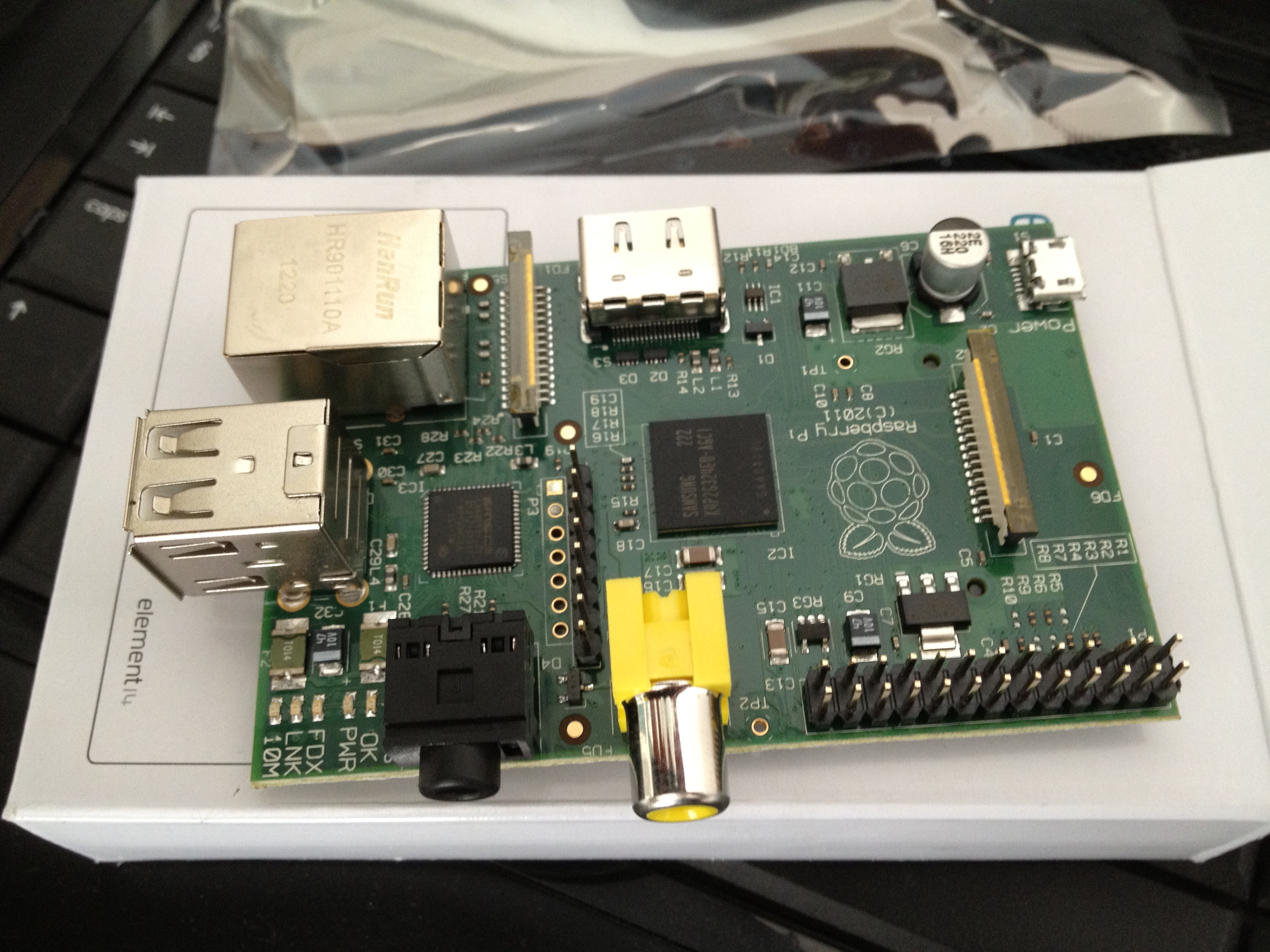
XBMC in Raspberry Pi

Raspberry Pi
Raspberry Pi

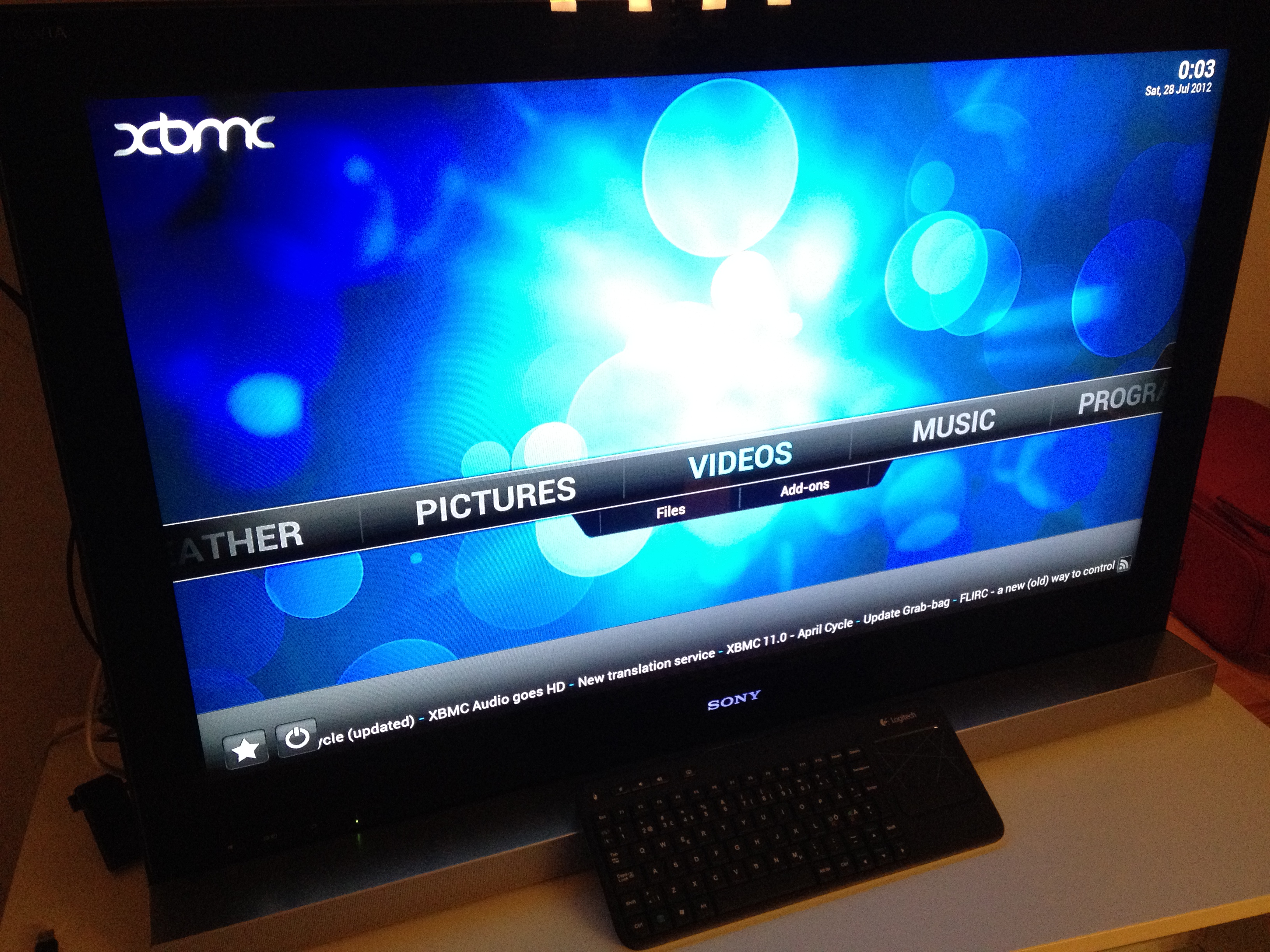
My Raspberry Pi had arrived while I was at the Microsoft Research Faculty Summit, and I got finally some hours to test drive it. As far as contemporary PC hardware goes, RPi is of course seriously underpowered little plaything. On the other hand, when you compare it with to some other devices (like smartphones, embedded systems), it does not look so bad. The principal reason for its development should also be taken into account (promoting computer literacy, encouraging tinkering with hardware and software tools, helping kids learn to code). I have been looking for some time for an affordable and functional HTPC system for serving media in our living room, and thus my first test drive involved setting up RPi as a media center PC. The Raspian “wheezy” distro that they recommend on the Raspberry Pi Foundation website was too slow and unresponsive for my taste to do anything. I tried also Raspbmc version of XBMC media center, but I could not get it to install any addons at all. So finally I did find a place that instructed how to install OpenElec, an embedded operating system that has been built to run XBMC – from a Windows PC (http://www.squirrelhosting.co.uk/hosting-blog/hosting-blog-info.php?id=9). Now XBMC was getting online, updating itself and installing addons nicely. It also booted up decently in c. 20-40 seconds.

It turned out that the major issue for me finally was a network infrastructure related one: we did not have a LAN socket in the corner where our TV set is situated. I tried to learn about WiFi USB dongles that could run out of the box, plug-and-play style with the OpenElec/XBMC, but it would had been necessary to know the exact version of chipset and firmware to make sure whether the USB dongle in question would work, so I decided to stay with the wired Internet/Ethernet connection instead, and added another layer to the (rather instesting) network topology of our home by setting up a Powerline Ethernet bridge (using two Zyxel PLA4215 units). While I was at it, I also got a powered USB 2.0 hub (a basic Belkin thing) and wireless keyboard-touchpad combo for comfortable sofa-based media surfing. The latter was a Logitech Wireless Touch Keyboard K400, which is a rattling, plastic thing, but has two important benefits for me: (a) it is cheap, (b) it has an inconspicuous power switch hidden on the side. Anyone with one or two (or, indeed, three) hyperactive toddlers in the house can witness why these are good things. I have already e.g. a broken Logitech diNovo Edge lying around somewhere. Surprisingly, everything seemed to work after a couple of system reboots.

As to the actual use of the OpenElec/XBMC/Raspberry Pi system, I have not yet much experience to share. I can say that the software is still buggy and occasionally rather slow. It is difficult to say what the system is doing when the playback or a menu does not open immediately, whether it is buffering data or whatever is going on. Attempting to stop the playback of a HD video file can suddenly jam the whole system to a complete halt. But yes, I can play music, videos and watch photos in a full HD screen from multiple sources, from both local network and from various online services in a more or less satisfactory manner. There seems to be much potential and room to explore further in this surprising little system. One can only hope that the energy of the community does not die out, but the development of software continues far beyond this early stage. It is, after all, really early in the evolution of Raspberry Pi ecosystem, as some developers have not yet even received the unit they are waiting for. Much of the OS distributions and applications are thus more at ‘alpha’ rather than even ‘beta’ stage at this point. But taken that, this is really entertaining little playground to experiment with, and to fool around.

OpenElec XBMC running on Raspberry Pi HTPC

New publications online

Our university has officially adopted a parallel publishing policy, and I have already since the 1990s made draft versions/author’s versions of my published articles and book chapters available online in my home pages. I have today made again some updates, making available draft versions e.g. of these publications:

  • Mäyrä, Frans (2011) ”Games in the Mobile Internet: Towards Contextual Play”. In: Garry Crawford & Victoria Gosling & Ben Light (eds.), Online Gaming: Production, Play & Sociality. New York: Routledge.
  • Mäyrä, Frans (2011) “From the demonic tradition to art-evil in digital games: Monstrous pleasures in The Lord of the Rings Online”. In: Tanya Krzywinska, Esther MacCallum-Stewart & Justin Parsler (eds.), Ringbearers: The Lord of the Rings Online as Intertextual Narrative. Manchester University Press.
  • Mäyrä, Frans, Tanja Sihvonen, Janne Paavilainen, Hannamari Saarenpää, Annakaisa Kultima, Timo Nummenmaa, Jussi Kuittinen, Jaakko Stenros, Markus Montola, Jani Kinnunen & Antti Syvänen (2010) ”Monialainen pelitutkimus”. In: Sami Serola (ed.) Ote informaatiosta: johdatus informaatiotutkimukseen ja interaktiiviseen mediaan. Helsinki: BTJ Kustannus. 306-354.
  • Mäyrä, Frans & Lankoski, Petri (2009) “Play in a Hybrid Reality: Alternative Approaches into Game Design”. In: Adriana de Souza e Silva and Daniel Sutko (eds.), Digital Cityscapes: Merging Digital and Urban Playspaces. New York: Peter Lang Publishers.

Links to the freely downloadable PDF files are available via my Publications page.