I have been testing out Siri, the new “artificially intelligent” personal assistant of Apple iPhone 4S for today, after I got hold of the handset in the morning. Here in Finland at least Siri falls into that irritating middle category of apps/services that obviously show so much promise that you’d love to use them, yet fail so often that it mostly makes no practical sense. The two main problems over here are language and location issues: as Siri currently only agrees to understand (US) English, it is rather difficult to ask it to carry out even simple tasks in a context surrounded by Finnish personal and place names. Siri also does not accept questions of places or businesses outside of the US, making its most obvious use — asking for directions while on the go — here totally irrelevant. Yet, I managed to send out a couple of urgent text messages by asking Siri for it while on the run, but even there the street noises and messy/limited online access broke the process so many times that I could have achieved the same with much less hassle through keyboard. But: if you are really running from place to place, stopping to access a keyboard is not always an option.
Currently Siri is mostly good for fun, general knowledge demos in quiet indoor, solid WiFi conditions. But in the future it is more than likely that natural conversational agents will really become one of our major interface paradigms. Discussion style interactions are so convenient and convincing when they actually do manage to work.
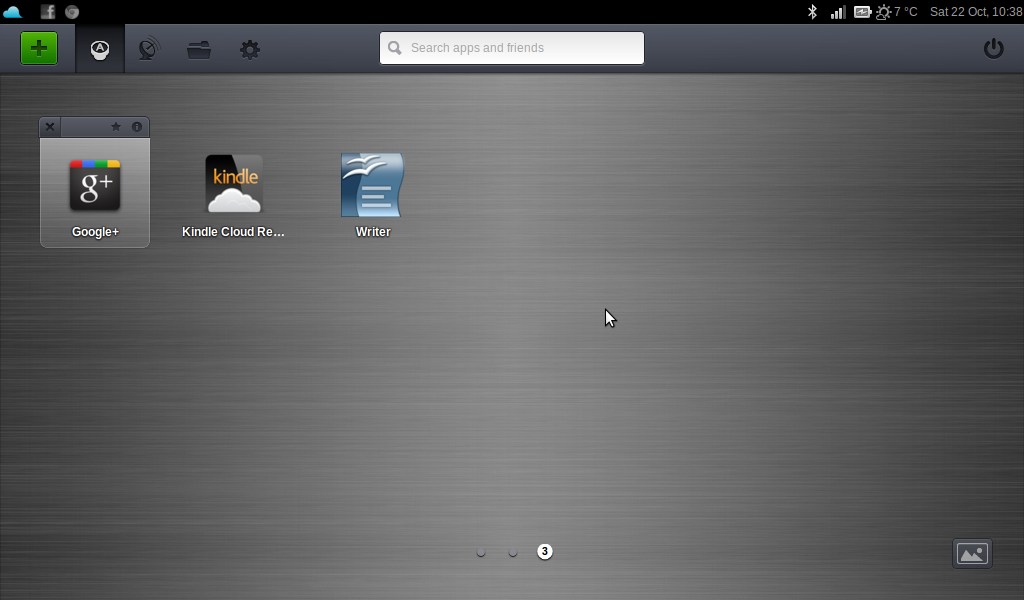
I have been trying out various operating systems for my netbooks, which by definition are rather under-powered devices. A new try is Joli OS, which is a “cloud oriented OS” in the sense that it has web app shortcuts on the desktop, next to local apps. Installation of various new services/apps is made very easy and most media run without any tweaking whatsoever, which is nice for a Linux based OS. The cloud integration does not run very deep atm, but you can access your desktop via Chrome browser from any computer, which is handy. They are also launching a new JoliCloud version soon, aiming to become a true “social computing platform”. For more, see: http://www.jolicloud.com/
I have been testing more integrated media systems lately. An interesting one has been Apple TV, a small black box that can fit to your hand and that is capable of streaming media from your iOS devices to the flatscreen television. The media that is available through the standard, unmodified ATV box includes iTunes movies, YouTube, Vimeo, the usual stuff, plus any iTunes media libraries you have put under a Home Share. The most interesting use that I have found so far, however, relates to the fact that you can use Wi-Fi streaming (AirPlay) to switch image from your iPad/iPhone to the big screen via ATV. There are many interesting games that take advantage of this capability, but most of them run only on iPad 2 – unfortunate for me. But I installed the BBC iPlayer app and was surprised how good quality the streamed media was. Ended up watching yet another episode of Doctor Who. One catch though: you get the AirPlay functionality (and most of the BBC content) only after a €6,99/month subscription fee. If you like British television, nature documentaries and all, it just might be worth it. I am not sure yet whether I will continue the subscription, but I will definitely continue testing the potentials of AirPlay and iCloud.
In case you are interested in trying out the new (currently semi-closed beta) social service by the search giant, here is a public Google+ invite link to the readers of this blog. The link is apparently valid only to the 150 first users, so click rather soon, if the service (or the tech talk that currently seems to dominate it) interests you:
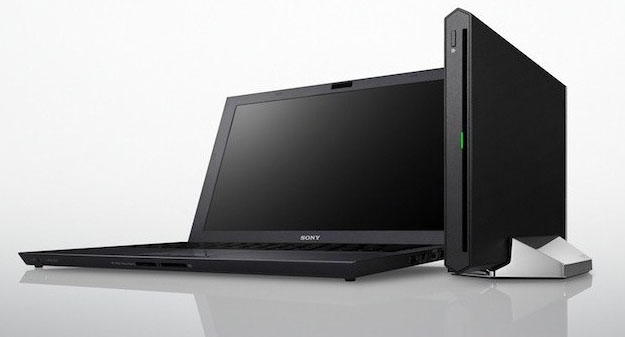
I have been a Sony Vaio Z user for some time (after a recent SSD and OS upgrade a rather happy user), and it is interesting to follow the news on how this line of laptops is developing. Engadget has recently published a review of Vaio Z 2011, and I am no longer sure whether “Z” is for me any more. Sony has opted to drop the hybrid/discrete graphics card and the optical drive from the laptop, and instead they are now build inside an accessory, “Power Media Dock”. The benefit of this system is that the laptop itself can stay very light (1,2 kg) and thin, but the downside is that you no longer have as versatile laptop. To me, it would make no sense to get Vaio Z of this kind of setup; it is much more cost effective to get a powerful graphics/gaming workstation PC, and an ultraportable laptop as separate computers, rather than as this kind of weird, expensive combo. In some cases you actually need to do that graphics editing or game testing work done with your laptop (particularly if you are a lot on the road). Having a “power dock” lying on your desk at the office does not help in that situation. Shame on you, Sony, shame.
[In Finnish, some experiences on product guarantee system here in Finland] Olemme saaneet joitakin mielenkiintoisia kokemuksia tuotetakuusta viime aikoina, mistä tässä pari sanaa. Ostimme Krups Espresseria -kahviautomaatin syyskuussa 2009 Kodin1 Turtola -tavaratalosta; alennusmyynnistä edulliseen hintaan ja kolmen vuoden takuulla, joten vaikutti hyvältä ostokselta. Laite oli pienellä käytöllä, teki harvakseltaan kohtuullista espressoa, ja olimme tyytyväisiä. Nyt toukokuussa 2011 keitin vikaantui, sen sisältä purkaantui höyryä ja LCD-näytön vikailmoitus kehotti ottamaan yhteyttä huoltoon. Kannoin laitteen takaisin Kodin Ykköseen, mistä sanottiin sen menevän huoltoon ja että tyypillinen huoltoaika olisi pari, kolme viikkoa. Ottaisivat kuulemma meihin yhteyttä. Aika kului, mitään ei kuulunut. Aloin ihmetellä ja kun kesälomien alettua oli lopultakin aikaa, kävin kyselemässä. Kodin1:n kodinkoneosaston myyjä yritti turhaan tavoittaa huoltoa, minne laite oli toimitettu, mutta lupasivat sitten olla myöhemmin meihin yhteydessä. Aikanaan tuli tekstiviesti, joka selvitti että kahviautomaatti oli niin pahasti rikki että sitä ei kannata korjata, ja että he hyvittävät meille laitteen hinnan.
Tässä vaiheessa takuujärjestely alkoi hieman mietityttää. Krups valmisti edelleen Espresseria-kahviautomaatteja ja sellainen löytyi netin mukaan jopa suoraan Turtolan Kodin1:n varastosta. Hinta vain oli nyt perusmallillakin yli tuplaten se, mitä olimme syksyllä 2009 laitteesta maksaneet. Ymmärryksemme mukaan kolmen vuoden takuu tarkoittaa kuitenkin sitä, että ostamamme laite tuona aikana sen vikaantuessa joko korjataan, tai mikäli tuo ei ole mahdollista, vaihdetaan uuteen vastaavaan. Takuun sijaan rahojen palautus yhtyneenä hintojen nousuun takaisi kuluttajan kannalta sen että kauppias voisi aina halutessaan “ostaa” itsensä vapaaksi kiusallisista takuuvelvoitteista, ja asiakas saisi puolestaan pulittaa kauppaan uuden, korkeamman hinnan saadakseen itselleen jo kertaalleen ostamansa/vastaavan tuotteen.
Muutama puhelu vahvisti vaikutelman: myyjäliike vetosi siihen että vastaavaa (=täsmälleen samaa) mallia ei enää ollut markkinoilla (mallinumero oli vaihtunut) ja että uusi Espresseria oli niin paljon kalliimpi kuin se hinta mitä olimme 2009 maksaneet. Molemmat osapuolet olivat yhteydessä omiin kuluttajasuojan asiantuntijoihinsa ja lopulta Turtolan tavaratalojohtaja kehotti meitä tekemään tapauksesta riita-asian kuluttajariitalautakuntaan. Tähän asti ei nyt kuitenkaan päästy, sillä Krupsin maahantuoja oli yllättäen postittanut meille uuden, Espresseria Automatic Premium -mallin. Olimme olleet siihenkin suuntaan aiemmin yhteydessä asiasta, mutta meille ei tullut koskaan tietoa, mikä maahantuojan kanta takuuasiaan tässä tapauksessa oli. Mutta hyvä näin. Pikaisten käyttökokemusten perusteella tämä “Premium” on toiminnaltaan ja ominaisuuksiltaan täysin vastaava aiempaan Espresseria-malliimme. Automatiikan valikoihin oli tullut pari optiota lisää, itse espresson laatu ja mekanismin äänet olivat kuitenkin täysin ennallaan. Tiedä sitten, mitä se lupaa tämän mallin kestävyydestä. Koputetaan puuta.
Yhteenvetona täytynee siis todeta että Kodin1 Turtolan menettely takuuasioiden suhteen ei tässä tapauksessa kuluttajan kannalta synnyttänyt luotettavaa kuvaa. Nykyään monien tuotteiden kohdalla mallinumerot muuttuvat vuosittain, joskus jopa muutaman kuukauden välein. Useamman vuoden takuu olisi käytännössä tällaisten tuotteiden kohdalla vain pidennetty palautusoikeus, jos sitäkään, mikäli Kodin Ykkösen politiikka alkaa yleistyä. (Turtolan tavaratalojohtaja katsoi että takuun purkamisen lisäksi heillä olisi ollut oikeus myös vähentää palautettavasta summasta käytön kuluttamaa osuutta vastaava summa – anteliaasti hän lupasi pidättäytyä moisesta tällä kertaa, jos hyväksyisimme palautuksen.) Krupsin maahantuojan vastaantulo oli puolestaan mallikelpoinen – tosin olisi ollut mukava saada jotain muutakin tietoa heidän kannastaan kuin lopulta saapunut yllättävä postipaketti.
Liitteeksi, Krupsin espressoautomaattien tietoja/myyntilauseita Krupsin ja Kodin Ykkösen nettisivuilta:
My iPhone 3GS suddenly decided to stop connecting to the Internet while at home. Investigating a bit further, it appears that while talking through the Airport Express wifi station to the ADSL modem (a Telewell thing), it is unable to pick up the IP address via DHCP. Airport acts as a bridge, DHCP comes from the modem. Setting up the IP details manually works ok. Renewing, resetting and power recycling the associated devices does not help. Doing a Google search with “iPhone wifi airport dhcp problem” delivers tons of hits, but no solution so far. Funny, the networking tech things often feel to live a life of their own. Need to get some sleep, I will continue to debug this at some other time…
Today the invites of new Google+ service have been spreading around the world like a wildfire. It is still too early to present any thorough review of this thing (only few hours of sporadic tests do not really cut it), but some initial thoughts:
Google+ replicates many of the core functionalities of established services like Facebook and Twitter (plus photo-sharing sites like Flickr), but it does it a bit differently, often better, sometimes just… differently.
It highlights the role of filtering, or privacy settings through its “Circles” in a manner that makes the boring task of setting up “Family”, “Colleagues”, “People of This or That” groups almost fun. Its group based settings are nothing new in themselves, but the design of the service makes them feel a bit new. The design philosophy of Google+ is based on importance of recognizing the social “frames” (à la Erving Goffman) for our daily existence, and it also supports the “layering” of this mundane reality: it is easy to select an individual post, photo or other item to be shared among just one “circle”, or several. An individual can belong to several circles.
Still, it seems unlikely that people would leave their established networking services just for the pleasure of better privacy settings. Google needs something else. Something “plus” in their “plus service”.
Their mobile client (Android, there is no yet public release of iOS one) is nice. It makes following, sharing and maintaining one’s social network pretty straightforward. It is better than, e.g. the Android version of Facebook client. But probably nothing revolutionary here.
Other key features include “Sparks”, is a sort of automated content feed on a user-chosen topic. I have not used it enough to comment on its actual usefulness. It appears to be based on a sort of “beefed-up” Google search, that is tweaked for “viral”, social media oriented properties (whatever those are).
Then we have the “Hangouts”, a playful video chat for up to ten people. Apparently it is quite fun and functional, and allows one to joke around while e.g. watching a Youtube video together. My problem with this is only that I cannot get the required plugin to install to my Vaio Z. Otherwise, I have my doubts whether daily rhythms allow time for having a camera and microphone on for that many people. Maybe, but I have doubts.
What then is the actual “plus” of this entire thing?
My current intuition is that the biggest thing are the changes under the hood; the gradual shift of Google the Search Engine into Google the Social. There are so many potential new functionalities already in this first test release of Google+ that it is quite hard to figure out what is possible, what is desirable and what not. Google handles so much data and has so great a role already in the lives of millions of people, that even small changes in its operation have major consequences. The changes that are now taking place are no minor. My mobile phone, my calendar, my email and my news, social status feeds and photo, video usage are already different from what they were yesterday. The big “plus” of Google+ is thus not in its surface as yet-another-facebook, but rather in the increasingly flexible ways in how the innumerable services Google provides today and in the future are currently being redefined to be relevant for social interaction. And that is an interesting process to follow.
I have for two years have been a happy iPhone user, and still consider that iPhone provides the best overall user experience. But the iOS is getting old, and particularly Android has been able to pass it on certain areas. My new work phone is Samsung Galaxy S II, which is running Gingerbread (Android 2.3). In the hardware area, it has a dual core processor (1,2 GHz), SuperAMOLED+ screen (4,3″), and 8 megapixel camera, to provide the key details. This thing can run all the games I have thrown at it without any hiccups, and it can record and play Full HD video when used to document events. In terms of user experience and competitive relationship to iPhone, comparison gets a little difficult. There are things like Swype sliding text input in Android/Samsung, but I still find text editing and web browser to work a bit better in iPhone. On the other hand, there is much more room for tinkering, configuring and modification in Android, so it can be set up to fit the actual user needs in a much more flexible manner. The Android app ecosystem is vast, but I feel iOS has generally better quality apps. Almost every search produces tens of different competing apps in Android Store, and it is sometimes really difficult to find something that actually fits your needs. Apple keeps tighter controls of their app-universe, and have already filtered out rubbish. In some cases though, it is impossible to find the feature or function you need from the Apple side, whereas Android is much more open and provides flexibility. It is also easy to fill your screens and data transfers with dozens of non-optimized processes in Android – iOS is more controlled and balanced environment also in this respect. There will be the new iOS 5 released later this autumn, which will bring some key elements that Android already has (like the notification centre, over-the-air updates) to iOS. It will be interesting to see how comparison will turn out then. At the moment, iOS is better for “general user”, while Android shines as a “power user” toy and tool of choice.
The full ramifications of today’s Apple WWDC event announcements remain to be seen, but one thing is clear: the “era of the cloud” is here to stay. Apple is making huge efforts in replicating some of the core functionalities that companies like Google or Amazon have been offering with their cloud-based services. In some areas Apple seems to be taking the lead position. It is particularly their emphasis on the ease of use and integration of data and services that go seamlessly across devices that make cloud approach finally go mainstream. Already, email solutions like Google’s Gmail, Calendar, plus their integration of the online contact database with the Android devices makes it easy to restore all necessary daily information to a new device by just entering one’s Google account details. Now, Apple promises to deliver your contacts, photos, documents, applications, music — basically your entire digital life seamlessly synced to all Apple/iOS devices, so they are available anywhere you go, regardless what was the last device you used to access them. With the Mac OS X integrating even tighter with iOS, the boundary lines between device categories are quickly melting, which is a very welcome point in digital ecosystem evolution, if true.
Here are some links to videos and more information:





 frans goes blog
You must be logged in to post a comment.