M50: first experiences

Ouf-of-camera JPG (M50, with EOS-M 22mm f/2 lens).

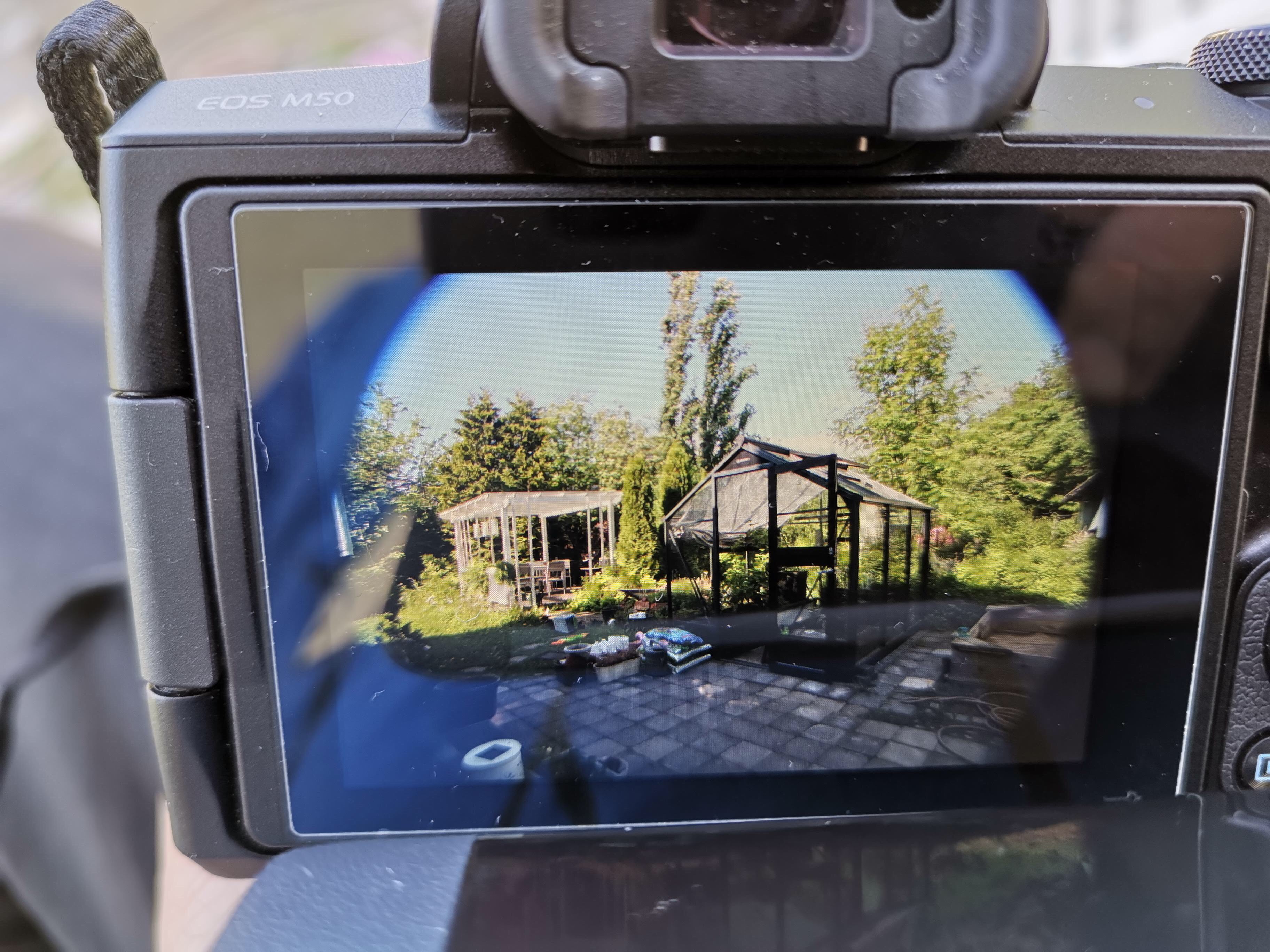
I have been using the new Canon EOS M50 mirrorless system camera now for a month or so. The main experiences are pretty positive, but I have also some comments on what this camera is good and not so optimal for.

In terms of image quality and feature set, this is a pretty complete package. Canon can make good cameras. However, the small physical size of this camera is perhaps its most defining main characteristic. This means that M50 is excellent as a light and small travel companion, but also that it has too small grip to carry comfortably this body when there are some heavy “pro” lenses or telephoto lenses attached. One must carry the system from the lens instead.

I really like the touch screen interface of M50. The swiveling LCD is really functional, and it is easy to take that quick photo from extra low or high angles. The LCD touch interface Canon uses is perhaps the best in the market today: it is responsive, well designed and logically organised. This is particularly important for M50, since it has only few physical buttons, and a single rotating control. Photographer using M50 needs to use the touch UI for many key functions. This is perhaps something that many manual-settings oriented professional and enthusiast photographers do not like; it you like to set the aperture, exposure time and ISO from the physical controls, then M50 is not for you (one should consider e.g. Fujifilm X-T3 or T30 instead). But if one is comfortable working with electronic controls, then M50 provides multiple opportunities.

My old EOS camera had only few (nine) autofocus points (phase-detect), and only the single point in the middle was with the fast, cross-type AF. This M50 has 99 selectable AF points (143 with some lenses), covering 80 % of the sensor area (dual-pixel type). Coupled with the touch screen, this change has had an effect on my photography style. It is now possible to first compose the photo, look through the electronic viewfinder, and simultaneously use a thumb to drag the AF point/area (in a “computer mouse/touchpad style”) to the desired point in the screen. I am not completely fluent in this technique yet though, and my usual technique of center focusing first, then half-pressing to lock the focus, and then quickly making the final composition, and shooting, is perhaps in most situations quicker and simpler than moving the focus point around the screen. But since M50 remembers in Program mode (which I use most) where the AF point was left the last time, the center focusing method does not work properly any more. I just need to learn new tricks, and keep moving the AF points in the screen (or, let the camera do everything, in Full Auto mode, or go into Manual mode, and do focusing with the lens ring instead.

As a modern mirrorless camera, M50 is packed with sensors and comes with a powerful DIGIG8 processor, bright LCD screen and electronic viewfinder. All of this consumes electricity, and the battery life of M50 is nowhere near my old 550D (which, btw, also had an extra battery grip). A full day of shooting takes either two or three fully loaded LP-E12 batteries. Thus, this camera behaves like a smartphone with poor battery life. You need to be using that battery charger all the time. (The standard rating is 235 shots-per-charge, CIPA.)

When travelling, I have been using a lot the wireless capabilities of M50. It is really handy that one can move full resolution, or reduced resolution versions of photos into an iPhone, iPad or Android device while on the go. On the other hand, this is nowhere as easy as when shooting and sharing directly from a smartphone. Moving typical 200-300 photos from a shooting session into an iPad for editing and uploading is slow, and feels like it takes ages. (I have not yet cracked how to get the advertised real-time Bluetooth photo transfer to work.) The traditional workflow where the entire memory card is first read into a PC and processed with Lightroom makes still better sense, but it is nice to have the alternative, for mobile processing and sharing some individual photos at least.

Many reviewers of M50 have written a lot about the limitations of 4K video mode (high crop factor, no dual-pixel autofocus). I use video rarely, and then only full HD, so that is not an issue for me. There is an external microphone input, which might be handy, and the LCD screen can be turned to point forward, if I ever go into video blogging (not that I plan to do it).

The main plusses for me in M50 are the compact size, the excellent touch UI, and very nice image quality in still images. That I can use both the new, compact EF-M mount lenses, and (with adapters) also the traditional Canon EF lenses was a major factor when making the purchase decision, since the lens collection of a photographer is typically much more expensive part of the equipment, than the body only. Changing to Nikon, Fuji or Sony would have been a big investement.

The autofocus system in M50 is fast, and in burst mode the camera can shoot 10 fps for 30 jpg shots in a row to fill the buffer. I am not a sports or wildlife photographer as such, so this is good enough for me. A physically bigger body would make the camera easier to handle with large and heavy lenses, but shooting with a large lens is a two-hand operation in any case (and in some cases requires using a tripod), so that is not so critical. I still need to train more to use the controls and switch between camera modes faster, and touch interface is probably never going to be as fast as using a camera with several dedicated physical controls. But this is a compromise one can make, to get this feature set, image quality and lens compatibility in this small package, in this price.

You can find the full M50 tech specs and feature set here in English: https://www.canon.co.uk/cameras/eos-m50/specifications/ and in Finnish: https://www.canon.fi/cameras/eos-m50/specifications/.

Mirrorless hype is over?

My mirrorless Canon EOS M50, with a 50 mm EF lens, and a “speed booster” style mount Viltrox adapter.

It has been interesting to follow how since last year, there has been several articles published that discuss the “mirrorless camera hype”, and put forward various kinds of criticism of either this technology, or related camera industry strategies. One repeated criticism is rooted to the fact that many professional (and enthusiast) photographers still find a typical DSLR camera body to work better for their needs than a mirrorless one. There are at least three main differences: a mirrorless interchangeable camera body is typically smaller than a DSLR, the battery life is weaker, and the image from an electronic viewfinder and/or LCD back screen offers a less realistic image than a traditional optical viewfinder in a (D)SLR camera.

The industry critiques appear to be focused on worries that as the digital camera market as a whole is going down, the big companies like Canon and Nikon are directing their product development resources for putting out mirrorless camera bodies with new lens mounts, and new lenses for these systems, rather than evolving their existing product lines in DSLR markets. Many seem to think that this is bad business sense, since large populations of professionals and photography enthusiasts are deeply invested in these more traditional ecosystems, and lack of progress in them means that there is not enough incentive to upgrade and invest, for all of those who remain in those parts of the market.

There might be some truth in both lines of argumentation – yet, they are also not the whole story. It is true that Sony, with their α7, α7R and α7S lines of cameras have stolen much of the momentum that could had been strong for Canon and Nikon, if they would had invested into mirrorless technologies earlier. Currently, the full frame systems like Canon EOS R, or Nikon Z6 & Z7, are apparently not selling very strongly. In early May of this year, for example, it was publicised how Sony α7 III sold more units in Japan at least than the Canon and Nikon full frame mirrorless systems combined (see: https://www.dpreview.com/news/3587145682/sony-a7-iii-sales-beat-combined-efforts-of-canon-and-nikon-in-japan ). Some are ready to declare Canon and Nikon’s efforts as dead on arrival, but both companies have claimed to be strategically committed into their new mirrorless systems, developing and launching lenses that are necessary for their future growth. Overall though, both Canon and Nikon are producing and selling much more digital cameras than Sony, even while their sales numbers have been declining (in Japan at least, Fujifilm was interestingly the big winner in year-over-year analysis; see: https://www.canonrumors.com/latest-sales-data-shows-canon-maintains-big-marketshare-lead-in-japan-for-the-year/ ).

From a photographer perspective, the first mentioned concerns might be the more crucial than the business ones, though. Are mirrorless cameras actually worse than comparable DSLR cameras?

There is the curious quality when you move from a large (D)SLR body into using a typical mirrorless: the small camera can feel a bit like a toy, the handling is different, and using the electronic viewfinder and LCD screen can produce flashbacks of compact, point-and-shoot cameras of earlier years. In terms of pure image quality and feature sets, the mirrorless cameras are already equals to DSLRs, and in some areas have arguably moved already beyond most of them. There are multiple reasons for this, and the primary relates to the intimate link there is between the light sensor, image processor and viewfinder in mirrorless cameras. As a photographer you are not looking at a reflection of light coming from the lens through an alternative route into the optical viewfinder – you are looking at the image that is produced from the actual, real-time data that the sensor and image processor are “seeing”. The mechanical construction of mirrorless cameras can be made simpler, and when the mirror is removed, the entire lens system can be moved closer to the image sensor – something that is technically called shorter flange distance. This should allow engineers to design lenses for mirrorless systems that have a large aperture and fast focusing capabilities (you can check out a video, where a Nikon lens engineer explains how this works here: https://www.youtube.com/watch?v=LxT17A40d50 ). The physical dimensions of the camera body in itself can be made small or large, as desired. Nikon Z series cameras are rather sizable, with a conventional “pro camera” style grip (handle); my Canon EOS M50 is diminutive, from the other extreme.

I think that the development of cameras with ever more stronger processors and their machine learning and algorithm-based novel capabilities will push the general direction of photography technology towards various mirrorless systems. Said that, I completely understand the benefits of more traditional DSLRs and why they might feel superior for many photographers at the moment. There has been some rumours (in the Canon space at least, which I am personally mostly following) that new DSLR camera bodies will be released into the upper-enthusiast APS-C / semi-professional DSLR category (search e.g. for “EOS 90D” rumours), so I think that DSLR cameras are by no means dead. There are many ways in which the latest camera technologies can be implemented into mirror-bodies, as well as into the mirrorless ones. The big strategic question of course is that how many different mount and lens ecosystems can be maintained and developed simultaneously. If some of the current mounts will stop getting lenses in the near future, there is at least a market for adapter manufacturers.

EOS M mount: interesting adapters

Attaching EF lenses to M mount camera requires an adapter – which adds a bit to the bulk of a small camera, but is also an interesting opportunity, since it is possible to fit new electronic or optical functionalities inside that middle piece.

I have both the official, Canon-made “EF-EOS M” mount adapter, which keeps the optical characteristics of the lens similar to what they would be if used on an EF-S mount camera (crop and all). The other adapter is “Viltrox EF-EOS M2 Lens Adapter 0.71x Speed Booster” (a real mouthful), which has the interesting capability of multiplying the focal length by factor of 0.71. This is a sort of “inverted teleconverter” as it reduces the image size that the lens produces, allowing more light to fit into the smaller (APS C) sensor, and almost eliminates the crop factor.

Most interestingly, as the booster collects more light into the sensor, this also has an effect of increasing the maximum aperture of my EF/EF-S lenses in an M mount camera. When I attach Viltrox into my 70-200 mm F4, it appears to my M50 camera as an F2.8 lens (with that constant aperture over the entire zoom range). The image quality that these “active speed booster adapters” produce is apparently a somewhat contested topic among camera enthusiasts. In my personal, initial tests, I have been pretty happy: the sharpness and corner vignetting also appear to be well controlled and the images produced of rather good quality – or good enough for me, at least.

When I put this into my 50 mm F2.8 portrait lens, this lens functions as having F1.2 maximum aperture. This is pretty cool, e.g. the capability to shoot in lower-light conditions is much better this way, and the narrow depth of field is similar to much more heavy and expensive, full frame camera system when using this adapter.

In my tests so far, all my Canon EF lenses have worked perfectly with Viltrox. However, when testing with the Tamron 16-300 mm F/3.5-6.3 Di II VC PZD super-zoom lens, there are issues. The adapter focuses light in a wrong manner when using this lens, and the result is that the corners are cut away from images (see the picture below). So, your mileage may vary. I have written to Viltrox customer service and asked what they suggest in the Tamron case (I have updated the adapter into the most recent available firmware – this can be done very simply using a PC and the built-in micro-usb connector in the adapter).

You can read a bit more about this technology (in connection to the first, Metabones product) from here: https://www.newsshooter.com/2013/01/14/metabones-speed-booster-adapter-gives-lenses-an-extra-fstop-and-nearly-full-frame-focal-lengths-on-aps-c-sensors/

Going mirrorless (EOS M50)

I have today started to learn to take photos with an ultra-compact EOS M50, after using the much bigger SLR or DSLR cameras for decades. This is surely an interesting experience. Some of the fundamentals of photography are still the same, but some areas I clearly need to study more, and learn new approaches.

Canon EOS M50 (photo credit: Canon).

These involve particularly learning how to collaborate with the embedded computer (DIGIG 8 processor) better. It is fascinating to note how fast e.g. the automatic focusing system is – I can suddenly use an old lens like my trusty Canon EF 70-200mm f/4 L USM to get in-flight photos of rather fast birds. The new system tracks moving targets much faster and in a more reliable manner. However, I am by no means a bird photographer, having mostly worked with still life, landscapes and portraits. Getting to handle the dual options of creating the photo either through the electronic viewfinder, or, the vari-angle touchscreen takes some getting used to.

Also, there are many ways to use this new system, and finding the right settings among many different menus (there must be hundreds of options in all) takes some time. Also, coming from much older EOS 550D, it was weird to realise that the entire screen is now filled with autofocus points, and that it is possible to slide the AF point with a thumb (using the touchscreen as a “mouse”) into the optimal spot, while simultaneously composing, focusing, zooming and shooting – 10 frames per second, maximum. I am filling up the memory card fast now.

My Canon EOS 550D and M50, side by side. Note that I am using a battery grip on 550D, which is rather small DSLR camera in itself.

It is easy to do many basic photo editing tasks in-camera now. It actually feels like there is small “Photoshop” built into the camera. However, there is a fundamental decision that needs to be made: of either using photos as they come, directly from camera, or after some post-processing in the computer. This is important since JPG or RAW based workflows are a bit different. These days, I am using quite a lot of mobile apps and tools, and the ability to wirelessly copy photos from the camera into a smartphone or tablet computer (via Wi-Fi, Bluetooth + NFC), in the field, is definitely something that I like doing. Currently thus the JPG options make most sense for me personally.

Lens trumps the camera?

It is sort of interesting to think that maybe cameras have already got “good enough”? By this I mean that the capabilities of the camera body are no longer the real bottleneck in photography. Following the field, it is easy to find anecdotal stories about professional photographers relying on their 10-year-old, even much older equipment, with no need to update or upgrade. And this does not count in the “retro” photographers who for various reasons prefer the film cameras and vintage equipment.

As digital cameras include microprocessors, and the light-sensitive sensors are based on semiconductor technologies, the development of new cameras has gained a lot from the “Moore’s Law”, and quick progress in manufacturing faster and faster silicon chips. It is today particularly in the design and marketing of smartphones where this “speedrun” is obvious, with the next generation following the previous one in every six months or so. But even in smartphones, the sales are slowing down, and one reason appears to be that the existing phones are already – good enough.

The brains of a digital camera are its processor, the system chip. This is where sensor information gets processed, operations such as AF (automatic focus systems) are coming from, and where any in-camera postprocessing of photos takes place. I have been mostly following the evolution of DIGIC series of image processors by Canon, and it is obvious that many genuinely useful features for photographers have come from the new processor generations. In addition to being able to fit in data from lens and light sensors to produce more-or-less optimally exposed photos, the newer generations have e.g. introduced face-detection autofocus, which can automatically find faces in a group photo, and set the depth of field so that all of them are sharp. Mostly the new generation usually just provides incremental improvements in the some fundamental areas such as speed of image processing, noise reduction in low-light conditions, or speed and preciseness of autofocus.

It is nice to have a fast-shooting, fast-focusing camera that does all sorts of intelligent things like scene detection, and is able to apply many settings automatically. On the other hand, much of the art and craft of photography is in learning to think about the key dimensions of photographs, and about developing the ability to make use of technology to produce a certain kind of creation. The “smart” processor might be useful in removing the danger of technically failed shots, but it might also slow down a bit the ability to experiment, and learn from mistakes? I know from my own experience how easy it is just to give the “Program” (the ‘semi-auto’ mode in Canon) the reigns, and then end up living in somewhat smaller creative sandbox, as the result.

Putting over-emphasis on the latest features in cameras has also the danger of missing out other important dimensions of cameras as physical tools. The mechanical construction of a camera, the size and shape of it, how the physical dials and control buttons work – all of this have a very significant effect on the handling and ergonomics that matter a lot while taking photographs. Consider the latest smartphones, for example. In many cases the wide-angle and normal focal length photos can be shot with a smartphone with technically excellent results. However, most professionals still prefer to have a tool that is designed to be a camera also in ergonomic terms, while taking photographs all day long. The slippery smartphone with virtual, on-screen buttons just does not provide same kind of experience and sense of control.

Thus, in many cases one can actually save some money by settling for an older-generation model in the camera body, and investing into lenses instead. This can be a bit tricky, of course, as new camera and lens generations sometimes also come with new lens mounts; the autofocus and metering systems, for example, might rely on new pins for exchanging information between the lens and the body in new ways, or -as in the case of mirrorless cameras – the lenses are redesigned to take advantage from the smaller shape of mirrorless body (that is, moving the lenses physically closer to the image sensor). In many cases, however, the manufacturer standard lens mount still applies, or there is a perfectly working adapter available, to fit new lenses to older generation bodies, or the other way around.

Thus, one way for an enthusiast photographer to move forward in the actual image quality and range of photos one can achieve, is to stick with a bit older camera technology, but put the available savings into updating the lenses. In interchangeable lens cameras there are different basic options for the lens selection, and this relates to the style of photography one is working on. A street photographer, or one that mostly shoots people and events, can do nicely with a “normal” lens – or in portraiture with a short telephoto. In this lens range, the maximum aperture, sharpness and absence of various distortions what one is paying for, in a good quality (or “professional”) lens versions.

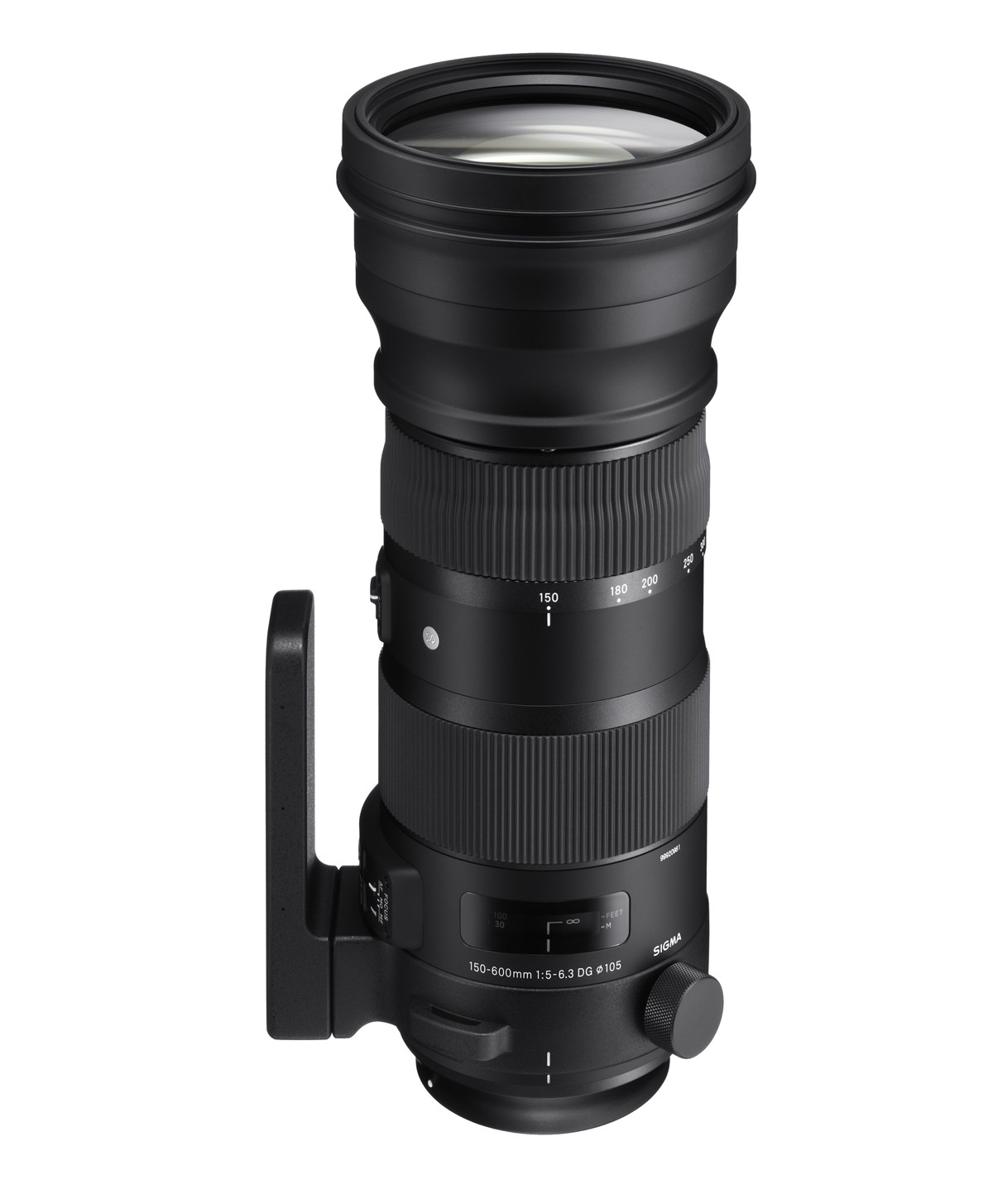
I think that I have pretty decent situation in wide angle and normal focal lenght photography at the moment, but there is much to improve in the longer telephoto lenses. Particularly my growing interest in nature photography translates into need for long-range, bit-aperture and sharp lenses. And unfortunately those things do not come cheap. Below are a couple of interesting alternatives for a Canon EF mount – I’d be interested to hear any comments or experiences you might have of these, or other EF mount telephoto lenses!

Canon EF 100-400mm f/4.5-5.6L IS II USM (Photo credit: Canon.)
Sigma 150-600mm F5-6.3 DG OS HSM | S. (Photo credit: Sigma.)

There is no perfect camera

One of the frustrating parts of upgrading one’s photography tools is the realisation that there indeed is no such thing as “perfect camera”. Truly, there are many good, very good and excellent cameras, lenses and other tools for photography (some also very expensive, some more moderately priced). But none of them is perfect for everything, and will found lacking, if evaluated with criteria that they were not designed to fulfil.

This is particularly important realisation at a point when one is both considering of changing one’s style or approach to photography, at the same time while upgrading one’s equipment. While a certain combination of camera and lens does not force you to photograph certain subject matter, or only in a certain style, there are important limitations in all alternatives, which make them less suitable for some approaches and uses, than others.

For example, if the light weight and ease of combining photo taking with a hurried everyday professional and busy family life is the primary criteria, then investing heavily into serious, professional or semi-professional/enthusiast level photography gear is perhaps not so smart move. The “full frame” (i.e. classic film frame sensor size: 36 x 24 mm) cameras that most professionals use are indeed excellent in capturing a lot of light and details – but these high-resolution camera bodies need to be combined with larger lenses that tend to be much more heavy (and expensive) than some alternatives.

On the other hand, a good smartphone camera might be the optimal solution for many people whose life context only allows taking photos in the middle of everything else – multitasking, or while moving from point A to point B. (E.g. the excellent Huawei P30 Pro is built around a small but high definition 1/1.7″ sized “SuperSensing”, 40 Mp main sensor.)

Another “generalist option” used to be so-called compact cameras, or point-and-shoot cameras, which are in pocket camera category by size. However, these cameras have pretty much lost the competition to smartphones, and there are rather minor advances that can be gained by upgrading from a really good modern smartphone camera to a upscale, 1-inch sensor compact camera, for example. While the lens and sensor of the best of such cameras are indeed better than those in smartphones, the led screens of pocket cameras cannot compete with the 6-inch OLED multitouch displays and UIs of top-of-the-line smartphones. It is much easier to compose interesting photos with these smartphones, and they also come with endless supply of interesting editing tools (apps) that can be installed and used for any need. The capabilities of pocket cameras are much more limited in such areas.

There is an interesting exception among the fixed lens cameras, however, that are still alive and kicking, and that is the “bridge camera” category. These are typically larger cameras that look and behave much like an interchangeable-lens system cameras, but have their single lens permanently attached into the camera. The sensor size in these cameras has traditionally been small, 1/1.7″ or even 1/2.3″ size. The small sensor size, however, allows manufacturers to build exceptionally versatile zoom lenses, that still translate into manageable sized cameras. A good example is the Nikon Coolpix P1000, which has 1/2.3″ sensor coupled with 125x optical zoom – that is, it provides similar field of view as a 24–3000 mm zoom lens would have in a full frame camera (physically P1000’s lenses have a 4.3–539 mm focal length). As a 300 mm is already considered a solid telephoto range, a 3000 mm field of view is insane – it is a telescope, rather than a regular camera lens. You need a tripod for shooting with that lens, and even with image stabilisation it must be difficult to keep any object that far in the shaking frame and compose decent shots. A small sensor and extreme lens system means that the image quality is not very high: according to reviews, particularly in low light conditions the small sensor size and “slow” (small aperture) lens of P1000 translates into noisy images that lack detail. But, to be fair, it is impossible to find a full frame equivalent system that would have a similar focal range (unless one combines a full frame camera body with a real telescope, I guess). This is something that you can use to shoot the craters in the Moon.

A compromise that many hobbyists are using, is getting a system camera body with an “APS-C” (in Canon: 22.2 x 14.8 mm) or “Four-Thirds” (17.3 × 13 mm) sized sensors. These also cannot gather as much light as a full frame cameras do, and thus also will have more noise at low-light conditions, plus their lenses cannot operate as well in large apertures, which translate to relative inability to achieve shallow “depth of field” – which is something that is desirable e.g. in some portrait photography situations. Also, sports and animal photographers need camera-lens combinations that are “fast”, meaning that even in low-light conditions one can take photos that show the fast-moving subject matter in focus and as sharp. The APS-C and Four-Thirds cameras are “good enough” compromises for many hobbyists, since particularly with the impressive progress that has been made in e.g. noise reduction and in automatic focus technologies, it is possible to produce photos with these camera-lens systems that are “good enough” for most purposes. And this can be achieved by equipment that is still relatively compact in size, light-weight, and (importantly), the price of lenses in APS-C and Four-Thirds camera systems is much lower than top-of-the-line professional lenses manufactured and sold to demanding professionals.

A point of comparison: a full-frame compatible 300 mm telephoto Canon lens that is meant for professionals (meaning that is has very solid construction, on top of glass elements that are designed to produce very sharp and bright images with large aperture values) is priced close to 7000 euros (check out “Canon EF 300mm f/2.8 L IS II USM”). In comparison, and from completely other end of options, one can find a much more versatile telephoto zoom lens for APS-C camera, with 70-300 mm focal range, which has price under 200 euros (check our e.g. “Sigma EOS 70-300mm f/4-5.6 DG”). But the f-values here already tell that this lens is much “slower” (that is, it cannot achieve large aperture/small f-values, and therefore will not operate as nicely in low-light conditions – translating also to longer exposure times and/or necessity to use higher ISO settings, which add noise to the image).

But: what is important to notice is that the f-value is not the whole story about the optical and quality characteristics of lenses. And even if one is after that “professional looking” shallow depth of field (and wants to have a nice blurry background “boukeh” effect), it can be achieved with multiple techniques, including shooting with a longer focal range lens (telephoto focal ranges come with more shallow depth of fields) – or even using a smartphone that can apply the subject separation and blur effects with the help of algorithms (your mileage may vary).

And all this discussion has not yet touched the aesthetics. The “commercial / professional” photo aesthetics often dominate the discussion, but there are actually interesting artistic goals that might be achieved by using small-sensor cameras better, than with a full-frame. Some like to create images that are sharp from near to long distance, and smaller sensors suit perfectly for that. Also, there might be artistic reasons for hunting particular “grainy” qualities rather than the common, overly smooth aesthetics. A small sensor camera, or a smartphone might be a good tool for those situations.

One must also think that what is the use situation one is aiming at. In many cases it is no help owning a heavy system camera: if it is always left home, it will not be taking pictures. If the sheer size of the camera attracts attention, or confuses the people you were hoping to feature in the photos, it is no good for you.

Thus, there is no perfect camera that would suit all needs and all opportunities. The hard fact is that if one is planning to shoot “all kinds of images, in all kinds of situations”, then it is very difficult to say what kind of camera and lens are needed – for curious, experimental and exploring photographers it might be pretty impossible to make the “right choice” regarding the tools that would truly be useful for them. Every system will certainly facilitate many options, but every choice inevitably also removes some options from one’s repertoire.

One concrete way forward is of course budget. It is relatively easier with small budget to make advances in photographing mostly landscapes and still-life objects, as a smartphone or e.g. an entry-level APS-C system camera with a rather cheap lens can provide good enough tools for that. However, getting into photography of fast-moving subjects, children, animals – or fast-moving insects (butterflies) or birds, then some dedicated telephoto or macro capabilities are needed, and particularly if these topics are combined with low-light situations, or desire to have really sharp images that have minimal noise, then things can easily get expensive and/or the system becomes really cumbersome to operate and carry around. Professionals use this kinds of heavy and expensive equipment – and are paid to do so. Is it one’s idea of fun and good time as a hobbyist photographer to do similar things? It might be – or not, for some.

Personally, I still need to make up my mind where to go next in my decades-long photography journey. The more pro-style, full-frame world certainly has its certain interesting options, and new generation of mirrorless full-frame cameras are also bit more compact than the older generations of DSLR cameras. However, it is impossible to get away from the laws of physics and optics, and really “capable” full frame lenses tend to be large, heavy and expensive. The style of photography that is based on a selection of high-quality “prime” lenses (as contrasted to zooms) also means that almost every time one changes from taking photos of the landscape to some detail, or close-up/macro subject, one must also physically remove and change those lenses. For a systematic and goal oriented photographer that is not a problem, but I know my own style already, and I tend to be much more opportunistic: looking around, and jumping from subject and style to another all the time.

One needs to make some kinds of compromises. One option that I have been considering recently is that rather than stepping “up” from my current entry level Canon APS-C system, I could also go the other way. There is the interesting Sony bridge camera, Sony RX10 IV, which has a modern 1″ sensor and image processor that enables very fast, 315-point phase-detection autofocus system. The lens in this camera is the most interesting part, though: it is sharp, 24-600mm equivalent F2.4-4 zoom lens designed by Zeiss. This is a rather big camera, though, so like a system cameras, this is nothing you can put into your pocket and carry around daily. In use, if chosen, it would complement the wide-angle and street photography that I would be still doing with my smartphone cameras. This would be a camera that would be dedicated to those telephoto situations in particular. The UI is not perfect, and the touch screen implementation in particular is a bit clumsy. But the autofocus behaviour, and quality of images it creates in bright to medium light conditions is simply excellent. The 1″ sensor cannot compete with full frame systems in low-light conditions, though. There might be some interesting new generation mirrorless camera bodies and lenses coming out this year, which might change the camera landscape in somewhat interesting ways. So: the jury is still out!

Some links for further reading:

Learning to experiment

I have been recently thinking why I feel that I’ve not really made any real progress in my photography for the last few years. There are a few periods when some kind of leap has seemed to take place; e.g. when I moved into using my first DSRL, and also in the early days of entering the young Internet photography communities, such like Flickr. Reflecting on those, rather than the tools themselves (a better camera, software, or service), the crucial element in those perhaps has been that the “new” element just stimulated exploration, experimentation, and willingness to learn. If one does not take photos, one does not evolve. And I suppose one can get the energy and passion to continue doing things in experimental manner – every day (or: at least in sometimes) – from many things.
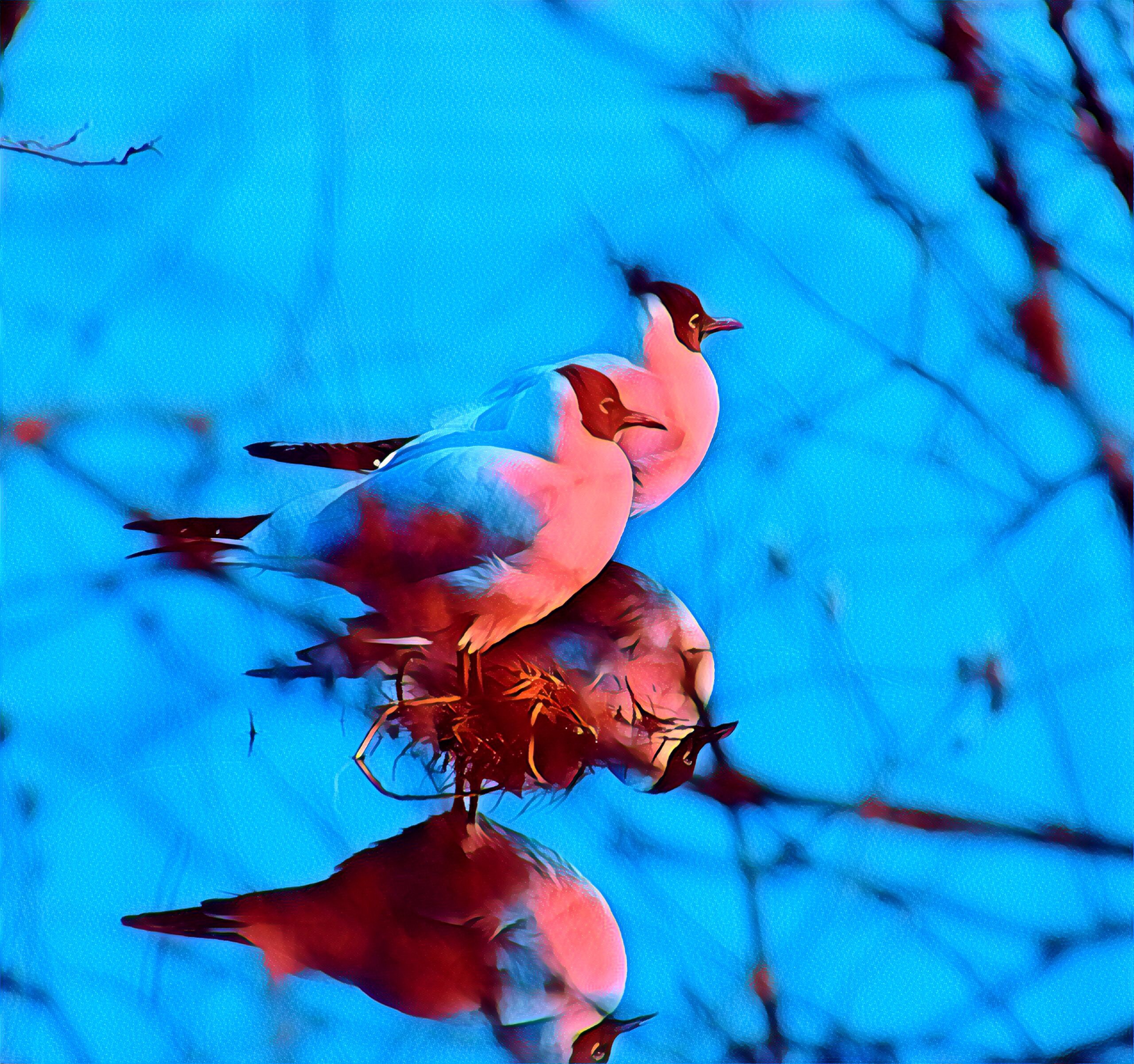
Currently I am constantly pushing against certain technical limitations (but cannot really afford to upgrade my camera and lenses), and there’s also lack of time and opportunity that a bit restrict more radical experiments with any exotic locations, but there are other areas where I definitely can learn to do more: e.g. in a) selecting the subject matter, b) in composition, and c) in post-production. Going to places with new eyes, or, finding an alternative perspective in “old” places, or, just learning new ways to handle and process all those photos.

I have never really bothered to study deeper the fine art of digital photo editing, as I have felt that the photos should stand by themselves, and also stay “real”, as documents of moments in life. But there are actually many ways that one can do to overcome technical limitations of cameras and lenses, that can also help in creating sort of “psychological photorealism”: to create the feelings and associations that the original situation, feeling or subject matter evoked, rather than just trying to live with the lines, colours and contrast values that the machinery was capable of registering originally. When the software post-processing is added to the creative toolbox, it can also remove bottlenecks from the creative subject matter selection, and from finding those interesting, alternative perspectives to all those “old” scenes and situations – that one might feel have already been worn out and exhausted.

Thus: I personally recommend going a bit avant-garde, now and then, even in the name of enhanced realism. 🙂

Microblogging

Diablo3.
My updates about e.g. Diablo3, or Pokémon GO, will go into https://frans.game.blog/.

I decided to experiment with microblogging, and set up three new sites: https://frans.photo.blog/https://frans.tech.blog/ and https://frans.game.blog/. All these “dot-blog” subdomains are now offered free by WordPress.com (see: https://en.blog.wordpress.com/2018/11/28/announcing-free-dotblog-subdomains/). The idea is to post my photos, game and tech updates into these sites, for fast updates and for better organisation, than in a “general” blog site, and also to avoid spamming those in social media, who are not interested in these topics. Feel free to subscribe – or, set up your own blog.

Photography and artificial intelligence

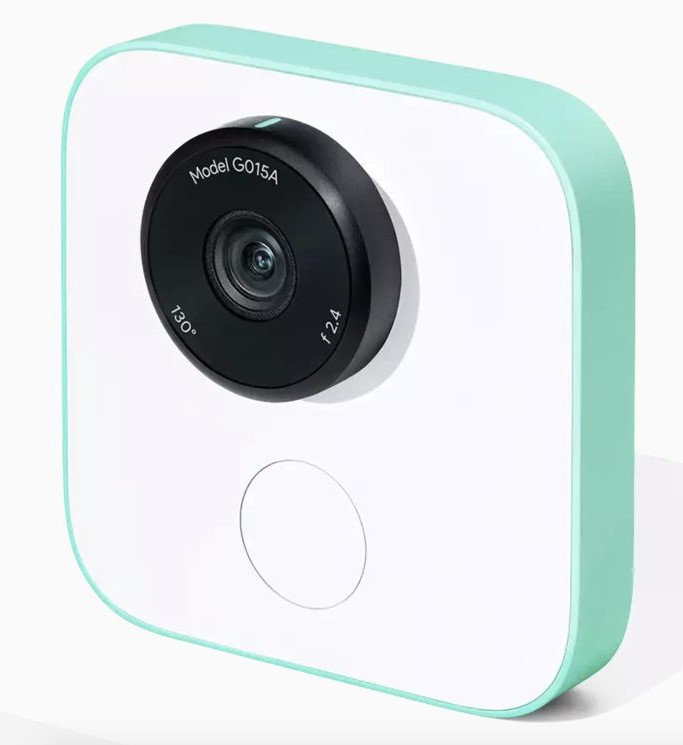
Google Clips camera
Google Clips camera (image copyright: Google).

The main media attention in applications of AI, artificial intelligence and machine learning, has been on such application areas as smart traffic, autonomous cars, recommendation algorithms, and expert systems in all kinds of professional work. There are, however, also very interesting developments taking place around photography currently.

There are multiple areas where AI is augmenting or transforming photography. One is in how the software tools that professional and amateur photographers are using are advancing. It is getting all the time easier to select complex areas in photos, for example, and apply all kinds of useful, interesting or creative effects and functions in them (see e.g. what Adobe is writing about this in: https://blogs.adobe.com/conversations/2017/10/primer-on-artificial-intelligence.html). The technical quality of photos is improving, as AI and advanced algorithmic techniques are applied in e.g. enhancing the level of detail in digital photos. Even a blurry, low-pixel file can be augmented with AI to look like a very realistic, high resolution photo of the subject (on this, see: https://petapixel.com/2017/11/01/photo-enhancement-starting-get-crazy/.

But the applications of AI do not stop there. Google and other developers are experimenting with “AI-augmented cameras” that can recognize persons and events taking place, and take action, making photos and videos at moments and topics that the AI, rather than the human photographer deemed as worthy (see, e.g. Google Clips: https://www.theverge.com/2017/10/4/16405200/google-clips-camera-ai-photos-video-hands-on-wi-fi-direct). This development can go into multiple directions. There are already smart surveillance cameras, for example, that learn to recognize the family members, and differentiate them from unknown persons entering the house, for example. Such a camera, combined with a conversant backend service, can also serve the human users in their various information needs: telling whether kids have come home in time, or in keeping track of any out-of-ordinary events that the camera and algorithms might have noticed. In the below video is featured Lighthouse AI, that combines a smart security camera with such an “interactive assistant”:
https://www.youtube.com/watch?v=erZBQ8nv_M0

In the domain of amateur (and also professional) photographer practices, AI also means many fundamental changes. There are already add-on tools like Arsenal, the “smart camera assistant”, which is based on the idea that manually tweaking all the complex settings of modern DSLR cameras is not that inspiring, or even necessary, for many users, and that a cloud-based intelligence could handle many challenging photography situations with better success than a fumbling regular user (see their Kickstarter video at: https://www.youtube.com/watch?v=mmfGeaBX-0Q). Such algorithms are already also being built into the cameras of flagship smartphones (see, e.g. AI-enhanced camera functionalities in Huawei Mate 10, and in Google’s Pixel 2, which use AI to produce sharper photos with better image stabilization and better optimized dynamic range). Such smartphones, like Apple’s iPhone X, typically come with a dedicated chip for AI/machine learning operations, like the “Neural Engine” of Apple. (See e.g. https://www.wired.com/story/apples-neural-engine-infuses-the-iphone-with-ai-smarts/).

Many of these developments point the way towards a future age of “computational photography”, where algorithms play as crucial role in the creation of visual representations as optics do today (see: https://en.wikipedia.org/wiki/Computational_photography). It is interesting, for example, to think about situations where photographic presentations are constructed from data derived from myriad of different kinds of optical sensors, scattered in wearable technologies and into the environment, and who will try their best to match the mood, tone or message, set by the human “creative director”, who is no longer employed as the actual camera-man/woman. It is also becoming increasingly complex to define authorship and ownership of photos, and most importantly, the privacy and related processing issues related to the visual and photographic data. – We are living interesting times…

Sony RX100: pocket, meet camera

Photography is an interesting thing – many interesting things. Take cameras, for example. For some people, cameras and lenses appear to mean perhaps more than the actual photographs they are supposed to use those equipment for. The global growth of revenue from digital camera industry continues its upwards trend, and by some estimates is expected to reach $46 billion by 2017. There are cameras for multiple uses, and the strengths of one system in one context turn into weaknesses in another. Compare DSLR “systems camera” to a cameraphone (or smartphone), for example: the versatility provided by multiple, interchangeable lenses combined to large image sensor and powerful image processing is unbeatable when the pure technical side of photography as a form of expression is being considered. On the other hand, in everyday daily lives, few people go about hauling their professional DSLR system everywhere. Having a good camera integrated into the mobile phone is your best bet to have camera at hand when the spontaneus opportunity for an interesting photo presents itself. Though, the limitations of small lens and small image sensor inevitably set its limits to what one can achieve with a smartphone camera.

I am going to experiment next by acquiring a compact, “pocket camera” that hopefully would be small enough to actually be feasible to carry around daily in my overcoat pocket, while also having better optics and more versatile feature set than a smartphone camera.

My choice (balancing budget and wish list) concluded into Sony Cyber-shot DSC-RX100 model. This is a compact camera that was introduced already in summer 2012, and there are already several more feature-rich, upgraded versions of RX100 available (Mark II, III, and now also IV, released in summer 2015). My priority here though was to focus on the essential aspects of solid optics combined with decent image sensor and build quality, and the original RX100 ranks high in that department, and the price is pretty competitive by now.

There are few things that smartphone cameras do really well, and extensive app ecosystem, strong computing power in compact form factor and excellent touch screen interfaces are among the key such elements. If the lens and sensor are priority in a compact camera, to get that high quality shot, and you are carrying a powerful smartphone also with you everywhere, it does not make sense to try to duplicate smartphone functions in the camera itself. It is enough to be able to get the photo from camera to the smartphone, and then do the post-processing and possible social media sharing, or archiving from there (or, via a cloud service and/or a PC, for that matter). RX100 does not have a built-in WiFi or other wireless functions, so I have now equipped my new Sony with the Eye-Fi Mobi Pro 32 GB SD memory card, which has the WiFi, and can connect to e.g. iPhone Eye-Fi Mobi app, where from you can take the editing and sharing business as far as you want.

I also invested to some other small add-ons: the official camera LCD screen protector (PCK-LM15) and the Sony AG-R2 Attachment Grip. The latter affects the slim, flat design of RX100 a bit, but is really good for getting reliable hold of the camera so that you can confidently work through multiple positions, without fear of dropping the camera.

RX100 is one of the most popular cameras in the relatively new “enthusiast compact” category, that I guess emerged out of Darwinian adaptation process, where mobile phones took over most of the “snapshot” market, and the compact camera manufacturers were forced to evolve and differentiate their offerings from the most basic and casual photography needs. The manual of RX100 is a rather thick volume, so it has fair number of various options and functions, and this camera has also a rather large, one-inch image sensor (of 20 megapixels), a Carl Zeiss Vario-Sonnar T lens (28-100mm equiv., f/1.8-4.9), image stabilization, automatic face recognition, customizable controls and the ability to shoot recording RAW images – something that the more professional (or nerdy) photo tweakers can value.

It is still too early to say whether the idea of having a daily pocket camera available actually makes any real sense, so that the extra 240 grams of weight in my jacket pocket really pays off. But I guess that in those conference trip breaks this would allow one to jump on and off the “tourist mode” with a bit more expressive range available than just a mobile phone camera would allow. We will see.