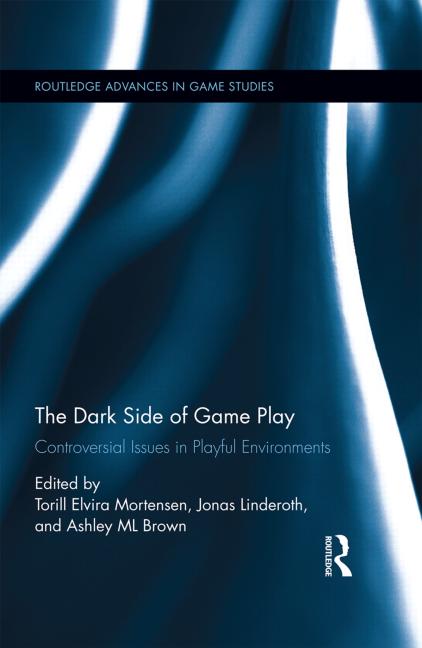
Finally: the very important “Dark Play” volume that has long been in the making is finally out! Titled The Dark Side of Game Play: Controversial Issues in Playful Environments (Routledge 2015), the work is edited by the excellent team of Torill Elvira Mortensen, Jonas Linderoth and Ashley ML Brown. It includes 15 chapters expanding our understanding of what ‘play’ is and what it means, including my text about “dark play of children”, including the sometimes perhaps subversive uses for LEGO pieces and video games they often come up with (a draft version of my chapter is here). Here is the table of contents:
Part I: Introduction
1. Dark Play: The Aesthetics of Controversial Playfulness
Torill Elvira Mortensen and Jonas Linderoth
Part II: Discourses of Dark Play
2. Analyzing Game Controversies: A Historical Approach to Moral Panics and Digital Games
Faltin Karlsen
3. Of Heroes and Henchmen: The Conventions of Killing Generic Expendables in Digital Games
René Glas
4. Don’t Forget to Die: A Software Update is Available for the Death Drive
Emily Flynn-Jones
Part III: Dark Play or Darkly Played?
5. Killing Digital Children: Design, Discourse and Player Agency
Björn Sjöblom
6. Little Evils: Subversive Uses of Children’s Games
Frans Mäyrä
7. Darkly Playing Others
Miguel Sicart
Part IV: Dark Play and Situated Meaning
8. Three Defences for the Fourteen-Inch Barbed Penis: Darkly Playing with Morals, Ethics and Sexual Violence
Ashley ML Brown
9. Exploring the Limits of Play: A Case Study of Representations of Nazism in Games
Adam Chapman and Jonas Linderoth
10. Keeping the Balance: Morals at the Dark Side
Torill Elvira Mortensen
11. Fabricated Innocence: On How People Can be Lured into Feel Bad Games
Staffan Björk
Part V: Designing for Dark Play
12. Massively Multiplayer Dark Play; Treacherous Play in EVE Online
Marcus Carter
13. Dark Play in Dishonored
Kristine Jørgensen
14. Sonic Descents: Musical Dark Play in Survival and Psychological Horror
Isabella van Elferen
15. Boosting, Glitching and Modding Call of Duty: Assertive Dark Play Manifestations, Communities, Pleasures and Organic Resilience
Alan Meades
New book, edited by Mari Hatavara, Matti Hyvärinen, Maria Mäkelä and myself, is now available for pre-order: Narrative Theory, Literature, and New Media: Narrative Minds and Virtual Worlds (Routledge). This interdisciplinary work discusses and analyses constructions of storyworlds and minds in games as well as in literature and media from multiple perspectives. Here is the table of contents:
Introduction: Minds in Action, Interpretive Traditions in Interaction Mari Hatavara, Matti Hyvärinen, Maria Mäkelä, and Frans Mäyrä
Section I
1. Texts, Worlds, Stories: Narrative Worlds as Cognitive and Ontological Concept Marie-Laure Ryan
2. Storyworlds and Paradoxical Narration: Putting Classifications to a Transmedial Test Liviu Lutas
3The Charge against Classical and Post-Classical Narratologies’ “Epistemic” Approach to Literary FictionGreger Andersson
Section II
4. How You Emerge from This Game Is up to You: Agency, Positioning, and Narrativity in The Mass Effect Trilogy Hanna-Riikka Roine
5. Playing the Worlds of Prom Week Ben Samuel, Dylan Lederle-Ensign, Mike Treanor, Noah Wardrip-Fruin, Josh McCoy, Aaron Reed, and Michael Mateas
6.Scripting Beloved Discomfort: Narratives, Fantasies, and Authenticity in Online Sadomasochism J. Tuomas Harviainen
7.Storyworld in Text-Messages: Sequentiality and Spatialisation Agnieszka Lyons
Section III
8. Defending the Private and the Unnarratable: Doomed Attempts to Read and Write Literary and Cinematic Minds in Marguerite Duras’s India Cycle Tytti Rantanen
9. Of Minds and Monsters: the Eventfulness of Monstrosity and the Poetics of Immersion in Horror LiteratureGero Brümmer
10. Narrative Conventions in Hallucinatory Narratives Tommi Kakko
11.Narrative and Minds in the Traditional Ballads of Early Country Music Alan Palmer
Section IV
12.Mind Reading, Mind Guessing, or Mental-State Attribution? The Puzzle of John Burnside’s A Summer of Drowning Matti Hyvärinen
13 Mind as World in the Reality Game Show Survivor Maria Mäkelä
14 Performing Selves and Audience Design: Interview Narratives on the Internet Jarmila Mildorf
15 Documenting Everyday Life: Mind Representation in the Web Exhibition “A Finnish Winter Day” Mari Hatavara
International Encyclopedia of Digital Communication & Society
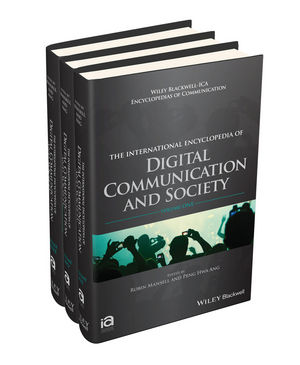
This is a pretty massive reference book (three volumes, 1296 pages) and it should include wealth of materials that is helpful if you study e.g. online gaming, social media, hate speech, or any other of the dozens of its interesting topics. The International Encyclopedia of Digital Communication & Society has been edited and written by some of the leading experts in Internet and game studies, and I am happy today to put online my small contribution – a short article titled “Mobile Games”: http://people.uta.fi/~frans.mayra/Mobile_Games.pdf. You can also access the regularly updated online version, and sample some of its contents free through this link.
The next major DiGRA conference to take place in European soil will start tomorrow in Lüneburg, Germany. There are several interesting dimensions to this year’s event, including its chosen theme on “Diversity of Play” and the research papers that highlight the multiple phenomena that bound together games, cultures and identities (sometimes in problematic, as well as constructive ways). Myself, I will be e.g. celebrating the original Level Up conference (2003; see the re-opened website), chairing the “From Game Studies to Studies of Play in Society” panel (related to our “Ludification and the Emergence of Playful Culture” research project), and talking about Finnish games and game cultures in the “Video Games Around the World” session (based on a new book of the same title). See you soon in Germany! The conference program is here: http://projects.digital-cultures.net/digra2015/files/2015/05/digra_program_final150504.pdf.
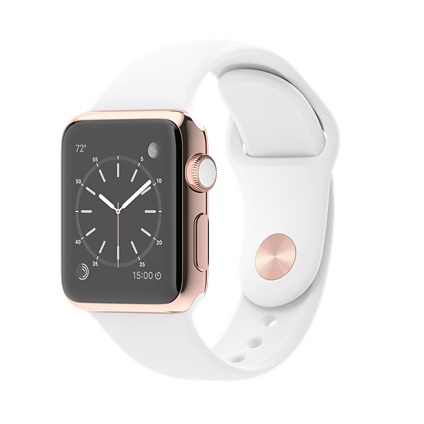
Apple Watch has been much in the headlines lately, and the leading role Apple has long had in fashionable, personal devices explains much of the hype. If Apple enters the product category, then it is ready for mainstream, the conventional wisdom goes. However, in this case Apple’s leadership is not guaranteed.
A smartwatch is possibly even a more personal and intimate device than a smartphone, if such a thing is possible. Rather than pocketed, a watch is tied to your wrist, always just a glance away from the focus of your attention. Granted, many people appear to walk around with their mobile phone constantly in their hand, but that is not the way a phone is originally designed to be used. A wristwatch, on the contrary, is meant to be worn all day long.
A wristwatch is also on your skin. It becomes really intimate part of yourself, and as it is a visible part of one’s attire, it can also be considered as a fashion accessory. Some people invest considerable sums of money to jewelry, and some prefer to make their fashion statements by investing into expensive timepieces. This is one demographic which Apple Watch is aimed at, with its 17 000 dollars top-of-the-line pricing.
One major problem with expensive smartwatches is the speed that information and communication technologies and services evolve. A one year or two years old model might already be obsolete, as it is missing support for some crucial new functionality. A classic wristwatch can be timeless in a manner that a smartwatch never can be.
Samsung Gear S
Another key issue is the service ecosystem integration. Currently there are at least three non-compatible app ecosystems that are competing of the souls (and money) of smartwatch users: Android Wear, Samsung Gear (based on Tizen, Samsung’s own Android-competitor), and the Apple Watch OS. I have personally been testing Samsung Gear S watch for some time, and while it has some arguably superior technical features (for a full list, see here), it is seriously lacking in applications that would support and integrate with key information, communication, entertainment and lifestyle services that most people are already committed into, with their smartphones, tablet devices and personal computers. Support of such services is really essential for a smartwatch to survive in the technologically overpopulated media ecology of today. Having unique content that truly benefits and interacts with e.g. the sensors and contextual information of these things (as in next generation pervasive games) will be another necessary step.
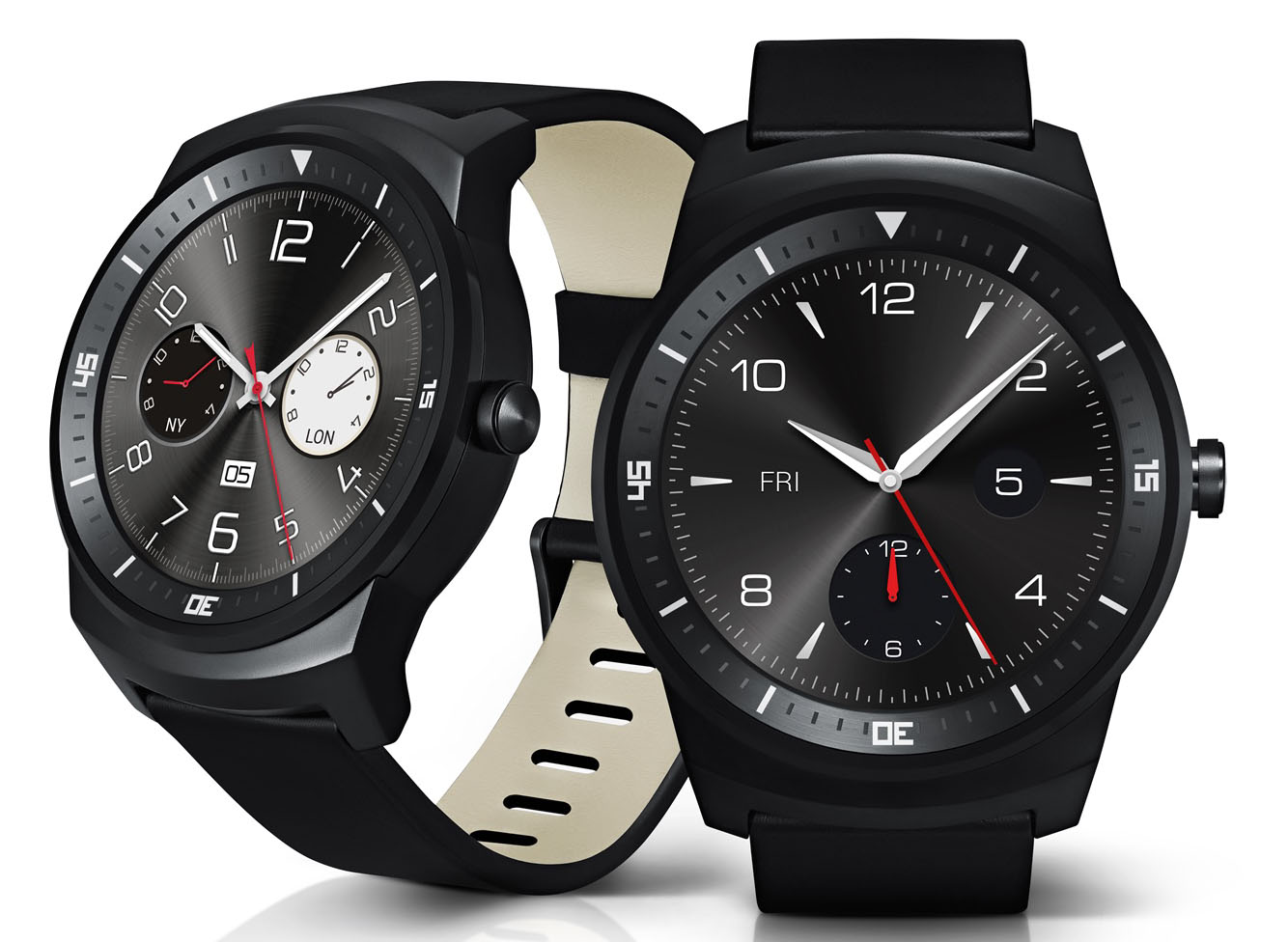
LG G Watch R
It is still too early to declare any winners in this race to colonize the virgin landscape of mainstream wearable space and associated user cultures. If some guesses can be made, though, I’d bet that Apple Watch will be doing rather well particularly in the US, where the existing user base for Apple devices has traditionally been strong, and the benefits of extending that into a smartwatch are therefore strongest. On the other hand, elsewhere I’d bet Android Wear to have advantage. This is due to the obvious benefits available for Google service users: the direct access to the wrist from Google Calendar and Google Now alerts alone is something that would be rather valuable for any busy professional of today. If all your personal and business contacts are in Google system, and you have saved all your important address points to the Google Maps, then it is natural to extend daily navigation, time keeping and communications filtering tasks to a Google-compatible smartwatch. Samsung appears to be weakest in this service integration area, and it might be a good idea for them to join forces e.g. with Microsoft with its large base of Exchange/Outlook users, as without well-integrated and highly automated access to the backbone personal data services a smartwatch is actually a pretty dumb idea.
Long in the making, this highly interesting book on ludification of culture is finally in print and available; it includes also my chapter on the culture and identity of online casual play:
Frissen, Valerie, Sybille Lammes, Michiel de Lange, Jos de Mul, and Joost Raessens, eds. 2015. Playful Identities: The ludification of digital media cultures. Amsterdam: Amsterdam University Press.
Table of Contents
1. Homo ludens 2.0: Play, media, and identity 9
Valerie Frissen, Sybille Lammes, Michiel de Lange, Jos de Mul & Joost Raessens
Part I Play Introduction to Part I 53
Valerie Frissen, Sybille Lammes, Michiel de Lange, Jos de Mul & Joost Raessens
2. Playland: Technology, self, and cultural transformation 55
Kenneth J. Gergen
3. Spiritual play: Encountering the sacred in World of Warcraft 75
Stef Aupers
4. Playful computer interaction 93
Daniel Cermak-Sassenrath
5. Playful identity in game design and open-ended play 111
Menno Deen, Ben Schouten & Tilde Bekker
6. Breaking reality: Exploring pervasive cheating in Foursquare 131
René Glas
7. Playing with bits and bytes: The savage mind in the digital age 149
Valerie Frissen
Part II Media Introduction to Part II 167
Valerie Frissen, Sybille Lammes, Michiel de Lange, Jos de Mul & Joost Raessens
8. Location-based mobile games: Interfaces to urban spaces 169
Adriana de Souza e Silva & Jordan Frith
9. The playful use of mobile phones and its link to social cohesion 181
Rich Ling
10. Digital cartographies as playful practices 199
Sybille Lammes
11. Ludic identities and the magic circle 211
Gordon Calleja
12. Play (for) time 225
Patrick Crogan
13. Playful identity politics: How refugee games affect the player’s identity 245
Joost Raessens
Part III Identity Introduction to Part III 263
Valerie Frissen, Sybille Lammes, Michiel de Lange, Jos de Mul & Joost Raessens
14. Playing out identities and emotions 267
Jeroen Jansz
15. Playing with others: The identity paradoxes of the web as social network 281
Jeroen Timmermans
16. New media, play, and social identities 293
Leopoldina Fortunati
17. Playing life in the metropolis: Mobile media and identity in Jakarta 307
Michiel de Lange
18. The conflicts within the casual: The culture and identity of casual online play 321
Frans Mäyrä
19. Afterplay 337
Jos de Mul
About the authors 347
Index of Names 353
Index of Subjects 359
If you were a techie nerd in the 80s, you might have used a Casio Databank wristwatch: a bulky device that had a small LCD screen, capable of acting as a calculator, address book, as well as a simple gaming device, while also providing advanced clock features. Those watches were (and still do) dividing user opinions, some enjoying their technically advanced, engineer-oriented pleasures, some staying as far as possible from such gadgets. With today’s focus on “smart watches” and “fitness bands”, such bulky appendices may be making a return to thousands of wrists this Christmas.
Another way of looking at these things is to consider them as the coming of the “wristwatch computer”, or manifestations of wearable, pervasive or ubiquitous computing, depending on the more general concept to adopt. As such small, “smart things” start to network and communicate with each other, they are also parts of “Internet of Things”, or “Web of Things” developments. The overall promise is of better services, which are more contextually aware, that provide information and interaction affordances in more convenient ways than the old, “PC-centric” computing paradigm has allowed. Such technologies are on the one hand inherently personal, as they connect with a trusted device (typically your mobile phone), which also may include your calendars, contact information, various social media accounts and other personalization information. On the other, they tap into new types of sensors, location-aware services and proximity beacons to provide novel services and experiences.
The futuristic promises are great, but the reality is still in the making. The current generation of smartwatches are limited in many ways, including unwieldy form factor, limited functionalities, occasional bugs, and typically rather short battery lives. The promise is nevertheless there, and many people appear to be drawn to experiment with such devices on the basis of two key functionalities: accessing smartphone alerts and information from a wristwatch, and for fitness or health information captured by the smartwatch sensors. The more advanced functionalities such as universal NFC payments, or location-based games are still waiting in the future.
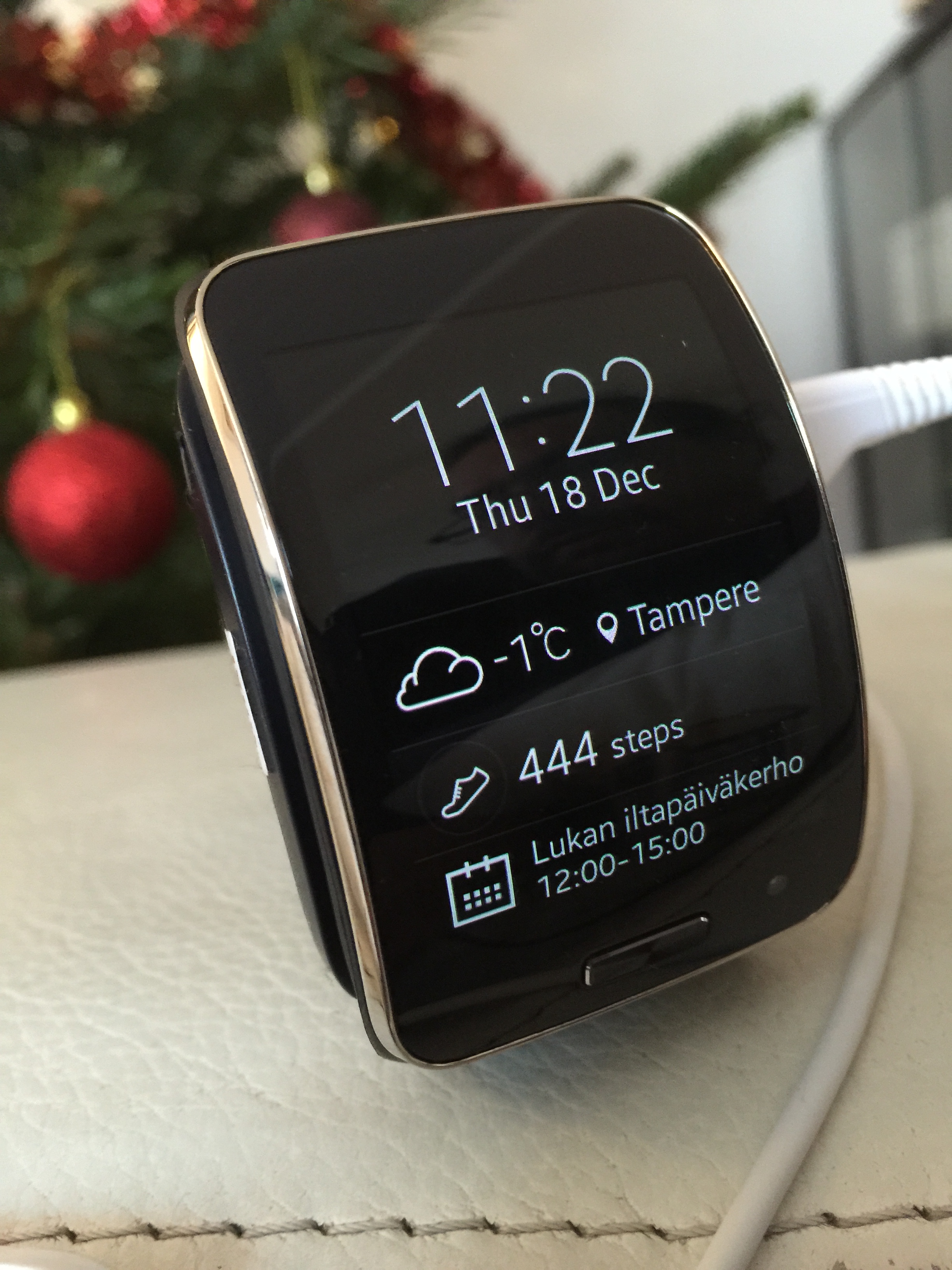
My recent experiences on smartwatches are based on setting up the Samsung Galaxy Gear S (apparently a good exercise for your faculties also while lying down with a nasty flu in bed). There are multiple hoops that an early adopter seems to need to hop through: for example, you need to have a particular type of Samsung smartphone in order to use it. Having a custom rom in the phone was also a no-go, so in my case for example, I first had to uninstall the Cyanogenmod 11 I had been using in my Galaxy S4, wipe the phone, install the stock Samsung TouchWiz rom, and after that to proceed to reinstall all my applications, set up all the user accounts and re-authenticate e.g. all two-factor authentication-enabled services – a process that can easily take several hours, and is probably btw enough to turn away few interested testers.
Galaxy Gear S
After inserting a nano-SIM card (this device can also double as a stand-alone gsm phone), and charging the Gear S, it is time to install the necessary Galaxy Gear Manager application into Galaxy S4 from Galaxy Store (this is not available from the Google Play store, even if it is an Android app), which makes it possible to install applications and customize the Gear S. The limited selection of Gear apps is one indication of the somewhat problematic, fragmented character of current wearable ecosystems. Rather than supporting Android Wear, the Google ecosystem for wearables, Gear S is based on Tizen, a different Linux based mobile OS, developed by an association of companies, led by Samsung. Next year, the Apple Watch will arrive, opening up yet another key competing ecosystem. Getting support of e.g. your Google Maps favourites and navigation to Gear S soon does not seem likely in this competitive situation, and if you are having your calendar in Microsoft Exchange 365 server, or iCloud, for example, you first need to figure out how to get that information synchronized to the smartphone that acts as the “base station” for the particular smart device you got your eyes on. Everyone is obviously adopting a gold rush tactic, and try to grab as much land in the emerging user base as possible, trying to lock the users to their own, proprietary wearable ecosystem. From the user perspective, the situation is not optimal.
Thus, while it is nice to see e.g. movement information automatically recorded by Gear S in its S Health app, I am already a user of the leading Runkeeper service, and there is no Runkeeper app in Galaxy Gear S, nor is there a way to integrate S Health data with Runkeeper that I know of. Another handy feature would be to have the daily navigational guidance right at your wrist, when you need it. I have already long adopted the habit of including location information to all my important calendar events, so that when I am on the run, one click on the smartphone calendar will automatically open maps, with navigation, helping to choose whether to walk, pick up public transport or a taxi, which is particularly handy in a foreign country or city. Google Maps is particularly good with the public transportation schedule integration, but also Here Maps (ex-Nokia) is pretty decent in this area, at least here in Finland. Gear S does not support Google Maps/navigation, but Here Maps is supported (in “Beta”). It features turn-by-turn navigation, which appears to work and is a very good service. However, while Gear S has a bright and sharp two-inch AMOLED touch screen, which makes it into a very large wristwatch, it is still painful to use for typing in an address, with the tiny QWERTY keys. It is possible to use “Send to Gear” action from the smartphone version of Here Maps, but this seems to work only for beaming the walking instructions, and the entire operation also somewhat negates what is the key idea of wearables – of not needing to dig up the smartphone in a busy situation, with the smartwatch ready in the wrist. Another way around this would be to use “S Voice” input in Gear, but as the Finnish language is not supported, there is currently no way to just speak the local address to the Gear S. While you can get your meetings’ location information displayed in Gear S by including it into the default calendar in your supported Galaxy smartphone, it does no good trying to tap that address line in Gear S, as it is not currently linked to any navigation action.
It finally boils down to practical things such as battery life and form factor of the device, as well as language and application/service support, which of the emerging smartwatches will be a real success among the users. Based on very limited, first experiences, Galaxy Gear S is a good attempt, but finally a borderline case. The plastic-covered wrist computer is so large that at least my skin gets a bit sweaty and irritated after wearing it for several hours; stylistically, the size alone might be a complete turn-off for many potential users. Getting the notifications from text messages, emails (I opted out of those), Facebook or Twitter messages, or occasional Google Now update into the wrist display are sometimes truly useful alarms, but often distracting interferences. If you already have a tendency to lose your concentration easily, the current wearables might not be for you. On the other hand, if your work life relies on following and responding to the flow of various messages and communications and calendar events quickly and efficiently, you might consider one. I have not yet used actively Gear S for a full working day, but I suspect it should make it through a day even with the clock display turned on (the default behaviour is that it is turned off to save battery, and reacts to the movement of your rising hand by lighting up – which it often did, but also failed to do often enough to become really irritating to me at least).
Our research group has been doing studies into the future user cultures of emerging game and media technologies for years, and the ethics and rationale of design is something that we try to pay special attention with. Wearable smart technology holds promise e.g. in health, social and gamification applications of various kinds, potentially communicating the social presence of our important people literally to “our skin” in real time. It can also be used to remind us to balance our lives better, or to help us achieve our important goals by supportive messages or incentives. Gear S did bring up the S Health Pedometer display every now and then while I was writing this thing, reminding me about my physical inactivity and encouraging me to get up and moving. In my case, that was not probably the most efficient rhetoric Samsung could have adopted, but maybe there will be also other, more playful and less efficiency-oriented apps available in the future. And if not in Galaxy Gear platform, then those interesting experiments will be arriving in some other. (There was one, exploration oriented “POI Nearby” style Gear app I could find, but I could not get it to understand Finnish language or place names, either.) In any case, the door for real-world pervasive computing and play applications is now starting to open.
Spread the word of this interesting conference – I am one of the keynotes and the call for papers is now open:
Welcome to the MEC 2015!
Media Education Conference – MEC 2015 (former NBE) is an informal and friendly conference which participants attend to exchange ideas and information dealing with media education, educational use of ICTs and learning environments. MEC is organized on 15-17 June 2015 in Sallatunturi with the theme In the Light of the Midnight Sun. The event organizer is the Centre for Media Pedagogy at the University of Lapland (CMP).
Keynote Speakers:
Professor Roger Säljö, Department of Education, University of Gothenburg, Sweden
Associate Dean Sandi Feaster, School of Medicine, Standford University, USA
Professor Frans Mäyrä, School of Information Sciences, University of Tampere, Finland
Important Dates and Deadlines:
Deadline for abstract submissions: 2 February 2015
Notifications of acceptance sent to authors by 16 February 2015
Deadline for paper submission of accepted abstracts: 13 April 2015
Deadline for early-bird registration: 30 April 2015
Review results notified to authors by 11 May 2015
Deadline for camera-ready papers: 29 May 2015
Please check the conference website for full details of programme, keynotes, paper submission and registration: http://www.ulapland.fi/MEC2015
Please forward this message to all the persons and organizations you think will be interested in the conference.
Looking forward to seeing you in Salla in June!
MEC 2015 Organizers
Professor Heli Ruokamo, Director, Chair
Ph.D. Päivi Rasi, University lecturer, Title of Docent
Ph.D. Mari Maasilta, University lecturer
Ph.D. Hanna Vuojärvi, University lecturer
MA (Education) Tuulikki Keskitalo, Researcher
Marja-Leena Porsanger, Conference Coordinator, Rovaniemi-Lapland Congresses, University of Lapland





 frans goes blog
You must be logged in to post a comment.