Rahapelaaminen Suomessa

[Finnish book on gambling studies] Jani Kinnusen ja minun yhdessä kirjoittama artikkeli verkkorahapelaamisen tutkimuksesta on ilmestynyt Gaudeamuksen kustantamassa Rahapelaaminen Suomessa -kirjassa (toim. Pauliina Raento):

Rahapelaaminen on tärkeä osa suomalaista politiikkaa, taloutta ja kulttuuria

Uudessa tietoteoksessa tutkijat paneutuvat peli-ilmiöön

Lauantai-iltaisin klo 20.45 suuri osa suomalaisista kokoontuu television ääreen rahapelirituaaliin. Pelit ovat läsnä arjessa ja vapaa-ajassa, ja rahapelaaminen on tärkeä osa politiikkaa, taloutta ja kulttuuria. Pauliina Raento kokosi eri tieteenalojen asiantuntijoita yhteen pohtimaan, mitä rahapelaamisesta on syytä ymmärtää 2000-luvun suomalaisessa yhteiskunnassa ja kulttuurissa. Raennon toimittama tietoteos Rahapelaaminen Suomessa (Gaudeamus 2012) ilmestyy nyt.

“Suuret rahasummat ja moraaliin ulottuvat näkemyserot yhteiskunnallisen ohjauksen suunnasta ja tavasta ovat tehneet rahapelaamisesta kiistanalaisen ja suuria tunteita herättävän aiheen”, Raento toteaa.

Rahapelejä pelataan kuitenkin päivittäin – kioskeilla, kotitietokoneilla, ruokakaupoissa, huoltoasemilla, baareissa ja ravintoloissa, kasinolla, pelisaleissa ja raviradoilla. Rahapelaaminen Suomessa -teoksen kirjoittajat lähestyvät ilmiötä monipuolisten aineistojen pohjalta. Teokseen on koottu runsas kuvitus ja suomalaisen rahapelaamisen kronologia vuodesta 1889 nykypäivään.

“Pelaamisella on suuri merkitys suomalaisen yhteiskunnan peruspalveluiden rahoittamisessa”, Raento muistuttaa. “On jo korkea aika, että käsitys rahapelaamisesta suomalaisessa yhteiskunnassa ja kulttuurissa syvenee ja alkaa ulottua lainsäädännön ja rahapeliongelmien muutosten seuraamista laajemmalle.”

Otteita teoksesta:

“[K]eskiaikaa luonnehtivat kohtalonusko ja käsitys onnen vaihtelevuudesta. Rouva Fortunaa, onnen henkilöitymää, pidettiin yleisesti oikullisena (…). Kohtalon, onnen ja pelaamisen yhteys on selvä. Esimerkiksi useassa germaanisessa kielessä kohtaloa ja arpaa tarkoittava sana on sama: englanniksi lot, ruotsiksi lott tai saksaksi Los.” (Mia Korpiola & Jussi Sallila)

“Tutkittu peluri varoi tarkasti kertomasta sivutoimestaan päätoimensa työyhteisölle eikä mielellään pukeutunut nettipokeripalvelusta saamaansa mainosteepaitaan. Virtuaalisessa pokeripöydässä hän ei kuitenkaan ajatellut moraalisia kysymyksiä, vaan keskittyi vastustajiensa voittamiseen ja siten erkani muusta arjestaan. Pelimaailmassa vallitsivat toiset säännöt kuin sitä monimutkaisemmassa yhteiskunnassa ja arjessa: pelissä joko voitettiin tai hävittiin.”  (Perpetual Crentsil & Jukka Jouhki)

“[P]oliittinen ilmapiiri on ristiriitainen suhteessa rahapelaamiseen: yhtäältä korostetaan suomalaisten monopoliyhtiöiden ‘hyviä tarkoituksia’ ja julkisia palveluja rahoittavaa toimintaa, mutta toisaalta huolehditaan rahapelaamisen aiheuttamista haitoista. Samalla rahapelaamisen sääntely ja rahapeliyritysten kilpailuympäristö Euroopassa ja koko maailmassa muuttuu nopeasti.”  (Arttu Paarlahti)

“[V]äitämme myös, että paikan ja ajan merkityksettömyyttä internet-pelaamisen aikakaudella on suuresti liioiteltu. Yksittäisen pelaajan valinnanvapaus on toki lisääntynyt ja hänen toimintansa piiri voi olla globaali ja uudella tavalla henkilökohtainen kellonajasta riippumatta, mikä on vaatinut liiketoiminnallisten ajattelutapojen ja ratkaisujen remonttia. Yksilötason yhdistäminen paikallisiin, alueellisiin, kansallisiin ja kansainvälisiin toimintaympäristöihin paljastaa kuitenkin pelitoiminnan monimutkaisia rakenteellisia sidonnaisuuksia, joita on vaikea irrottaa kulloinkin merkityksellisestä ajasta, tilasta ja sen ulottuvuuksista.” (Pauliina Raento & Lassi Härmälä)

***

Pauliina Raento (toim.): Rahapelaaminen Suomessa. Gaudeamus 2012.

Pauliina Raento työskentelee Pelitoiminnan tutkimussäätiön tutkimusjohtajana ja on vapaalla kulttuurimaantieteen professorin tehtävästään Helsingin yliopistossa. Teoksen muut kirjoittajat ovat Perpetual Crentsil, Lassi Härmälä, Jukka Jouhki, Johanna Järvinen-Tassopoulos, Matias Karekallas, Jani Kinnunen, Mia Korpiola, Riitta Matilainen, Heikki Mikkeli, Frans Mäyrä, Arttu Paarlahti, Jussi Sallila ja Tuukka Tammi.

Tilauslomake/esite löytyy täältä: http://www.pelisaatio.fi/files/ESITE_Raento_Rahapelaaminen_Suomessa.pdf

Pelitutkimuksen vuosikirja 2012

[The Finnish Yearbook of Game Studies is out!] – Tiedote:

Väärinpelaaminen kiinnostaa pelitutkijoita

Pelitutkimuksen vuosikirja 2012 on ilmestynyt sähköisenä osoitteessa

http://www.pelitutkimus.fi/vuosikirja-2012

Vuosikirjassa tarkastellaan jälleen niin pelaamisen historiaa, nykytilannetta kuin tulevaisuuttakin. Pelitutkimuksen vuosikirja on vertaisarvioitu, avoin tiedejulkaisu. Pelitutkimus on sekä monitieteinen tutkimusala että nuori akateeminen oppiaine, jonka parissa toimivien tutkijoiden huomion keskiössä on digitaalisten pelien erityisluonne. Nyt julkaistussa, järjestyksessään neljännessä vuosikirjassa, käsitellään muun muassa antiikin Rooman lautapelejä, lukijoiden ja pelilehtien vuorovaikutusta, Suomen pelipiratismin historiaa, pelien kerrontaa ja luokittelua sekä internetshakkia.

Vuosikirjassa on julkaistu artikkelien lisäksi lyhyempiä katsauksia, jotka pureutuvat esimerkiksi kilpapelaamiseen, puheentunnistusteknologiaan sekä oppimisroolipeleihin. Lisäksi vuosikirjassa on television tekstiviestipelien tekemistä koskeva muistelmakirjoitus ja kaksi kirja-arviota.

Tämän vuoden vuosikirjassa useampaa tutkijaa on kiinnostanut väärinpelaamisen ja sääntöjen venyttämisen tutkiminen. Teema tulee esille niin internetshakkia käsittelevässä artikkelissa, NHL12-peliä käsittelevässä katsauksessa kuin kirja-arvioissakin. Väärinpelaaminen voi tarkoittaa vastustajien sanallista häirintää, pelin viivyttämistä, pelin puutteiden epäreilulta tuntuvaa hyväksikäyttöä tai kiellettyjen teknisten apuvälineiden hyödyntämistä. Väärinpelaaminen tai epäurheilijamainen käytös liittyvät siis myös digitaaliseen pelaamiseen silloin kuin voittoa tavoitellaan keinoja kaihtamatta.

Pelitutkimuksen vuosikirjan päätoimittaja on professori Jaakko Suominen Turun yliopistosta. Toimituskuntaan kuuluvat lisäksi professorit Raine Koskimaa (Jyväskylän yliopisto) sekä Frans Mäyrä (Tampereen yliopisto) ja yliopisto-opettaja Riikka Turtiainen (Turun yliopisto).

Lisätietoja: Jaakko Suominen, jaakko.suominen@utu.fi

Anthology on First Person Shooters: Guns, Grenades and Grunts

A new anthology of first person shooter studies is out in the Continuum game studies series:

“The second volume of Continuum’s Approaches to Digital Game Studies series, Guns, Grenades and Grunts gathers scholars from multiple disciplines to bring the weight of contemporary social theory and media criticism to bear on the public controversy and intellectually investigation of first-person shooter games. As a genre, FPS games have helped shepherd the game industry from the early days of shareware distribution and underground gaming clans to contemporary multimillion dollar production budgets, Hollywood-style launches, downloadable content, and worldwide professional gaming leagues. The FPS has been, and will continue to be a staple of the game market.”

More: http://www.continuumbooks.com/books/detail.aspx?BookId=167841&SubjectId=952&Subject2Id=1708

Talks on Playfulness, Finnish games culture

Neitoperho/The European Peacock (Inachis Io, photo: FM, 17.8.2012)

Yesterday, Sept 17, I gave two talks, one on the concepts of playfulness and gamification, and another on the Finnish game culture. The first one was on a closed seminar where people from YLE and elsewhere planning the new Tohloppi Mediapolis initiative were looking for ideas about interesting developments in media and ICT research, and I decided to focus on the fundamentals of what makes play phenomena playful. The afternoon talk was on a seminar of Finnish Cultural Foundation, the annual meeting of trustees. I chose to talk about the history of Finnish games and play, then go quickly through the early development of computer games, some talk about Assembly and the demoscene, concluding into some reflections about the cultural characteristics of contemporary (diverse, and rather multi-dimensional) gaming and game development cultures in Finland.

New publications online

Our university has officially adopted a parallel publishing policy, and I have already since the 1990s made draft versions/author’s versions of my published articles and book chapters available online in my home pages. I have today made again some updates, making available draft versions e.g. of these publications:

  • Mäyrä, Frans (2011) ”Games in the Mobile Internet: Towards Contextual Play”. In: Garry Crawford & Victoria Gosling & Ben Light (eds.), Online Gaming: Production, Play & Sociality. New York: Routledge.
  • Mäyrä, Frans (2011) “From the demonic tradition to art-evil in digital games: Monstrous pleasures in The Lord of the Rings Online”. In: Tanya Krzywinska, Esther MacCallum-Stewart & Justin Parsler (eds.), Ringbearers: The Lord of the Rings Online as Intertextual Narrative. Manchester University Press.
  • Mäyrä, Frans, Tanja Sihvonen, Janne Paavilainen, Hannamari Saarenpää, Annakaisa Kultima, Timo Nummenmaa, Jussi Kuittinen, Jaakko Stenros, Markus Montola, Jani Kinnunen & Antti Syvänen (2010) ”Monialainen pelitutkimus”. In: Sami Serola (ed.) Ote informaatiosta: johdatus informaatiotutkimukseen ja interaktiiviseen mediaan. Helsinki: BTJ Kustannus. 306-354.
  • Mäyrä, Frans & Lankoski, Petri (2009) “Play in a Hybrid Reality: Alternative Approaches into Game Design”. In: Adriana de Souza e Silva and Daniel Sutko (eds.), Digital Cityscapes: Merging Digital and Urban Playspaces. New York: Peter Lang Publishers.

Links to the freely downloadable PDF files are available via my Publications page.

Encyclopedia of Video Games

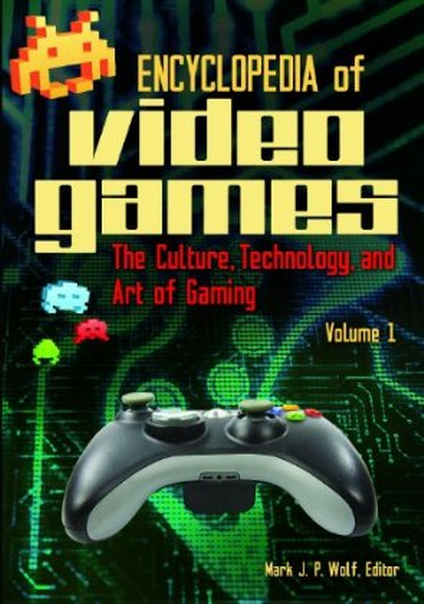
It looks like Amazon.com has now the publication date for the massive Encyclopedia of Video Games (volume one alone is 740 pages – edit: I think I this must be the total length for both volumes, but I am not totally sure). This two-volume, initially hard-cover reference book is edited by Mark J.P. Wolf, and will hopefully serve students, scholars and general public alike in providing some essential frames of reference for discussions about games cultures and scholarship in the future. I have contributed five entries to this work: “Casual Games”, “DiGRA”, “Immersion”, “Mobile Games” and “RPG”. Now available for pre-order from here:

http://www.amazon.com/Encyclopedia-Video-Games-volumes-Technology/dp/031337936X

Encyclopedia of Videogames, Vol. 1

Serious Surfaces, Playful Services

MS Surface

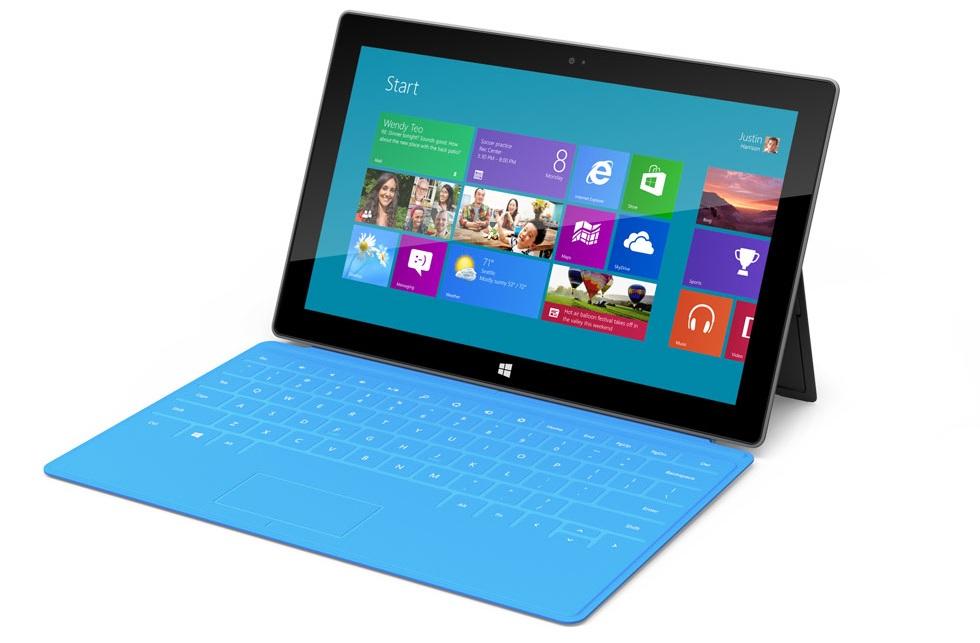
The Microsoft tablet announcement was welcome news on multiple levels. First of all, it is good to have some real competition in the future of touch oriented, mobile computing and communication devices. Apple has been dominating the field with their iPhone and iPad line of iOS devices and the Android camp, for example, has appeared to be unable to produce anything that goes beyond (or even reaches) the level of user experience and design perfection Apple has been able to achieve. It is probably necessary to have a unified vision of both software and hardware design principles to achieve real reference at this point. Now we seem to have two companies, Apple and Microsoft, that have reached that level, and the third one, Google, is forced to add the stakes, if they want to keep on the race.

Secondly, while I am an admirer and daily user of devices that belong to the Apple ecosystem (this note is written in iPad 2, using a Logitech keyboard case), they also have their shortcomings. The Apple world is very closed one: it is close to impossible to tweak the operation of software, examine the file system or make adjustments to the operating system without resorting to a cumbersome “jailbreak”. There are millions of users who are happy the way things are, of course, but if you want to seriously employ tablets, smartphones and computers in your daily work, such extra closed walls are frankly just unacceptable. Microsoft Surface tablets are part of the Windows 8 ecosystem and while I have my doubts about the hybrid Win8 interface on a traditional PC, it is clearly primarily designed for the next generation of hardware such as Surface Pro. There is some work that still needs to be done with a full desktop computer with very precise mouse and full keyboard, but it is getting more rare by the day.

My two key question marks: the first one is related to the quality of user experience, keyboard case and battery life: whether these tablets actually reach to the level where they seriously challenge ultrabook laptop computers, for example, as they appear to be priced at the ultrabook price range. The second question mark is the app ecosystem. You need to have different versions of the software for the ARM based tablet and for the Intel based one. Will the quality and diversity of applications and services be able to challenge those of Apple or Google? Time will tell. But it is good to have some options as we are moving to the world dominated by cloud computing, software as services, pervasive play and mobile computing.

Research Methodology in Gaming, S&G

Our Simulation & Gaming special issue (a “symposium”) in research methodology is now out:

A new issue of Simulation & Gaming is available online:

Symposium: Research Methodology in Gaming:
1 June 2012; Vol. 43, No. 3

The below Table of Contents is available online at: http://sag.sagepub.com/content/vol43/issue3/?etoc


Guest Editorial


Research Methodology in Gaming: An Overview

Frans Mäyrä, Jussi Holopainen, and Mikael Jakobsson

Simulation Gaming 2012;43 295-299
http://sag.sagepub.com/cgi/content/abstract/43/3/295


Symposium Articles


Social Constructionism and Ludology: Implications for the Study of Games

Markus Montola

Simulation Gaming 2012;43 300-320
http://sag.sagepub.com/cgi/content/abstract/43/3/300

Social Interaction in Games: Measuring Physiological Linkage and Social Presence

Inger Ekman, Guillaume Chanel, Simo Järvelä, J.Matias Kivikangas, Mikko Salminen, and Niklas Ravaja

Simulation Gaming 2012;43 321-338
http://sag.sagepub.com/cgi/content/abstract/43/3/321

Studying the Elusive Experience in Pervasive Games

Jaakko Stenros, Annika Waern, and Markus Montola

Simulation Gaming 2012;43 339-355
http://sag.sagepub.com/cgi/content/abstract/43/3/339

Natural Language Processing in Game Studies Research: An Overview

José P. Zagal, Noriko Tomuro, and Andriy Shepitsen

Simulation Gaming 2012;43 356-373
http://sag.sagepub.com/cgi/content/abstract/43/3/356

Players as Coresearchers: Expert Player Perspective as an Aid to Understanding Games

Kristine Jørgensen

Simulation Gaming 2012;43 374-390
http://sag.sagepub.com/cgi/content/abstract/43/3/374

Design for Research Results: Experimental Prototyping and Play Testing

Mirjam P. Eladhari and Elina M. I. Ollila

Simulation Gaming 2012;43 391-412
http://sag.sagepub.com/cgi/content/abstract/43/3/391

Rethinking Playing Research: DJ HERO and Methodological Observations in the Mix

Tero Karppi and Olli Sotamaa

Simulation Gaming 2012;43 413-429
http://sag.sagepub.com/cgi/content/abstract/43/3/413

On Finnish games research, thoughts from DiGRA Nordic 2012

“A Decade of Nordic Game Studies”, the closing panel of DiGRA Nordic 2012 was cut short a bit, so I thought I’d blog some thoughts that had not so much room there.

Raine Koskimaa, the chair of panel presented us, the Nordic representatives, with the question of “what had been the main trend in game studies, as seen from your own perspective”. Another perspective to and challenge for the panel was presented by Espen Aarseth’s preceding keynote, “Playing the Field: Game Studies 1982 – 2042”, which (among many other things) asked whether there had been any real, solid contribution of game studies so far that would stand the test of time. Espen’s vision for the future included three main alternative directions, the “Massive Multiplayer” (where large teams would join forces, e.g. in school of architecture style), “Battlefield” model where there would be very little collaboration and much conflict, and thirdly, “Game Over” model, where game studies had proved to be just a fad, and had died away.

First, to look into the history of game studies in Finland: it is obvious that the history of scholarship related to games and play is long, and can be retraced back to the work of Yrjö Hirn from 1916 (see Olli Sotamaa’s Finnish language article about this in the Finnish Yearbook of Game Studies: http://www.pelitutkimus.fi/wp-content/uploads/2009/08/ptvk2009-09.pdf). There has been multiple starts, breaks in the tradition of scholarship and then re-starts, as seems to be the situation also internationally (cf. Jesper Juul’s review of “The Study of Games” in the first issue of Game Studies: http://www.gamestudies.org/0101/juul-review/). It appears that folkloristics, educational research and developmental psychology have dealt with some aspects of play with most consistent track history in Finland. The contemporary phase of digital game studies can be traced back to the late 1980s when hypermedia and hypertext arrived to the agenda of humanities and literary studies in particular, and more substantially during the 1990s when computer and video games and digital culture became a more sustained interest of scholarship. In early 2000s the first academic positions dedicated to the study of games emerged and e.g. the Game Research Lab in the University of Tampere was established in 2002 when we organised the Computer Games and Digital Cultures conference in Tampere. DiGRA was discussed at the time and formally established in early 2003.

One can evaluate the role and character of Finnish game studies from multiple perspectives, and it is clear that at least in numerical terms the volume of game studies has increased during the years. There is no bibliography or statistical record of game studies in Finland, but looking at the situation in Tampere Game Research Lab, I can see the ebb and flow of dozens of games related, externally funded research projects (I think the total figure 35 today), where the volume rises up for a two or three of busy years, then goes down, only to be followed by some busy years again, bit later. (You can see the effect of having only one professor here: it is very hard to prepare new research projects while you are completely engaged with the on-going ones, and research staff cannot continue directly from one project to another – there will be breaks that affect the continuity.)

The contemporary game research in Finland has been highly interdisciplinary, rooted in humanities, social sciences, design research as well as in e.g. economics, computer sciences, information studies as well as in many other disciplines and research fields. One could also say that it has become rather innovative of necessity: there has been almost no research funding available to look into the established, popular forms of computer games, but it has been possible to study emerging forms such as location based mobile multiplayer games, or pervasive games in general. There has also been more funding for applied research where games and play are integrated into some practically oriented implementation, rather than for basic research that would build the conceptual and theoretical basis for game studies. There are nevertheless good examples of how one can “smuggle into” applied project research questions and approaches that lead to important “foundational” innovations in conceptual, theoretical or methodological level. Personal research grants for PhD projects have also started to make it easier to stay focused with a certain topic, approach and theoretical line of thinking for a few years at least, while completing one’s PhD in game studies.

Thus, my candidates for the terms that characterise the past decade of game studies in Finland would be ‘divergence’ and ‘convergence’: the range of interests has spread from the initial, ‘core’ concerns of what a ‘game’ is or what constitutes player experience, to work that has experimented and interpreted the workings of completely new forms of games, as well as aspects of contemporary society, culture and daily life that can be characterised as ‘ludic’ or playful. But while this expansion has been on-going, there has been also steady stream of activity that has materialised through journal and conference papers, textbooks, yearbooks, anthologies and in other forums, which has also risen the awareness about key ontological, epistemological and methodological concerns that relate to games and play. In Espen’s keynote there was a suggestion (or question) that maybe we have not made any progress in game studies at all, and I think that would be an unfair assessment. There is certainly an element in game studies that is not cumulative, particularly as there are continuous changes and developments in the technical, social, cultural and commercial forms that games take from year to year. We need new research as new phenomena emerges. But the core fundamentals of games and play have also some rather stable characteristics that make the work carried out decades ago still relevant (Huizinga, Caillois – Espen mentioned Jacques Ehrmann’s article “Homo Ludens Revisited” from 1968, and there are many other works in cultural anthropology, literary and art theory, history, psychology and sociology that are also several decades old and yet still are worth reading and becoming inspired while doing research with games and play). What are the “classic” works of Finnish game studies, it is perhaps still too early to assess.

The game scholars from Finland have been active in opening new initiatives, participating in international forums and my guess is that the work carried out in this field has made an effect in several important discussions that cut through game studies, even while it is difficult to assess using “impact factor” tools used in other fields. The extensive interdisciplinarity of game studies still makes it too easy to miss out important, highly relevant publications that are published in venues that remain hidden behind disciplinary divides. We need more work in research bibliographies, open access repositories and databases that make it possible to use several different keywords to hunt for earlier publications in selected themes. Current situation is worrisome in game studies; even the bibliography of DigiPlay Initiative was closed down some time ago, even while it is now possible to access this data using Zotero (see https://www.zotero.org/groups/digiplay). Together with Joost Raessens and René Glas we made proposal to DiGRA for initiating a working group on an international database/wiki for research oriented game studies courses and degree programs (and professors/teachers), so that both us, members of the faculty, as well as students, could find relevant academic educational activities and expertise, and promote closer international collaboration.

Thus, from the three alternative future directions that Espen offered us, I am a firm believer in the “Massive Multiplayer” one, and I think that the progress we have made with game studies in Finland, as well as internationally, suggests that this is the future where we are indeed moving towards. Yet, the weak institutional status and the thinly scattered resources make it clear that we need more structure and support in this field to meet our challenges. DiGRA can play a key role in this development in the future, but we all need also to be active in the “grassroots level”. Closer collaboration with programs that train game industry professionals is also an important direction to consider, since it is clear that there are mutual benefits that can be gained through putting “theory” and “practice” into contact in different ways. It is also clear that there is more need for people who understand game studies and work in media or game industry than there is for professors or academic researchers. One can look e.g. the structures in communication studies and think about the relation between vocational education in professional journalism and media/communication research – a relationship that of course has also its tensions and challenges, but that has nevertheless has lead into a much clearly identifiable institutional character than the combination of game studies and game development education has in the university system today.


Socio-cultural research into games

In addition to acting as the opponent to Ulf Hagen in the examination of his interesting Licentiate Thesis, “Lodestars for Player Experience: Ideation in Videogame Design”, I also made a talk in a seminar of Mobile Life Centre at the University of Stockholm in Kista, Sweden yesterday (1st June, 2012). My talk was titled “Socio-cultural research into games, play and society” and I took the opportunity to discuss the need for interdisciplinary and multi-method approach in game studies (necessarily rooted in the dual and complex character of games, I claimed), as well as for the construction of disciplinary identity in this field. My case studies were introducing experiences from game research projects we had run in the Game Research Lab at the University of Tampere. There were many really good comments and interesting discussion — I’d love to visit them again, with better time. Many thanks to Kristina Höök and Annika Waern for the invitation and for the nice event!