Scifi-tutkijayhdistys, uusi tutkimusjulkaisu

[Finnish researchers of science fiction and fantasy join forces in academic association, establish new journal] Tiedote:

Suomen scifi- ja fantasiatutkijat järjestäytyivät

10.10.2013, julkaisuvapaa heti

Suomen science fictionin ja fantasian tutkijat ovat perustaneet akateemisen yhdistyksen lajityyppien tutkimuksen ympärille. Suomen science fiction- ja fantasiatutkimuksen seura ry:n tehtävänä on edistää monitieteistä ja monialaista tieteiskirjallisuuden ja fantasian tutkimusta Suomessa. Samalla yhdistys perustaa neljä kertaa vuodessa ilmestyvän akateemisen vertaisarvioidun tiedejulkaisun Nordic Journal of Science Fiction and Fantasy Research, jonka tarkoituksena on yhdistää kentän pohjoismainen tutkimus.

”Vaikka meillä on vahvat perinteet tieteis- ja fantasiataiteen tutkimuksesta, ala on tähän asti järjestäytynyt vain epävirallisesti. Meillä on kansainvälisesti huomattavan korkealaatuinen ja aktiivinen tutkimuskenttä, mutta tutkijoilla ei ole ollut juuri mahdollisuutta julkaista tutkimuksiaan pohjoismaisella tasolla – alan artikkelit ovat hajaantuneet ympäri maailmaa alan julkaisuihin, joihin suurin osa täkäläisestä tutkijoista ei pääse käsiksi,” toteaa päätoimittaja Jyrki Korpua. ”Myös Ruotsissa, Norjassa ja Tanskassa painitaan samojen ongelmien kanssa, joten tarve pohjoismaiselle tieteelliselle julkaisulle on todella voimakas. Toimituskunta on alansa huippua ja erittäin kansainvälinen, ja tähtäimessämme onkin nostaa alan pohjoismainen tutkimus merkittäväksi osaksi kansainvälistä kenttää.”

Scifi- ja fantasiatutkimus on kansainvälisesti monialaista ja laajapohjaista. Alan verkostot ovat perinteisesti huomattavan järjestäytyneitä, ja konferenssit tapaavat keskittyä tutkimuksen yksittäisiin osa-alueisiin. Suomen tutkijaverkosto pyrkii päinvastaiseen – tarkoituksena on kerätä saman akateemisen sateenvarjon alle kentän koko kirjo. Tutkijaverkosto avaakin ovensa niin kirjallisuuden, sarjakuvien, pelien, elokuvan kuin muiden taiteiden tutkimukselle. Fantasian ja scifin tutkimuksella on Suomessa poikkeuksellisen vahvat juuret: vuosittainen Finfar-konferenssi on jatkunut jo viisitoista vuotta, ja tutkijaverkosto on tehnyt tiivistä yhteistyötä ulkomaisten konferenssien ja tutkimusverkostojen kanssa.

”Kattomme on korkealla ja seinät laveat. Scifin ja fantasian tutkimus ei ole vuosikausiin rajoittunut kirjallisuuteen, ja muilla taiteenlajeilla on merkittävä osansa tutkimuksessa. Akateemisesti katsoen tieteis- ja fantasiataiteen tutkimus on varsin poikkitieteellistä, ja juuret voivat pureutua useisiin teoreettisiin viitekehyksiin ja malleihin,” Korpua jatkaa.


Lisätietoja:

Jyrki Korpua, päätoimittaja, jyrki.korpua@oulu.fi, 050-3574024

Mika Loponen, tiedottaja, mika.loponen@helsinki.fi, 050-4033305
New Directions in the European Fantastic published

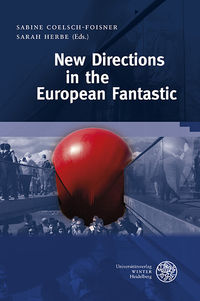
untitledThe interesting new book, New Directions in the European Fantastic (edited by Sabine Coelsch-Foisner) has been published by Winter Verlag. It includes my article titled “The Global and Local in Fantastic New Media: The Case of Finland”, which is based on the keynote I delivered in the EUROFAN conference. You can find more information about the book from these places at least:

Pervasive Media without Borders

Having spent some time travelling to the other side of the world recently, I have come to think about the role of Internet, content and technology a bit differently than before. The key lesson has been how useless the promises of various media and service ecosystems are, if you cannot access them. You might have bought access to a streaming media service that would be really useful for you and your family while you are away from your friends and family, but you cannot use it, since streaming media is just extremely expensive. Or you might go out and buy a DVD or Blu-ray, but you cannot play it on your device, since it is coming from another “Area” than that of the content you just bought. It is no matter if you try using your iTunes content, something that you could buy from Google Play, or from Microsoft – all those shiny devices and smart services are inherently fragile, dependent on whether there is an open Wi-Fi hotspot somewhere (probably with a 50 megabyte/30 minutes download cap), where you could try to make them run for a moment.

Having to admit that living with unlimited Internet broadband in a well-connected Western country definitely frames this issue as a “First World Problem”, but the lack of a global, pervasive Internet backbone is an issue larger than that. As long as our network technologies are based on high-speed access that is restricted to few urban centres, the true usefulness and radically democratizing potential of Internet and connected services remains limited at best. We need much more ambitious endeavours to get the entire planed connected: this is an issue that can be backed up by commercial, political and even ecological reasons. Establishing solid, reliable links between people living in their villages in the South and the North as well as in the East and the West, can promote local empowerment as well as global collaboration and exchange that is qualitative leap over the current situation.

Satellite data is prohibitively expensive today, but if the initiatives in this area would be given a high enough priority, there is no stopping us having a truly networked world where the global “infosphere” of sharing and communication would be available on equal basis, regardless of the geographical location.

Merry Christmas and Happy New Year to all readers of this blog!

CFP: Narrative Minds and Virtual Worlds conference, 21-22 May, 2013

Narrative Minds and Virtual Worlds
Tampere, Finland, May 21st and 22nd 2013

Call for Papers

– abstract deadline January 31st, 2013

Keynote speakers:

Marie-Laure Ryan (author of Possible Worlds, Artificial Intelligence and Narrative Theory [1991], Narrative as Virtual Reality [2001] and Avatars of Story [2006]; editor of Cyberspace Textuality [1999] and Narrative across Media [2004])

Jarmila Mildorf (author of Storying Domestic Violence [2007]; editor of Magic, Science, Technology, and Literature [2006] and Imaginary Dialogues in English [2011])

The postclassical turn in narratology has led to 1) a new emphasis on minds, both fictional and interpretative, and 2) the theoretical discovery of storyworlds. These ideas come together in cognitive-theoretically informed narratology, which is well on its way to getting to grips with the processes of immersion and readerly orientation within the storyworld, and also with perceptual positioning on the levels of storyworld, narration and the actual reading process. This conference discusses, applies and tests narratological theories of world and mind construction in different media, ranging from literature to digital games, classroom interaction and corporate communication.

The conference calls for papers from any relevant field of study addressing interfaces of minds and worlds, narrative as well as virtual. Bringing together research on different narrative and quasi-narrative media will reveal both the medium-specific and the transmedial dynamics between inner and outer worlds in narrative sense-making. For instance, the narratological notions of fictional mind construction have lately been informed by theories of spatial and temporal situatedness and its effect on the reading process. The situation of game players immersed in a virtual world involves both interesting similarities with as well as differences to more prototypically narrative environments, particularly in its prioritisation of navigation and problem-solving over empathetic identification. Furthermore, the use of shared storyworlds as foundations for transmedial franchises suggests that worlds may, indeed, be translatable.

This conference is inspired by interdisciplinary and transmedial studies of narrative as pursued by, among others, our keynote speakers Jarmila Mildorf and Marie-Laure Ryan. We welcome papers discussing general and theoretical issues, as well as papers focusing on particular texts or cases in any medium. Furthermore, papers may address medium-specificity or disciplinary boundaries as interpretative or methodological challenges. Possible topics include, but are not limited to

  • medial and intermedial construction of minds and worlds in literature and the everyday
  • adapting storyworlds from one medium to another
  • socially distributed minds in everyday conversation, narration and life stories
  • the role of fiction and narration in digital games
  • misreading virtual minds in fiction
  • fictional worlds in picture books and graphic novels
  • virtual worlds and fictional minds as tools for teaching
  • game worlds between real action and imaginary spaces
  • narrative and ludic agency in game playing
  • narrative, material and visual dimensions of organisational sense-making
  • “Theories of Mind” in different media
  • attributing minds and representing worlds in historical narratives
  • exceptional minds and bodies in fiction and the everyday
  • dream narratives as virtual worlds
  • narrative embodiment in illness narratives
  • the function of stories in marketing and brand development

Please send a 250-word abstract to Mari Hatavara (mari.hatavara[at]uta.fi) by January 31st 2013. Be sure to give the title, author(s), affiliation(s), and e-mail address in the same document.

The conference is organised by:
Mari Hatavara, professor of Finnish literature at the University of Tampere School of Language, Translation and Literary Studies
Matti Hyvärinen, professor of Sociology at the University of Tampere School of Social Sciences and Humanities
Frans Mäyrä, professor of Information Studies and Interactive Media at the University of Tampere School of Information Sciences

Culture: Losing the Sense of Wonder?

I have finally found a physical copy of The Hydrogen Sonata, the new Culture novel by Iain M. Banks (since I am a fan, I collect the paperbacks, rather than get Kindle/e-book licences). After reading a while, it became clear that this is book about Sublimation (“Heaven”), while The Surface Detail, the previous one was about Hell, and – this is pretty obvious – the one before that was about Matter.

I think I do not like these bulky, bit over-ambitious novels as much as the earlier, often quirky and surprising Science Fiction works with unabashed satirical and political undertones. The real reason might be that I have enjoyed the sense of wonder that has saturated the Culture narratives, the super-human scale and feeling that we are seeing only glimpses of mysteries that remain there at the background, unexplained. Now Banks has started to explain things – Big Things – and that is not good. Sense of wonder is gradually diminishing, even while it is still there. Is this trilogy the start of goodbyes for this particular vision of science-fictional future?

In my Demonic Texts, Textual Demons book (my PhD thesis) I touched upon this theme in the Vampire Chronicles series by Anne Rice: as the older and more powerful vampires took us towards the origin of them all, there was finally no stone turned, no sense of mystery left. You can download the relevant chapter from here: http://www.uta.fi/~frans.mayra/Demon_2005/Chapter_07.pdf.

20121128-232541.jpg

Finnish Fantasies: User-Generated Culture conference keynote

My keynote for “You, Me, User – Conference on User-Generated Culture” in Helsinki Friday 25, May, 2012″Finnish Fantasies: From Consumer to Pirate to Producer in Finnish Gaming Cultures”. My focus was on ‘fantasy’ as the impulse driving both game playing and game design and on the internal complexities, tensions and potential conflicts in the constitution this dual gamer/designer agency.

Peliväkivalta-haastattelu

[In Finnish, about games and violence debate:] Viime päivien surulliset tapahtumat ovat jälleen nostaneet pelien ja väkivallantekojen mahdollisen yhteyden esiin. Tiedotusvälineet ovat uutisoineet aiheesta eri tavoin ja olen pyydettäessä osallistunut keskusteluun. Tässä on linkki YLE Hämeen juttuun, joka on otsikoitu “Ruokkiiko väkivaltapeli tosielämän väkivaltaa?” ja jossa yritän nostaa esiin muutamia juonteita tästä monisäikeisestä aihepiiristä.

Professori Frans Mäyrä ei lainkaan hämmästy, että suomalaisten väkivaltaisia rikoksia tehneiden ja aseisiin tarttuneiden nuorten miesten taustalta löytyy tietokonepeliharrastaus. Syynä on yksinkertaisesti se, että tuon ikäryhmän nuorista miehistä lähes kaikki pelaavat. Hän olisi enemmän huolissaan niiden nuorten riskeistä, jotka eivät esim. syrjäytymisen takia pelaa lainkaan.

Hän myös myöntää, että ampumistapausten ja väkivaltaisten pelien välillä on kytkentä. Mutta ei niin että pelaaminen johtaa väkivaltaan, vaan enemmänkin siten, että aseista ja sodasta kiinnostuneet nuoret miehet valitsevat realistisia, dramaattisia ja väkivaltaisia pelejä, kuten muitakin median muotoja, vaikkapa filmejä tai sarjakuvia.

http://yle.fi/uutiset/ruokkiiko_vakivaltapeli_tosielaman_vakivaltaa/6139532

SF tutkijatapaaminen / researcher meeting 2012

Here is the CFP for this year’s science fiction and fantasy researcher meeting at Finncon (below in English):

MUUKALAISET, TULKAA KOTIIN –
XIII SCIFI- JA FANTASIATUTKIJATAPAAMINEN
Tampereella torstaina 19.7. & perjantaina 20.7. 2012

Finnconin yhteydessä järjestettävän kolmannentoista scifi- ja fantasiatutkijoiden tapaamisen teemana on muukalaisuus. Muukalaisuutta voidaan käsitellä spekulatiivisessa fiktiossa koomisesti tai kauhukuvitelmana, mutta myös analyyttisesti. Kummeksutun hahmon vieraudessa kiteytyy usein teoksen tematiikka. Tutkijatapaamiseen toivomme pohdintoja esimerkiksi siitä, millaisia ovat etniset konfliktit fantasiassa tai millaista vertauskuvallisuutta kätkeytyy tieteisfiktion alieneihin.

Tutkimuksen kohteena voivat olla kirjat, elokuvat, tv-sarjat tai muut scifiksi tai fantasiaksi laskettavat kulttuurituotteet. Toivomme saavamme tutkijatapaamiseen papereita teemaan sopivista tutkimuksista, olipa tavoitteena essee, seminaarityö tai väitöskirja. Tutkijatapaamisen erityisvieraiksi toivotaan gradu-vaiheessa olevia opiskelijoita, mutta kutsu on suunnattu tänä vuonna myös Pohjoismaisin ja Baltiaan. Paperit voivat olla joko suomeksi tai englanniksi.

Tutkijatapaamisen tavoitteena on edistää monitieteistä tieteiskirjallisuuden ja fantasian tutkimusta sekä suomalaisen tutkijaverkoston kansainvälistymistä. Työskentelyä ohjaavat tutkija Irma Hirsjärvi (JY), prof. Liisa Rantalaiho (TaY), prof. Frans Mäyrä (TaY), tutkija Sofia Sjö (Abo), tutkija Merja Leppälahti (TuY), sekä tutkija Paula Arvas (HY).

Lähetä 500 sanan abstrakti aiheestasi 27.4.2012 (huom! korjattu päivä) mennessä Word- tai RTF-tiedostona osoitteeseen csmaso [at] uta.fi. Väitöskirjaan tai sitä seuraavaan tutkimukseen liittyvien papereiden toivomme olevan englanniksi. Lähetämme tiedon hyväksymisestä ja jatko-ohjeet 21.5. mennessä. Itse seminaariin toivomme 4-8 sivun paperia kultakin. Mikäli osanottajien määrä antaa myöten, käsitellään papereita myös teeman ulkopuolelta. Huom! PORTTI-lehti on tarjonnut joillekin papereille mahdollisuuden tulla julkaistuiksi artikkeliksi muokattuina (http://www.sci.fi/~portti/).

Järjestäjät:
FINFAR – Finnish Network of Fantasy Research ja Finncon (2012.finncon.org/).
Koordinaattori: Markku Soikkeli (csmaso [at] uta.fi)

ALIENS, COME HOME –
THE 13TH SEMINAR OF SCIENCE FICTION AND FANTASY RESEARCH IN FINLAND
Tampere, 19th and 20th July, 2012

The 13th Seminar of Science Fiction and Fantasy Research in Finland will take place in Tampere in connection with Finncon 2012, and for this year’s seminar we wish to invite papers on the general theme of the alien. In speculative fiction the alien can be anything from a comic element to a vision of horror, but it can also be approached in an analytical fashion. Often the theme of a particular work will coalesce in how it represents the odd, the alien and the strange. We are looking forward to seeing papers exploring, for example, the representation of ethnic conflicts in fantasy, or the symbolism of alien beings in science fiction.

The research may be based on literature, movies, TV-series and any other cultural product in the wide field of science fiction and fantasy. Various kinds of papers are welcome: essays, academic seminar papers, parts of dissertations etc. The papers may be in either Finnish or English.

The aim of the seminar is to promote Finnish multidisciplinary research on science fiction and fantasy and to enhance the internationalization of the Finnish research network. Teachers of the seminar are researcher Irma Hirsjärvi (Univ. of Jyväskylä), prof. Frans Mäyrä (Univ. of Tampere), prof. Liisa Rantalaiho (Univ. of Tampere), researcher Sofia Sjö (Åbo Akademi), researcher Merja Leppälahti (Univ. of Turku), researcher Paula Arvas (Univ. of Helsinki).

The deadline for an abstract of 500 words is 27.4.2012. It should be sent by e-mail, preferably in Word- or RTF-format to the address csmaso [at] uta.fi You will receive a message about the acceptance of your paper and further info by 21.5. For the seminar we wish to receive a presentation of 4-8 pages of your research. Dissertation articles or post-graduate research papers should be in English if possible. When the number of participants allows, papers will also be accepted outside the theme.

Organizers: FINFAR – Finnish Network of Fantasy Research and Finncon 2012
Coordinator: Markku Soikkeli (csmaso [at] uta.fi)

Portti-kilpailun tulokset 2011

(The Portti science fiction short story awards were given out yesterday)

Portin Tieteis- ja fantasianovellien kirjoituskilpailu 2011:n tulokset

1. palkinto, 2000 e: Anne Leinonen (Ristiina) novellista “Oliverin kirja”
2. palkinto, 700 e: M.G.Soikkeli (Tampere) novellista “Luottokoira
vain sinun rakkaudellesi”

3. (jaettu) palkinto 300 e: Tuomas Saloranta (Helsinki) novellista
“Musta tähti”

3. (jaettu) palkinto 300 e: Marika Riikonen (Tampere) novellista
“Pedot liikkuvat pimeässä”

Kunniamaininnan ja 100 e saivat seuraavat kirjoittajat:

Tommi Heikkinen (Espoo), novelli “Pariisiin”

Sarianna Kankkunen, novelli “Maaseudun tulevaisuus”

Anna Malinen (Espoo), novelli “Marras”

Kaisa Muhonen (Tampere), novelli “Portilla”

Anni Nupponen (Tampere), novelli “Rastas”

Markku Pietikäinen (Helsinki), novelli “Tunkeutujat”

Mari Saario (Piikkiö), novelli “Verisiskot”

Jaakko Markus Seppälä (Raahe), novelli “Leipä”

Jaakko Markus Seppälä (Raahe), novelli “Lady Lemen”

Ja BU-listalle pääsivät seuraavat nimimerkit:
Aino M, Ang Pangalan Mo, Hallanvaara, Hirvas J, Hukka, Ihannus, Kara
Viljos, Mangusti, Marianne M., Moreau, Nemo, P. Schwarzschildov, Pieni
kivi, Platon, Proxy, Rocky, Rokkit, Turisti, Tähdikki, 10000.

Onnittelut – congratulations!

Totoro

Totoro
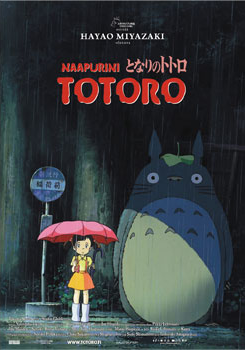
Naapurini Totoro

I watched My Neighbour Totoro today with my boys (all three of them, while the youngest had some troubles in concentrating, he is only 5 months old). I sometimes wonder how does it affect your imagination and perception of the world to have access to such nuanced, beautiful works of fantastic art from very early age. I was reading Famous FIve by Enid Blyton and then, at the age of seven, was watching Batman (the campy tv series) and Thunderbirds doll animations from Finnish, black-and-white television. No wonder I grew up to become a gadget geek.

I should write more of Hayao Miyazaki’s work some time. I mentioned it briefly in my 2009 talk, and the related short paper, Japanese Fantasy and the East-West Dialectic (2010), but watching how traces of Eastern Shintoism mix freely with the great tradition of fantastic imaginary and storytelling (elements folk tales, even Alices Adventures in Wonderland are evident in Totoro), there is so much more to be said.