Google Glass: quick impression

Google Glass
Google Glass

Today I had a chance to do a very quick test of Google Glass in local PC/tech store. The situation was hardly optimal for any real user testing, but at least this was a possibility to try on this coveted/hated device. Despite its largish frame, the eyewear is actually rather light and easy to carry. The screen (when you finally get it in your field of vision, it requires some adjustment first) is bright and sharp enough and seems to float up there, few virtual meters away. My main frustration was with the voice control: I kept on repeating “Ok Glass”, but at least this model requires that you first activate the specs through the touchpad in the right side, navigate into the correct menu mode, which displays the time of clock and the text “Ok Glass”, and it is only after this when you can give voice commands (e.g. “take photo”, “record video”, “google University of Tampere” – which actually produced wikipedia entry for “University of Tampa” – close enough…) This is not good, and I hope this was only a feature of some out-of-date firmware (?) Otherwise, I cannot see it as very convenient to use your hand to flip through the menus (displayed in a tiny, semi-transparent floating screen) in order to get into mode where you can “naturally” enter commands. Also, the voice output from Glass was at such low level that it was almost impossible to hear anything at the noisy store environment.

Ok, Glass. Interesting, but we will have a closer look again at some future event.

CFP: From “Traditional” Games to Digital Games

*Version française à la suite de l’appel en anglais*


 Call for papers

International Conference

From « Traditional » Games to Digital Games

26, 27 & 28 November 2014

IUT Nancy Charlemagne, 2 TER BD Charlemagne, 54000 Nancy, France

University of Lorraine, CREM (Centre for Research on mediation)

Since the early 2000’s, the importance of studying digital games has increased to take a significant place in the academic literature dedicated to entertaining phenomena, to such a point that many articles offering to make an inventory of current “game studies” primarily focus on work related to games on this media (Rueff, 2008, Zabban, 2012). In fact, if current digital games are the topic of many conferences, books and magazines, discussions on non-digital games seem less present, even though they constantly develop. Yet, for more than a century, researchers from multiple disciplines have occasionally contributed to the understanding of these more “classical” games. In the field of Mathematics and Economy, for instance, this work brought forth the famous game theory (von Neumann & Morgenstern, 1944, Nash, 1951). Mention can also be made of anthropological and sociological discussions led by Johan Huizinga and Roger Caillois, which are still references. Similarly, since the 80’s, role playing games (Caira, 2007, Bowman, 2010), wargames (von Hilgers, 2008 Sabin, 2012) and board games (Schädler, 2007, Hinebaugh, 2009) gave rise to frequent publications.

In this context, we cannot ignore the fact that work aimed at conceiving and studying digital games is also regularly referred to as reflections on (non-digital) “traditional” games, whether to build their theoretical framework (Frasca, 2001; Salen&Zimmerman, 2004), or to conduct comparative and contrastive studies (Trémel, 2001). According to us, this kind of mutual lighting encourages researchers to examine the peculiarities and complementarities of the two areas, as well as the theoretical interest of connecting or of confronting them. Therefore, in order to analyse the relations established between “traditional” games and digital games, this call is divided into five themes that give a broad overview of the different kinds of possible links. All types of research, fundamental or applied, as well as disciplinary approaches are welcome. They can be part of one of the five themes listed below (non-exclusive).

1. Adapting games: complementarities and structural or thematic differences

Since the first computers were introduced, traditional games have consistently been adapted (scrabble, chess, card games, pinball machines, etc.), it is not uncommon today to see reverse adaptation (Angry Birds, Doom, World of Warcraft, etc.). In a way or another, these adaptations bring forth the issue of processes shaping the rules, but also the issue of fictional universes in order to take into account the specificities of the support. We will consider in particular:

  • similarities or dissimilarities of entertaining mechanisms of interactions through an adaptation,
  • shaping of temporal aspects of the game (time, time management, representation of time , etc.)
  • management of spatial aspects (space representation, playground)
  • different types of universes games make reference to, as well as the singularity of their formatting depending on the support,
  • narrative mechanisms implemented
  • changes to accompanying sounds or music in the games

2. Paratexts and paraliterature in games

In the digital game, just like in the traditional game, the paratext occupies a central place in the (aesthetic, cognitive) apprehension of the object. The notion of paratext should be understood in the broad sense, covering for example, arcade cabinets, box illustrations for video games, but also manuals and rule books, publications (amateur or professional), or even novels derived from entertaining universes. What is the result of connecting video games’ paratext to more traditional games? We shall therefore particularly focus on the following:

  • games as a literary subcategory (rule book of a game, novels from a game, strategic analysis book of a game and its gameplay, etc. . )
  • analysis of specialized press (magazines and newspapers targeting a certain category of games)
  • objects with a speech on the game (game boxes, rules and game support, goodies, websites, forums, etc. )
  • promotional communication of games
  • etc.

3. Values ​​and rhetoric of games

From traditional to digital games (or vice versa), what are the continuities and changes made ​​in terms of rhetoric and values? If the notion of procedural rhetoric is common in the analysis of the transmission of a speech about the world through the video game, is it transposable as such for non-digital games? These questions encourage exploring the similarities and differences of digital and traditional games on:

  • analysis of the speech developed by game
  • rhetoric of pictures embedded in games
  • evolution of values ​​proposed by games over time
  • study of worldviews conveyed by games
  • analysis of the existing relationships between sports and e- sports,
  • etc.

4. Design logic, play logic, public

It relates to the organization of the game development and its public (those ones that are mentioned, or imagined, during the design phase, those who practice, etc). What are the features and the similarities between the design and the acceptance of traditional games and digital games? What are the radical changes in the process of designing a digital game vs another kind of game? Is their public apprehended the same way? Are these two broad categories of games received in an equivalent manner? How do their specific editorial and commercial constraints structure their content? Proposals on these topics will explore the connections and the differences that define traditional games as well as digital games regarding:

  • the design process
  • reception and appropriation approaches
  • game categories and sociocultural categories of players
  • editorial and commercial constraints
  • etc.

5. Application and game diversions

With respect to traditional as well as in digital games, entertaining events have always been implemented in multiple sectors. But is the feature creep of a digital game more efficient than the misappropriation of a traditional game? In the context of a serious application, when should a traditional game be implemented in digital format or vice versa? In either case of adaptation, what are the benefits or the drawbacks to consider? Proposals on this theme should aim at determining contributions, failures, successes in the transition from traditional games to digital games, when we use it for another function than leisure. We can focus on:

  • support to acquisition of knowledge and strategic decision making
  • creation and innovation
  • support to mediation and remediation
  • support to communication and promotion
  • education and training
  • etc.

Keynote speaker: Espen AARSETH, Principal Researcher, Center for Computer Games Research (IT University, Copenhagen).

We are happy to announce Espen Aarseth as keynote speaker during the conference. Espen Aarseth is an international reference in the field of game studies. He is co-founder and chief editor of the GameStudies.org journal; the first international journal devoted entirely to digital games. He is also author of Cybertext: Perspectives on ergodic literature (Johns Hopkins UP, 1997), he was a pioneer in analysis of digital literature and the comparative approach between video games and other forms of expression.

Selection Process

The conference will be held on Nancy on 26, 27 & 28 November 2014, in Nancy.

Proposals are expected by 15 April 2014. They must be sent in the form of an abstract of 5000-6000 typefaces (without spaces, excluding bibliography), specifying the conceptual framework, methodology and the field of study. Each proposal shall also indicate the last name, the first name, the status and the institution the author is affiliated to.

Proposals should be sent to:

Stephane.goria@univ-lorraine.fr and sebastien.genvo@gmail.com

Proposals will be anonymously assessed by the scientific committee (notification of acceptance June 2014).

The selected authors will have the possibility to submit their full-text that will be “double blind” assessed for publication. A publication as a special issue of Kinephanos.ca, online journal, will follow after the conference for the proposals in english. For the proposals in French, a publication as a special issue of Sciencesdujeu.org, online journal, will follow after the conference.

Conference languages ​​are French and English.

Bibliograhy

Bowman, Sarah Lynne (2010), The Functions of Role-Playing Games: How Participants Create Community, Solve Problems and Explore Identity, McFarland & Company, London, 208 p.
Caïra, Olivier (2007), Jeux de rôle : Les forges de la fiction, CNRS Editions, Paris, 312 p.
Frasca, Gonzalo (2001), Videogames of the oppressed : videogames as a mean for critical thinking and debate, Master Thesis, Georgia Institute of technology.
Hinebaugh, Jeffrey (2009) A board game education, Rowman & Littlefield Publishing group, Lanham, 223 p.
Morgenstern, Oskar & Von Neumann, John (1944) Theory of Games and Economic Behavior, Princeton University Press, 1944, Princeton, 641 p.
Nash, John (1951) « Non-cooperative games », Annals of Mathematics, vol. 54, p. 286–295.
Rueff, Julien (2008), « Où en sont les « game studies » ? », Réseaux 5/2008 (n° 151), p. 139-166.
Sabin, Philip (2012) Simulating war: studying conflict through simulation games, Continuum International Publishing Group, London, 363 p.
Salen, Katie & Zimmerman, Eric (2003), Rules of Play: Game Design Fundamentals, MIT Press, Cambridge, 688 p.
Schädler Ulrich (2007), Jeux de l’humanité : 5000 ans d’histoire culturelle des jeux de société, Slatkine, Genève, 222 p.
Trémel, Laurent (2001), Jeux de rôles, jeux vidéo, multimédia, les faiseurs de mondes, Paris, Presses universitaires de France.
Von Hilgers, Philipp (2008), War games: a history of war on paper, MIT Press, Cambridge, 220 p.
Zabban, Vinciane (2012), « Retour sur les game studies. Comprendre et dépasser les approches formelles et culturelles du jeu vidéo », Réseaux 3/2012 (n° 173-174), p. 137-176.

Organizing Committee 

David BUCHHEIT (Université de Lorraine, CREM laboratory),
Delphine BUZY (Université de Lorraine, CREM laboratory),
Victor CAYRES (Federal University of Bahia),
Laurent DI FILIPPO (Université de Lorraine, CREM laboratory),
Sébastien GENVO (Université de Lorraine, CREM laboratory),
Stéphane GORIA (Université de Lorraine, CREM laboratory),
Catherine KELLNER (Université de Lorraine, CREM laboratory),
Josette LINDER (Université de Lorraine, CREM laboratory),
Alain MULLER (Université de Lorraine, CREM laboratory),
Emmanuelle SIMON (Université de Lorraine, CREM laboratory),
Pauline THÉVENOT (Université de Lorraine, CREM laboratory),
Vincent THOMAS (Université de Lorraine, LORIA laboratory).

Scientific committee

Espen AARSETH, Principal researcher, IT University of Copenhagen, Denmark,
Lynn ALVES, Professor, State university of Bahia, Brasil,
Alexis BLANCHET, Professor, University of Paris III, France,
Vincent BERRY, Professor, University of Paris XIII, France,
Gilles BROUGERE, Professor, University of Paris XIII, France,
Sébastien GENVO, Professor, Université de Lorraine, France,
Bertrand GERVAIS, Professor, Université du Québec à Montréal, Canada,
Stéphane GORIA, Professor, Université de Lorraine, France,
Catherine KELLNER, Professor, Université de Lorraine, France,
Pascaline LORENTZ, postdoctoral fellow, Masaryk University, Czech Republic,
Frans MÄYRA, Professor, University of Tampere, Finland,
Luís Carlos PETRY, Professor, Pontifical Catholic University of São Paulo, Brasil.

Extension: DiGRA 2014 CFP

(Please spread) In an attempt to accommodate requests by DiGRA members, we are extending the Call for Participation. We will be accepting papers, abstracts, panels, and additional submissions, see below, until February 24th.

DiGRA 2014 is being hosted by the University of Utah’s EAE program and will be held in the Wasatch Mountains at Snowbird Ski & Summer Resort from August 3rd-6th. The location is scenic, secluded, economical, and within easy access of Salt Lake City’s International Airport. We believe it offers a unique setting in which to explore games, and the blanks in games research.

To such end the theme of DiGRA 2014 is a phrasal template: <Verb that ends in ‘ing’> the <noun> of Game <plural noun>

For DiGRA’s 2014 Conference we playfully emphasize work that explores non-traditional questions, peers between the cracks of areas that are starting to become well-worn, and revisits old themes from new perspectives. In other words, what has been overlooked or otherwise not given the care and respect it deserves? A Mad Lib is a word game in which one player asks another for nouns, verbs, and other parts of speech with little or no context. They then proceed to fill in the blanks of a phrasal template to often humorous and sometimes profound results. As game scholars we have worked hard to figure out what were the most important blanks. However, at this, the seventh DiGRA conference, we invite you to point out the blanks that have yet to be filled. Your answers to our Mad Lib theme could highlight the profound, sublime, or humorous. We encourage you to trying working the theme into the title of your work.

Conference Website:  http://digra2014.eae.utah.edu/

TRACKS
———-

DiGRA aims at being a venue for game research from all research disciplines. In line with this, it accepts and encourages submissions on a wide range of subjects including but not limited to:

•    Game design: design techniques, practices, methods, post mortems, etc.
•    Game criticism and analysis: close readings, ontologies and frameworks, historical studies, philosophical explorations, and other humanities-informed approaches
•    Play studies: studies of play, observations and interviews of players, and research based on other methods from the social sciences
•    Game technology and production: case studies of experimental game technologies, evaluations of existing systems, and studies of game production processes
•    Applications and uses of games: inquires in serious, documentary games, games for health, gamification, games education, teaching and learning.

Due to the interdisciplinary nature of the DiGRA conference, authors and reviewers alike will be required to describe their research background and field of study. The intention for this is to help reviewers be conscious of when they are reviewing work outside their own field as well as making clear the proportions of contributing fields.

For more information, visit the conference website: http://digra2014.eae.utah.edu/

Formats
———–

Submit a paper or an abstract?

DiGRA 2014 supports two different categories for submitting research; full papers (no more than 16 pages) and abstracts (up to 1000 words including references). The structure reflects the cross-disciplinary nature and different conference traditions of the conference attendants. A full paper submission is recommended for completed research work, in particular empirical or technical work. The abstract format is suitable for discussion topics and ideas. Both papers and abstracts are subject to a double-blind review process, and get equal time for presentation and discussion during the conference.

Accepted full-length submissions will be uploaded into the DiGRA digital library after the conference. Both papers and abstracts will be available from the conference web site, and authors of abstracts may submit a full-length text. Do however note that abstracts, and full-length texts written post conference will not be uploaded to the DiGRA digital library. Finally, both selected articles and full-length texts may be invited for re-publication in the DiGRA journal ToDiGRA.

SUBMISSION DEADLINES
———————————

Submissions site: https://www.easychair.org/conferences/?conf=digra2014

Full papers:
•    No more than 16 pages
•    Will be published on the conference website
•    Will be published in the DiGRA digital library
•    Submission template: here
•    Submission deadline: February 24, 2014
•    Notifications of decisions: March 21, 2014
•    Rebuttal deadline: April 1, 2014
•    Notifications of final decisions: April 15, 2014
•    Revised submission deadline: May 15, 2014 (camera ready)

Abstracts:
•    No more than 1000 words, including references
•    Will be published on the conference website
•    Will not be published in the DiGRA digital library
•    Submission deadline: February 24, 2014
•    Notifications of decision: March 21, 2014
•    Full text submission deadline: May 15, 2014

Panels:
•    Proposal: no more than 1000 words, including references
•    Will not be published in the DiGRA digital library
•    Submission deadline: January 31, 2014
•    Notifications of decision: March 21, 2014
•    Full text submission deadline: May 15, 2014

Workshops:
•    Proposal: no more than 1000 words, including references
•    Indicate full or half day (Workshops will take place August 3, 2014)
•    Contact details of organizing committee
•    Will not be published in the DiGRA digital library
•    Submission deadline: February 24, 2014
•    Notifications of decision: March 21, 2014
•    Full text submission deadline: May 15, 2014

Conference event submissions, filling in the blanks of DiGRA 2014:

DiGRA 2014 understands that no call can accommodate all types of research. We believe that there is excellent research and scholarship happening in the spaces between the formats we traditionally offer. We are happy to consider submissions not listed above, for example tutorials, performances, or an experimental session. Many participants in the past have asked, “why don’t they do a blank” at DiGRA. This is an invitation to fill in the blank.

A conference event proposal can be at most 1000 words long and should provide justification for the event, describe the required time and resources, and provide names and backgrounds of the organisers.

•    Submission deadline: February 24, 2014
•    Notifications of decision: March 1, 2014

Submissions to conference events
For conference events that issue their own calls, deadlines should conform to this schedule.
•    Events Submission deadline: April 15, 2014
•    Events Notification date: May 15, 2014

Program Chairs
———————
•    Staffan Björk, University of Gothenburg, Sweden (staffan.bjork@gu.se)
•    Annika Waern, University of Uppsala, Sweden (annika.waern@im.uu.se)

Conference Chairs
————————-
•    Roger Altizer, University of Utah, USA (roger.altizer@utah.edu)
•    Jose Zagal, University of Utah, USA (jose.zagal@utah.edu)

Program Committee
—————————-
TBA

Venue
——–
Snowbird, Utah – http://www.snowbirdmeetings.com/

CFP: Nordic Digra 2014

lankoski's avatarPetri Lankoski

Games are becoming more and more pervasive in our everyday life. Gamification and game-based learning are research topics that are blooming. Games are also used in electioneering.

We invite submission for full papers and for workshops. Topics of interest include, but are not limited to:

– gamification
– games in society
– games and learning
– games as propaganda
– persuasive games
– games in teaching
– critical stances to gamification and game-based learning

IMPORTANT DATES
– Full paper submission and workshop proposals March 30, 2014
– Notification of acceptance: April 25, 2014
– Camera ready May 18, 2014
– Conference: May 29-30, 2014

SUBMISSIONS

Papers submitted are subject to peer review.

Long papers should be 8 to 12 pages in Digra format (http://todigra.org/public/journals/1/DiGRAJournalPublicationFormat.dotx) . For detailed information see Submission page. Selected papers will be published in conference site as well as at Digital Library of Digital Game…

View original post 42 more words

Quantified Self & Withings Pulse

Withings Pulse
Withings Pulse

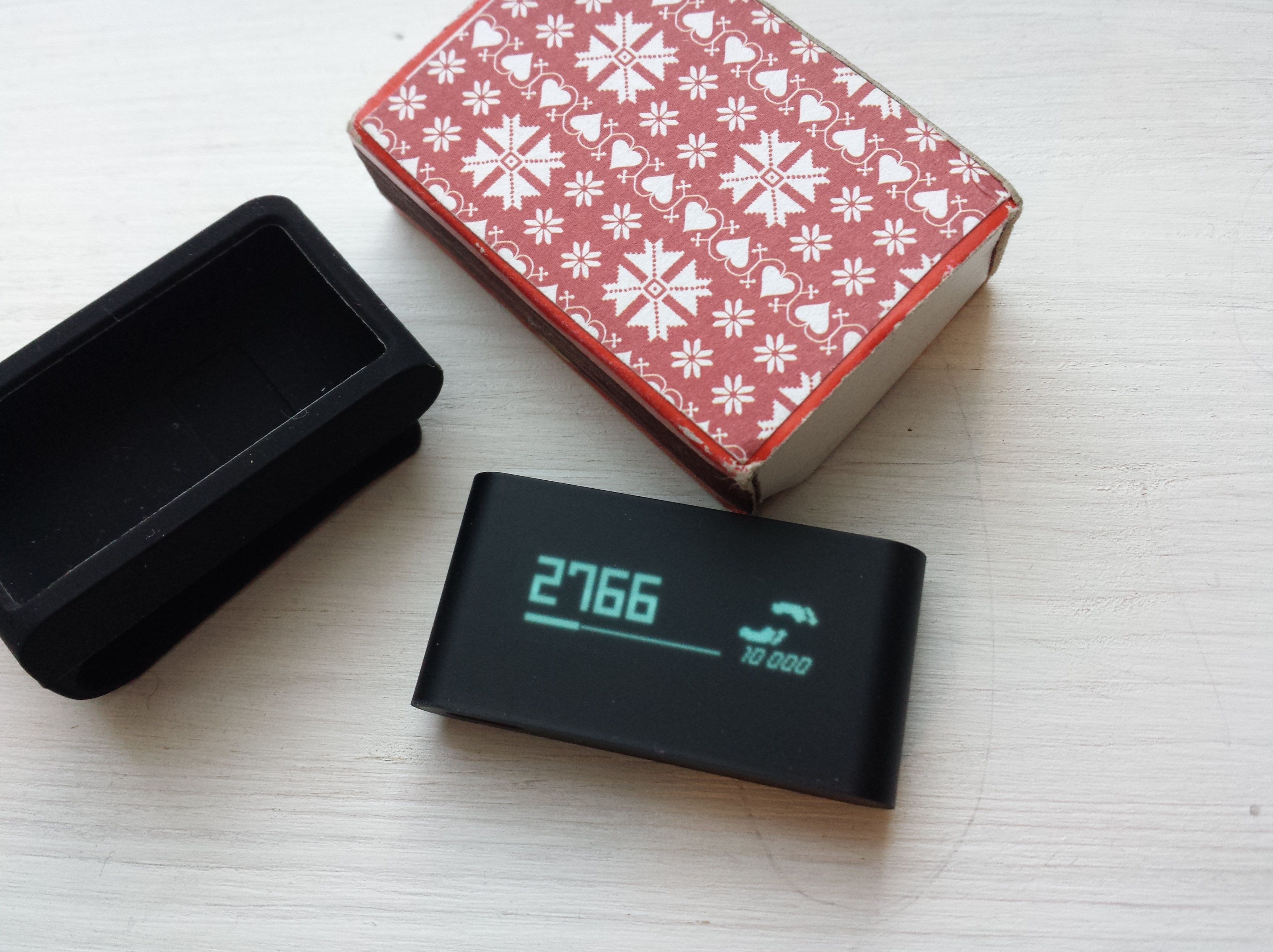
Pictured: Withings Pulse device, smaller than a third of a matchbox. – I have had my doubts about the “Quantified Self” movement (or just a vogue), but there are also some promising aspects in the concept of increasing information and awareness about your health and fitness. The obvious downsides include the potential for increased self-focus, obsession, stress, and data deluge. The (gamification-style) counter-argument is that when you get clear and immediate feedback on the relevant aspects of your life, it becomes more motivational, and it becomes easier to cajole yourself into doing stuff that you’d really want to do, in the first place.

Withings Pulse is the device that I am testing at the moment. Small, 8 gram marvel of miniaturization, it has sensors to measure movement, elevation, acceleration and many similar things — it even has a heart rate monitor that can be used to capture heart beat values every now and then — and connects via bluetooth to the smartphone app few times a day so that you can get nice, illustrative graphs and stats from the free Withings app. Withings is one part of the mushrooming new health data industry, with scales, blood pressure monitors, baby monitors as well as activity trackers in its connected-devices ecosystem. For a user, the crucial question is how well the supposed use style of these smart things actually fits with one’s lifestyle. Simply carrying the passive measuring device in your pocket is not too much a burden, but in order to fully benefit from this technology, one really should regularly start and stop the sleep recorder, step to the smart scale for body monitoring, then remember to set the relevant apps and sensors in the correct configuration, depending on whether one is following a particular training program, or just tries to see how many steps one takes during a regular working day.

It is perhaps too early to say how mainstream these technologies will become, in the end. But I see signs of a science-fictional future emerging: one where we are constantly getting readouts about the (previously pretty opaque) internal doings of our bodies, and personal health assistants alarming us in good time before any life threatening issues have time to develop. It is important also to keep track on how the individual freedom, protection of privacy and the voluntary character of such, highly sensitive data collection will work out in the future “culture of transparency”.

Link, Withings Pulse web page: http://www.withings.com/pulse

CFP: Fafnir – Nordic Journal for Science Fiction and Fantasy Research

Please circulate this CFP (I am at the journal advisory board representing game studies related themes):

CALL FOR PAPERS 2/2014

Fafnir – Nordic Journal for Science Fiction and Fantasy Research invites authors to submit papers for the upcoming edition 2/2014.

Fafnir – Nordic Journal for Science Fiction and Fantasy Research is a new, peer-reviewed academic journal which is published in electronic format four times a year. The purpose of Fafnir is to join up the Nordic field of science fiction and fantasy research and to provide a forum for discussion on current issues on the field. Fafnir is published by FINFAR Society (Suomen science fiction- ja fantasiatutkimuksen seura ry).

Now Fafnir invites authors to submit papers for its next edition, 2/2014. Fafnir publishes various texts ranging from peer-reviewed research articles to short overviews and book reviews in the field of science fiction and fantasy research.

The submissions must be original work, and written in English (or in Finnish or in Scandinavian languages). Manuscripts of research articles should be between 20,000 and 40,000 characters in length. The journal uses the most recent edition of the MLA Style Manual. The manuscripts of research articles will be peer-reviewed. Please note that as Fafnir is designed to be of interest to readers with varying backgrounds, essays and other texts should be as accessibly written as possible.

The deadline for submissions is 28 February 2014.

In addition to research articles, Fafnir constantly welcomes text proposals such as essays, interviews, overviews and book reviews on any subject suited to the paper.

Please send your electronic submission (saved as RTF-file) to all three editors at the following addresses: jyrki.korpua@oulu.fi, hanna.roine@uta.fi and paivi.vaatanen@helsinki.fi. For further information, please contact the editors.

This edition is scheduled for June 2014. The deadlines for the submissions for the next two editions are scheduled at 31 May (3/2014) and 31 August (4/2014).

Best regards,

Jyrki Korpua, Hanna-Riikka Roine and Päivi Väätänen
Editors, Fafnir – Nordic Journal for Science Fiction and Fantasy Research

Contextual apps

S4 with the Cover app lock screen

There are digirati who claim that the era of contextual apps and services is here and that it will transform our daily lives (the recent, app-cataloguing book Age of Context by Robert Scoble and Shel Israel is one example). Since the mobile media experimentation and development really took off in the late nineties, there has been much talk and few real breakthroughs in this area. However, some recent developments have brought the “contextual revolution” a bit closer to reality. Particularly all the information industry giants like Google and Apple are collecting is making it easier to use algorithms and sensor data to identify various locations and provide estimates on what the user would be interested in doing in that particular spot. I have been test driving e.g. Cover, the contextual lock screen app, and Aviate, the contextual home screen app (currently in beta) in my Android device (Samsung Galaxy S4). While there is obvious promise in making the mobile operating system and user experience more adaptive, providing the most used applications in my particular locations seems still a bit hit-and-miss affair for these apps, at least. I suppose they will get better by learning from what I am actually doing, but currently I end up manually configuring the app shortcuts in the various “Spaces” that Aviate serves me, for example. And that is not exactly making the life easier than having a static home screen where I can immediately find my most used apps, always reliably in the same place. Having this “lively interface” where things are dynamically moving around can be also confusing, so my mind is stil divided about the actual usefulness of this, first generation. But I can definitely see that this kind of functionalities could come built-in some of the next versions of Android, for example. When these services start to know you better than yourself, the holding power of such apps can obviously grow to remarkable (or frightening, depending on the perspective) degrees. A really insightful recommendation system can really affect your behaviour (think about all those Amazon.com recommendations, for example), and when something similar is always making suggestions to you while you are going around and deciding upon the directions and activities in your daily life, the effect is potentially vastly greater.

Links:

Applications open for Master’s Degree Programme in Internet and Game Studies

The application round for the master’s degree programmes given in English at the University of Tampere is now open. The application deadline is 31 January 2014. One of the open programmes is the Master’s Degree programme in  Internet and Game Studies; you can find more information about it from here: http://www.uta.fi/sis/en/iti/mastersprogramme/igs.html.

Information on the master programmes and on how to apply is available at http://www.uta.fi/admissions/degreeprog/applying.html.

More information from Ms. Kirsi Tuominen http://www.uta.fi/sis/yhteystiedot/henkilokunta/kirsimarjatuominen.html.

DiGRA 2014 Call for Papers & Participation

Quick note, spread the word: the CFP for DiGRA 2014 is out at http://digra2014.eae.utah.edu/

Blog comment spam

For a long time already, pretty much the only comments that my blog sites receive are coming from spammers. I have the setting that all new commenters’ comments go for moderation, and I manually delete them all, so they do not serve any purpose for a spammer, either. The original character of blogs as social sites of discussion have long been replaced by social network services, most notably by Facebook, Twitter and Google+. These days, the comments that a note like this one receives, take place in these various services, where original content is being linked to, “liked” and circulated. This is not a particularly good thing if you consider gathering together the various discussion threads, or would like to return to those comments at some point in the future. All those comments will be lost in the constant status update stream of social media, unfortunately. I am now seriously considering closing the comment function altogether from my blogs, and will most likely implement this change in the near future. It will be possible to send me comments via email, of course, and my preferred social network site for public discussion today is Google+ (there are links to my profile in this blog), but any comments, in any platform, are really welcome.