New games research projects

UTA Gamelab logo
UTA Gamelab

The UTA Game Research Lab has got grants and started working on several new research projects recently:

  • FUN, the Finnish-US SAVI project got funding from the Tekes in Finland and NSF in the US to catalyse trans-Atlantic collaboration particularly in games and education research; we have been working on gamification and player research survey collaboration on this one;
  • in Services, the Tivit SHOK we are taking part in the Education work package to look into the potentials of game-like learning in mixed reality applications (MixLearn);
  • the Gaming Behaviour literature survey is our new opening, started after winning the open European tender process for a research partnership with Norsk Tipping, the state lottery in Norway;
  • we are now also starting the work on the Pelaajabarometri 2013, the comprehensive national survey on both traditional games and digital games play in Finland, with a grant from Pelitoiminnan tutkimussäätiö (the Finnish Foundation for Gaming Research)
  • last but not least, Free2Play, the new two-year research project studying the multiple aspects related to the freemium model got funding from the Tekes  Skene program, and the consortium of leading Finnish games companies.

All of us – and me personally – we want to thank warmly everyone involved for the continuing support to the games research we are carrying out in the Gamelab! Together, these new initiatives rise the count of externally funded research projects in Gamelab over 40, and with a total grant budget of c. 5,5 million euros. (And I have already long time ago lost count of the publications our talented team of researchers has produced over the years…)

Facebook ja pelitutkimus

[My presentation slides from today’s Facebook research seminar in Tampere] Pohdin tässä lyhyessä esityksessäni hieman sitä työtä, mitä Tampereen Gamelabin tiimi on vuosien varrella Facebook-pelien ja -pelaamisen sekä näihin liittyvien tutkimusteemojen parissa tehnyt, että toisaalta laajemmin sitä pelijulkaisemisen ja pelikulttuurin muutosta joka on edelleen käynnissä. Julkaisumallien, teknologiaympäristöjen ja mediaekosysteemien muutokset ovat merkittäviä, mutta niin on myös laajempi kulttuurinen muutos – ehkä aikuisenkin ihmisen on tänään hieman helpompaa olla avoimesti leikillinen kuin vain vuosikymmen sitten?

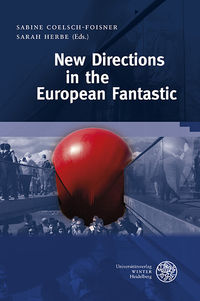
New Directions in the European Fantastic published

untitledThe interesting new book, New Directions in the European Fantastic (edited by Sabine Coelsch-Foisner) has been published by Winter Verlag. It includes my article titled “The Global and Local in Fantastic New Media: The Case of Finland”, which is based on the keynote I delivered in the EUROFAN conference. You can find more information about the book from these places at least:

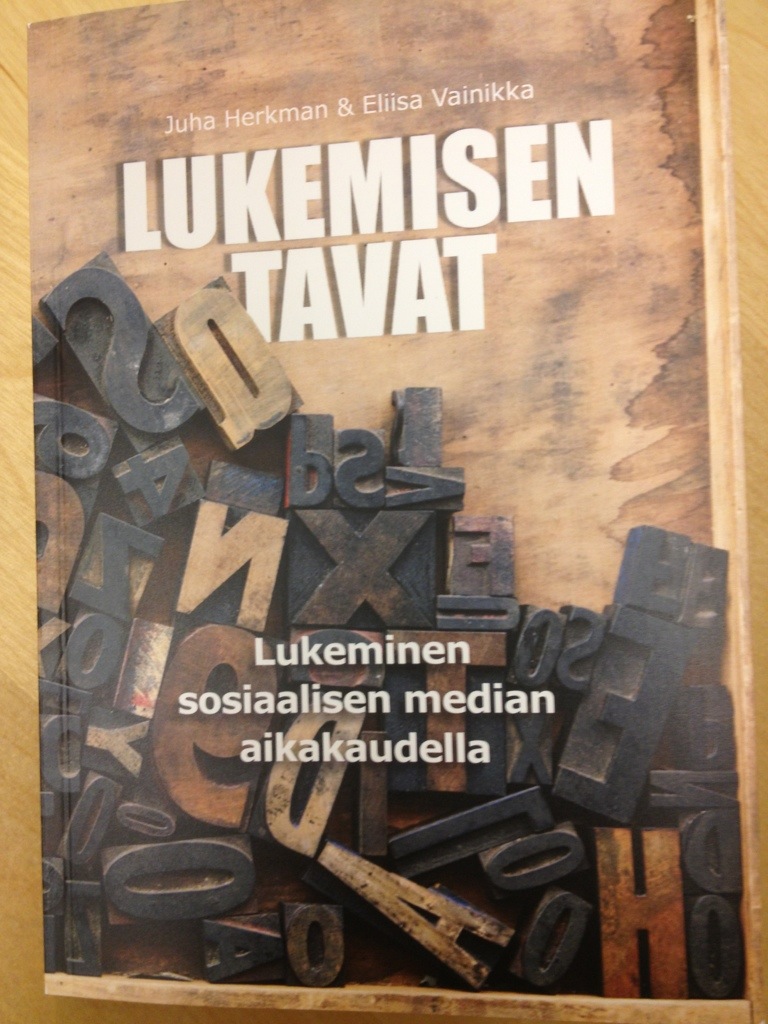
Lukemisen tavat

The interesting new book, Lukemisen tavat – lukeminen sosiaalisen median aikakaudella – has come out; good new data and readings about the changing character of reading. You can download the book free as a PDF from: http://tampub.uta.fi/handle/10024/66381.

20130102-181212.jpg

Research Gate

There are these days several services that aim to serve the function of being an “Academic Facebook”: an easy-to-use service with various dynamic, social media functionalities for sharing and following the research work that we are doing. The ones that I have occasionally tried to update include Academia.edu, and ResearchGate.net – the latter is a new one that seems to grow fast due to its ‘viral’ settings: it both automatically grawls the net and add publications that might be yours, making it a matter of just a couple of clicks to add them to your publications listing. And, they also by default mail all your co-authors asking them to become members, too. While this kind of strategy of aggressive growth might look borderline spammy, I can only hope our official publication registry system at the University of Tampere would make life as easy. (I still have not got around updating my publications and other academic activities from last 6 months, sigh…) Link: my ResearchGate profile: https://www.researchgate.net/profile/Frans_Maeyrae/

“Playful mobile communication” published

My communication+game studies article “Playful mobile communication: Services supporting the culture of play” is now out in the special issue of Interactions: Studies in Communication & Culture (Volume 3, Number 1, 30 October 2012 , pp. 55-70), edited by professor Maarit Valo. It is behind paywall (that for some reason even I cannot cross with my university account), I’ll try and put an author’s version online soon. Meanwhile, here is the abstract:

Communication has many functions; from linguistics to social psychology, there is ample evidence that communication fundamentally defines our ways of being, which is the reason changes in communicational practices and technologies are particularly interesting. This article focuses on the recent developments in playful mobile communication, firstly discussing play and playful practices in general, then moving on to contextualize the discussion in terms of contemporary mobile technology. Not just restricted to formal game play (ludus) but also including more improvisational forms of being playful (paidia), mobile play allows us some creative distance from the routine ways of communicating and is consequently more free-form than the more immediately utilitarian communicative acts. Playfulness also has certain distinctive features and it is possible to identify and discuss playfulness as it is expressed in the design of new tools for communication, as well as in the communicative practices and attitudes dopted by the participants. This article provides an introduction to the study of playful communication, and proposes three key evaluation criteria for playfulness. It then proceeds to test these criteria in contemporary playful mobile communication services.

You can access the published version from this link: http://www.ingentaconnect.com/content/intellect/iscc/2012/00000003/00000001/art00005

Markus Montola’s Doctoral Defense

While there have been earlier doctors coming from our Game Research Lab (Aki Järvinen, Olli Sotamaa), Markus Montola who today defends his doctoral dissertation is the first to come from within our own degree program, myself acting as the Kustos. Here is the abstract and link to download the electronic version of the thesis (defense is public and takes place at 12 o’clock in hall B1097):

On the Edge of the Magic Circle: Understanding Pervasive Games and Role-Playing

Markus Montola

Abstract

On the Edge of the Magic Circle studies two threads of contemporary western gaming culture: Role-playing and pervasive games. Recreational role-playing includes forms such as tabletop role-playing games, larps and online role-playing games, while pervasive games range from treasure hunts to alternate reality games. A discussion on pervasive role-playing connects these strands together.
The work has four larger research goals. First, to establish a conceptual framework for understanding role-playing in games. Second, to establish a conceptual framework for understanding pervasive games. Third, to explore the expressive potential of pervasive games through prototypes. And fourth, to establish a theoretical foundation for the study of ephemeral games.

The central outcome of the work is a theory complex that explains and defines role-playing and pervasive gaming, and allows them to be understood in the context of the recent discussion in game studies.

In order to understand these two borderline cases of games, the work establishes a theoretical foundation that highlights gameplay as a social process. This foundation combines the weak social constructionism of John R. Searle with the recent game studies scholarship from authors such as Jesper Juul, Jane McGonigal, Katie Salen and Eric Zimmerman.

Link to download the thesis: http://acta.uta.fi/haekokoversio.php?id=1000161

Rahapelaaminen Suomessa

[Finnish book on gambling studies] Jani Kinnusen ja minun yhdessä kirjoittama artikkeli verkkorahapelaamisen tutkimuksesta on ilmestynyt Gaudeamuksen kustantamassa Rahapelaaminen Suomessa -kirjassa (toim. Pauliina Raento):

Rahapelaaminen on tärkeä osa suomalaista politiikkaa, taloutta ja kulttuuria

Uudessa tietoteoksessa tutkijat paneutuvat peli-ilmiöön

Lauantai-iltaisin klo 20.45 suuri osa suomalaisista kokoontuu television ääreen rahapelirituaaliin. Pelit ovat läsnä arjessa ja vapaa-ajassa, ja rahapelaaminen on tärkeä osa politiikkaa, taloutta ja kulttuuria. Pauliina Raento kokosi eri tieteenalojen asiantuntijoita yhteen pohtimaan, mitä rahapelaamisesta on syytä ymmärtää 2000-luvun suomalaisessa yhteiskunnassa ja kulttuurissa. Raennon toimittama tietoteos Rahapelaaminen Suomessa (Gaudeamus 2012) ilmestyy nyt.

“Suuret rahasummat ja moraaliin ulottuvat näkemyserot yhteiskunnallisen ohjauksen suunnasta ja tavasta ovat tehneet rahapelaamisesta kiistanalaisen ja suuria tunteita herättävän aiheen”, Raento toteaa.

Rahapelejä pelataan kuitenkin päivittäin – kioskeilla, kotitietokoneilla, ruokakaupoissa, huoltoasemilla, baareissa ja ravintoloissa, kasinolla, pelisaleissa ja raviradoilla. Rahapelaaminen Suomessa -teoksen kirjoittajat lähestyvät ilmiötä monipuolisten aineistojen pohjalta. Teokseen on koottu runsas kuvitus ja suomalaisen rahapelaamisen kronologia vuodesta 1889 nykypäivään.

“Pelaamisella on suuri merkitys suomalaisen yhteiskunnan peruspalveluiden rahoittamisessa”, Raento muistuttaa. “On jo korkea aika, että käsitys rahapelaamisesta suomalaisessa yhteiskunnassa ja kulttuurissa syvenee ja alkaa ulottua lainsäädännön ja rahapeliongelmien muutosten seuraamista laajemmalle.”

Otteita teoksesta:

“[K]eskiaikaa luonnehtivat kohtalonusko ja käsitys onnen vaihtelevuudesta. Rouva Fortunaa, onnen henkilöitymää, pidettiin yleisesti oikullisena (…). Kohtalon, onnen ja pelaamisen yhteys on selvä. Esimerkiksi useassa germaanisessa kielessä kohtaloa ja arpaa tarkoittava sana on sama: englanniksi lot, ruotsiksi lott tai saksaksi Los.” (Mia Korpiola & Jussi Sallila)

“Tutkittu peluri varoi tarkasti kertomasta sivutoimestaan päätoimensa työyhteisölle eikä mielellään pukeutunut nettipokeripalvelusta saamaansa mainosteepaitaan. Virtuaalisessa pokeripöydässä hän ei kuitenkaan ajatellut moraalisia kysymyksiä, vaan keskittyi vastustajiensa voittamiseen ja siten erkani muusta arjestaan. Pelimaailmassa vallitsivat toiset säännöt kuin sitä monimutkaisemmassa yhteiskunnassa ja arjessa: pelissä joko voitettiin tai hävittiin.”  (Perpetual Crentsil & Jukka Jouhki)

“[P]oliittinen ilmapiiri on ristiriitainen suhteessa rahapelaamiseen: yhtäältä korostetaan suomalaisten monopoliyhtiöiden ‘hyviä tarkoituksia’ ja julkisia palveluja rahoittavaa toimintaa, mutta toisaalta huolehditaan rahapelaamisen aiheuttamista haitoista. Samalla rahapelaamisen sääntely ja rahapeliyritysten kilpailuympäristö Euroopassa ja koko maailmassa muuttuu nopeasti.”  (Arttu Paarlahti)

“[V]äitämme myös, että paikan ja ajan merkityksettömyyttä internet-pelaamisen aikakaudella on suuresti liioiteltu. Yksittäisen pelaajan valinnanvapaus on toki lisääntynyt ja hänen toimintansa piiri voi olla globaali ja uudella tavalla henkilökohtainen kellonajasta riippumatta, mikä on vaatinut liiketoiminnallisten ajattelutapojen ja ratkaisujen remonttia. Yksilötason yhdistäminen paikallisiin, alueellisiin, kansallisiin ja kansainvälisiin toimintaympäristöihin paljastaa kuitenkin pelitoiminnan monimutkaisia rakenteellisia sidonnaisuuksia, joita on vaikea irrottaa kulloinkin merkityksellisestä ajasta, tilasta ja sen ulottuvuuksista.” (Pauliina Raento & Lassi Härmälä)

***

Pauliina Raento (toim.): Rahapelaaminen Suomessa. Gaudeamus 2012.

Pauliina Raento työskentelee Pelitoiminnan tutkimussäätiön tutkimusjohtajana ja on vapaalla kulttuurimaantieteen professorin tehtävästään Helsingin yliopistossa. Teoksen muut kirjoittajat ovat Perpetual Crentsil, Lassi Härmälä, Jukka Jouhki, Johanna Järvinen-Tassopoulos, Matias Karekallas, Jani Kinnunen, Mia Korpiola, Riitta Matilainen, Heikki Mikkeli, Frans Mäyrä, Arttu Paarlahti, Jussi Sallila ja Tuukka Tammi.

Tilauslomake/esite löytyy täältä: http://www.pelisaatio.fi/files/ESITE_Raento_Rahapelaaminen_Suomessa.pdf

Pelitutkimuksen vuosikirja 2012

[The Finnish Yearbook of Game Studies is out!] – Tiedote:

Väärinpelaaminen kiinnostaa pelitutkijoita

Pelitutkimuksen vuosikirja 2012 on ilmestynyt sähköisenä osoitteessa

http://www.pelitutkimus.fi/vuosikirja-2012

Vuosikirjassa tarkastellaan jälleen niin pelaamisen historiaa, nykytilannetta kuin tulevaisuuttakin. Pelitutkimuksen vuosikirja on vertaisarvioitu, avoin tiedejulkaisu. Pelitutkimus on sekä monitieteinen tutkimusala että nuori akateeminen oppiaine, jonka parissa toimivien tutkijoiden huomion keskiössä on digitaalisten pelien erityisluonne. Nyt julkaistussa, järjestyksessään neljännessä vuosikirjassa, käsitellään muun muassa antiikin Rooman lautapelejä, lukijoiden ja pelilehtien vuorovaikutusta, Suomen pelipiratismin historiaa, pelien kerrontaa ja luokittelua sekä internetshakkia.

Vuosikirjassa on julkaistu artikkelien lisäksi lyhyempiä katsauksia, jotka pureutuvat esimerkiksi kilpapelaamiseen, puheentunnistusteknologiaan sekä oppimisroolipeleihin. Lisäksi vuosikirjassa on television tekstiviestipelien tekemistä koskeva muistelmakirjoitus ja kaksi kirja-arviota.

Tämän vuoden vuosikirjassa useampaa tutkijaa on kiinnostanut väärinpelaamisen ja sääntöjen venyttämisen tutkiminen. Teema tulee esille niin internetshakkia käsittelevässä artikkelissa, NHL12-peliä käsittelevässä katsauksessa kuin kirja-arvioissakin. Väärinpelaaminen voi tarkoittaa vastustajien sanallista häirintää, pelin viivyttämistä, pelin puutteiden epäreilulta tuntuvaa hyväksikäyttöä tai kiellettyjen teknisten apuvälineiden hyödyntämistä. Väärinpelaaminen tai epäurheilijamainen käytös liittyvät siis myös digitaaliseen pelaamiseen silloin kuin voittoa tavoitellaan keinoja kaihtamatta.

Pelitutkimuksen vuosikirjan päätoimittaja on professori Jaakko Suominen Turun yliopistosta. Toimituskuntaan kuuluvat lisäksi professorit Raine Koskimaa (Jyväskylän yliopisto) sekä Frans Mäyrä (Tampereen yliopisto) ja yliopisto-opettaja Riikka Turtiainen (Turun yliopisto).

Lisätietoja: Jaakko Suominen, jaakko.suominen@utu.fi

Anthology on First Person Shooters: Guns, Grenades and Grunts

A new anthology of first person shooter studies is out in the Continuum game studies series:

“The second volume of Continuum’s Approaches to Digital Game Studies series, Guns, Grenades and Grunts gathers scholars from multiple disciplines to bring the weight of contemporary social theory and media criticism to bear on the public controversy and intellectually investigation of first-person shooter games. As a genre, FPS games have helped shepherd the game industry from the early days of shareware distribution and underground gaming clans to contemporary multimillion dollar production budgets, Hollywood-style launches, downloadable content, and worldwide professional gaming leagues. The FPS has been, and will continue to be a staple of the game market.”

More: http://www.continuumbooks.com/books/detail.aspx?BookId=167841&SubjectId=952&Subject2Id=1708