The Dark Side of Game Play, book out

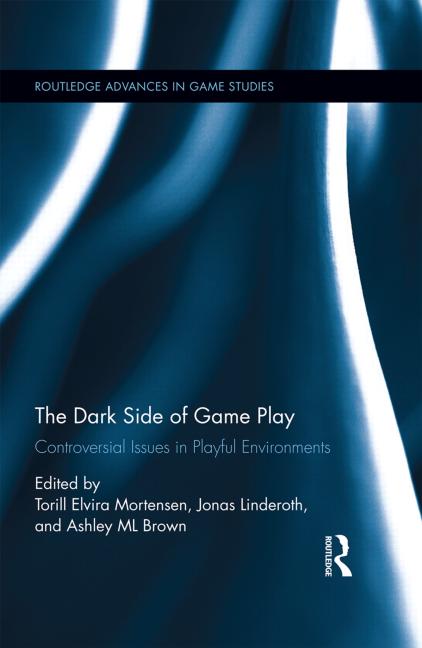
Dark Side of Game Play book cover.
Dark Side of Game Play book.

Finally: the very important “Dark Play” volume that has long been in the making is finally out! Titled The Dark Side of Game Play: Controversial Issues in Playful Environments (Routledge 2015), the work is edited by the excellent team of Torill Elvira Mortensen, Jonas Linderoth and Ashley ML Brown. It includes 15 chapters expanding our understanding of what ‘play’ is and what it means, including my text about “dark play of children”, including the sometimes perhaps subversive uses for LEGO pieces and video games they often come up with (a draft version of my chapter is here). Here is the table of contents:

Part I: Introduction

1. Dark Play: The Aesthetics of Controversial Playfulness
Torill Elvira Mortensen and Jonas Linderoth

Part II: Discourses of Dark Play

2. Analyzing Game Controversies: A Historical Approach to Moral Panics and Digital Games
Faltin Karlsen

3. Of Heroes and Henchmen: The Conventions of Killing Generic Expendables in Digital Games
René Glas

4. Don’t Forget to Die: A Software Update is Available for the Death Drive
Emily Flynn-Jones

Part III: Dark Play or Darkly Played?

5. Killing Digital Children: Design, Discourse and Player Agency
Björn Sjöblom

6. Little Evils: Subversive Uses of Children’s Games
Frans Mäyrä

7. Darkly Playing Others
Miguel Sicart

Part IV: Dark Play and Situated Meaning

8. Three Defences for the Fourteen-Inch Barbed Penis: Darkly Playing with Morals, Ethics and Sexual Violence
Ashley ML Brown

9. Exploring the Limits of Play: A Case Study of Representations of Nazism in Games
Adam Chapman and Jonas Linderoth

10. Keeping the Balance: Morals at the Dark Side
Torill Elvira Mortensen

11. Fabricated Innocence: On How People Can be Lured into Feel Bad Games
Staffan Björk

Part V: Designing for Dark Play

12. Massively Multiplayer Dark Play; Treacherous Play in EVE Online
Marcus Carter

13. Dark Play in Dishonored
Kristine Jørgensen

14. Sonic Descents: Musical Dark Play in Survival and Psychological Horror
Isabella van Elferen

15. Boosting, Glitching and Modding Call of Duty: Assertive Dark Play Manifestations, Communities, Pleasures and Organic Resilience
Alan Meades

Link to publisher’s information page about the book: http://www.routledge.com/books/details/9781138827288/.
Narrative Theory, Literature, and New Media: new book

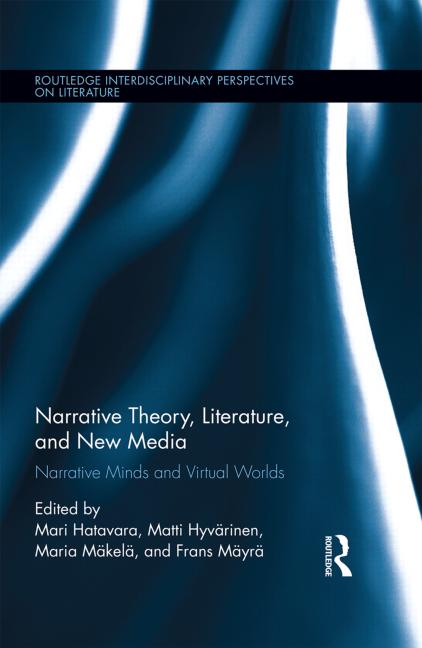
Narrative Minds, Virtual Worlds (cover).
Narrative Minds, Virtual Worlds.

New book, edited by Mari Hatavara, Matti Hyvärinen, Maria Mäkelä and myself, is now available for pre-order: Narrative Theory, Literature, and New Media: Narrative Minds and Virtual Worlds (Routledge). This interdisciplinary work discusses and analyses constructions of storyworlds and minds in games as well as in literature and media from multiple perspectives. Here is the table of contents:

Introduction: Minds in Action, Interpretive Traditions in Interaction Mari Hatavara, Matti Hyvärinen, Maria Mäkelä, and Frans Mäyrä

Section I

1. Texts, Worlds, Stories: Narrative Worlds as Cognitive and Ontological Concept Marie-Laure Ryan

2. Storyworlds and Paradoxical Narration: Putting Classifications to a Transmedial Test Liviu Lutas

3The Charge against Classical and Post-Classical Narratologies’ “Epistemic” Approach to Literary FictionGreger Andersson

Section II

4. How You Emerge from This Game Is up to You: Agency, Positioning, and Narrativity in The Mass Effect Trilogy Hanna-Riikka Roine

5. Playing the Worlds of Prom Week Ben Samuel, Dylan Lederle-Ensign, Mike Treanor, Noah Wardrip-Fruin, Josh McCoy, Aaron Reed, and Michael Mateas

6.Scripting Beloved Discomfort: Narratives, Fantasies, and Authenticity in Online Sadomasochism J. Tuomas Harviainen

7.Storyworld in Text-Messages: Sequentiality and Spatialisation Agnieszka Lyons

Section III

8. Defending the Private and the Unnarratable: Doomed Attempts to Read and Write Literary and Cinematic Minds in Marguerite Duras’s India Cycle Tytti Rantanen

9. Of Minds and Monsters: the Eventfulness of Monstrosity and the Poetics of Immersion in Horror LiteratureGero Brümmer

10. Narrative Conventions in Hallucinatory Narratives Tommi Kakko

11.Narrative and Minds in the Traditional Ballads of Early Country Music Alan Palmer

Section IV

12.Mind Reading, Mind Guessing, or Mental-State Attribution? The Puzzle of John Burnside’s A Summer of Drowning Matti Hyvärinen

13 Mind as World in the Reality Game Show Survivor Maria Mäkelä

14 Performing Selves and Audience Design: Interview Narratives on the Internet Jarmila Mildorf

15 Documenting Everyday Life: Mind Representation in the Web Exhibition “A Finnish Winter Day” Mari Hatavara

Afterword: A New Normal? Brian McHale

Publisher book page link: http://www.routledge.com/books/details/9781138854147/.

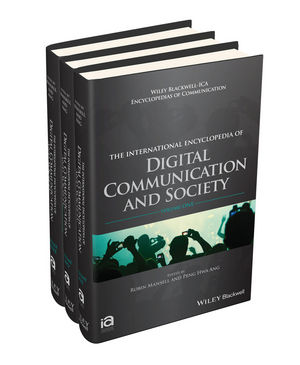
‘Mobile Games’ in the International Encyclopedia of Digital Communication & Society

International Encyclopedia of Digital Communication & Society (three volumes).
International Encyclopedia of Digital Communication & Society

This is a pretty massive reference book (three volumes, 1296 pages) and it should include wealth of materials that is helpful if you study e.g. online gaming, social media, hate speech, or any other of the dozens of its interesting topics. The International Encyclopedia of Digital Communication & Society has been edited and written by some of the leading experts in Internet and game studies, and I am happy today to put online my small contribution – a short article titled “Mobile Games”: http://people.uta.fi/~frans.mayra/Mobile_Games.pdf. You can also access the regularly updated online version, and sample some of its contents free through this link.

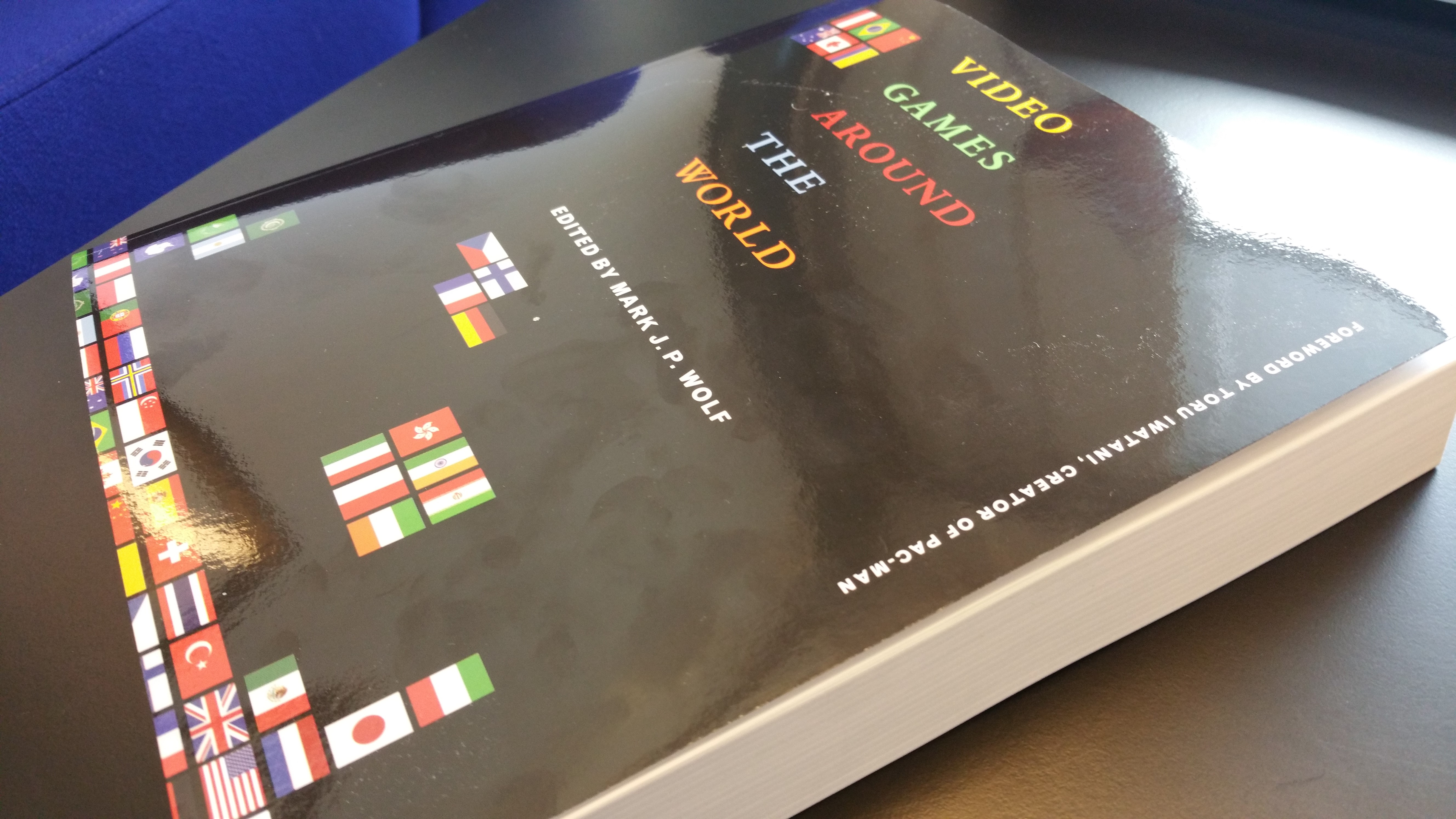
Finland in ‘Video Games Around the World’ book

Video Games Around the World (book).
Video Games Around the World

I got today in mail delivery my author’s copy of the very interesting book Video Games Around the World (The MIT Press). Edited by the encyclopaedicly knowledgeable and eminently productive Mark J.P. Wolf, it features 40 essays about games and game cultures in different parts of the world (all continents are discussed – even Antarctica gets a mention). With 656 pages this is a major, international collaborative event for global game studies, and I am happy to having been part of the project. Hopefully it will stimulate even more detailed, and also comparative, international studies in the future. I have also put online an early draft version (dated in April 2012) of my own chapter on Finnish games and game culture here: http://people.uta.fi/~frans.mayra/Mayra-Video_Games_in_Finland.pdf. More of the book from the MIT Press page at: http://mitpress.mit.edu/books/video-games-around-world.

And, if you are interested in games and game culture of Finland, I very much recommend the recent Finnish Video Games: A History and Catalog by Juho Kuorikoski, the most comprehensive work on the topic and probably the leading work on games of any single, small country from this perspective.

Työstä ja leikistä

Työtä vai leikkiä? (Telma-lehti)
Työtä vai leikkiä?

I wrote a short article about the changing relations between work and play] Työelämän kehittämisen erikoislehti Telman uusin numero on uuden teknologian erikoisnumero. Minulta mukana on lyhyt kirjoitus otsikolla “Työtä vai leikkiä – ajatelmia työstä, leikistä ja pelillisyydestä”; ks. http://telma-lehti.fi/pelit-ja-pelaaminen-tyoelaman-uudistajina/

Playful Identities: The Ludification of Digital Media Cultures

Playful Identities (cover)
Playful Identities (2015)

Long in the making, this highly interesting book on ludification of culture is finally in print and available; it includes also my chapter on the culture and identity of online casual play:

Frissen, Valerie, Sybille Lammes, Michiel de Lange, Jos de Mul, and Joost Raessens, eds. 2015. Playful Identities: The ludification of digital media cultures. Amsterdam: Amsterdam University Press.

Table of Contents

1. Homo ludens 2.0: Play, media, and identity 9
Valerie Frissen, Sybille Lammes, Michiel de Lange, Jos de Mul & Joost Raessens

Part I Play
Introduction to Part I 53
Valerie Frissen, Sybille Lammes, Michiel de Lange, Jos de Mul & Joost Raessens

2. Playland: Technology, self, and cultural transformation 55
Kenneth J. Gergen

3. Spiritual play: Encountering the sacred in World of Warcraft 75
Stef Aupers

4. Playful computer interaction 93
Daniel Cermak-Sassenrath

5. Playful identity in game design and open-ended play 111
Menno Deen, Ben Schouten & Tilde Bekker

6. Breaking reality: Exploring pervasive cheating in Foursquare 131
René Glas

7. Playing with bits and bytes: The savage mind in the digital age 149
Valerie Frissen

Part II Media
Introduction to Part II 167
Valerie Frissen, Sybille Lammes, Michiel de Lange, Jos de Mul & Joost Raessens

8. Location-based mobile games: Interfaces to urban spaces 169
Adriana de Souza e Silva & Jordan Frith

9. The playful use of mobile phones and its link to social cohesion 181
Rich Ling

10. Digital cartographies as playful practices 199
Sybille Lammes

11. Ludic identities and the magic circle 211
Gordon Calleja

12. Play (for) time 225
Patrick Crogan

13. Playful identity politics: How refugee games affect the player’s identity 245
Joost Raessens

Part III Identity
Introduction to Part III 263
Valerie Frissen, Sybille Lammes, Michiel de Lange, Jos de Mul & Joost Raessens

14. Playing out identities and emotions 267
Jeroen Jansz

15. Playing with others: The identity paradoxes of the web as social network 281
Jeroen Timmermans

16. New media, play, and social identities 293
Leopoldina Fortunati

17. Playing life in the metropolis: Mobile media and identity in Jakarta 307
Michiel de Lange

18. The conflicts within the casual: The culture and identity of casual online play 321
Frans Mäyrä

19. Afterplay 337
Jos de Mul

About the authors 347
Index of Names 353
Index of Subjects 359

Games and Culture: new papers

Interesting new research has been published in Games and Culture journal, OnlineFirst:

Articles

Is it in the Game? Reconsidering Play Spaces, Game Definitions, Theming, and Sports Videogames

by Garry Crawford

Stand by Your Man

by Rabindra A. Ratan, Nicholas Taylor, Jameson Hogan, Tracy Kennedy, and Dmitri Williams

Predicting Video Game Behavior: An Investigation of the Relationship Between Personality and Mobile Game Play

by Soonhwa Seok and Boaventura DaCosta

New research, Games and Culture

Interesting new research papers coming out in Games and Culture, OnlineFirst:

New issue: Fafnir, Nordic Journal of Science Fiction and Fantasy Research

Spreading word, the new issue of Fafnir is out:

Fafnir – Nordic Journal of Science Fiction and Fantasy Research 4/2014

Jyrki Korpua, Hanna-Riikka Roine & Päivi Väätänen:
Editorial 4/2014

Download this article as PDF

_____________________________________________

William Bowman:
Women and Women: Use of Women Types as Rhetorical Techniques in Atwood’s Handmaid’s Tale and Tepper’s Gate to Women’s Country.

Abstract: In this article, I argue both Margaret Atwood in Handmaid’s Tale and Sheri S. Tepper in Gate to Women’s Country use the same three ‘women type’ characters to explore ideal female gender roles and their relationship to society. Further, I argue that both authors use these characters as part of their bigger rhetorical engagement with the American gender essentialist political movements of 1980s. In particular, I argue that Atwood’s types, despite her empathy with the feminist movement, distance her from both radical second-wave separatist feminism and the American religio-political conservative movement of the 80s, and, against Dopp, that Offred does in fact offer an effective ideal female to be emulated in that, by the end of the novel, she defines and externalizes her self. On the other hand, for Tepper I argue, against Pierson, that Gate is not intrinsically anti-sexual but rather anti-romanticism, sexuality—homosexual and otherwise–only the unfortunate collateral damage, and, further, that Tepper’s women types align her much closer to the essentialism of second- and third-wave feminism than Atwood.

Keywords: Atwood, Tepper, Gender Roles, Women, Science Fiction, Handmaid’s Tale, Gate to Women’s Country

Download this article as PDF

Victor Grech, Clare Vassallo and Ivan Callus:
The coldest of all cold monsters: state infliction of infertility.

Abstract:The state may decide to limit its population due to a variety of reasons. This paper reviews the intersection of state-induced infertility in science-fiction, exploring eugenics, overpopulation, along with state-devised strategies to control both overpopulation and the quality of the remaining population.

Keywords:science fiction; infertilty, demodystopias, eugenics.

Download this article as PDF

_____________________________________________

Päivi Väätänen:
Sun Ra: Myth, Science, and Science Fiction.

Download this article as PDF

Jari Käkelä:
Maps for Further Exploring: Experiences from Helsinki Summer School Course “Science Fiction in Literature and Culture”

Download this article as PDF

Jyrki Korpua:
Kirja-arvio: Juri Nummelin & Vesa Sisättö – Tolkien – elämä ja teokset.

Download this article as PDF

blog year 2014 in review

The WordPress.com stats helper monkeys prepared a 2014 annual report for this blog.

Here’s an excerpt:

The concert hall at the Sydney Opera House holds 2,700 people. This blog was viewed about 35,000 times in 2014. If it were a concert at Sydney Opera House, it would take about 13 sold-out performances for that many people to see it.

Click here to see the complete report.