[Postitin tämän aiemmin tänään pelitutkimuksen finland[at]digra.org -postilistalle; tervetuloa mukaan sinne ja keskustelemaan aloitteesta; ohjeet liittymiseen löytyvät alta.]
Tänään Pelitutkimuksen päivän yhteydessä käytiin keskustelua, kannattaisiko perustaa Suomen pelitutkimuksen seura (ry.) edistämään pelitutkimuksen asemaa maassamme. Koska kaikki kiinnostuneet eivät varmaankaan olleet paikalla Turussa (kiitos järjestäjille ja puhujille!) niin avataan keskustelu myös täällä DiGRA Finland-sähköpostilistan puolella. Muutamia pointteja keskustelun herätteeksi:
– “Meillä on jo DiGRA Finland, kansainvälisen pelitutkimusyhdistyksen paikallisosasto, miksi uusi ry, eikö vanhan byrokratiassa ole jo tarpeeksi?” – Tähän voisi kommentoida että väljä toimijaverkosto (jollaista tämä chapter-toiminta lähinnä kai on) on ilman muuta mukava tapa välittää tietoa ja järjestää kevyellä kaavalla aktiviteetteja. Yhdistys kuitenkin tarjoaisi muutamia etuja.
– Pelitutkimuksen tieteellinen seura voi hakea Tieteellisten seurain valtuuskunnan (TSV) jäsenyyttä ja tätä kautta myös tieteellisten seurojen julkaisutoimintaan, ja esimerkiksi konferenssien järjestämiseen tarkoitettuja valtionavustuksia. Myös jäsenmaksutulot tukisivat tapahtumia, tiedottamista ja muuta toimintaa.
– Pelitutkimuksen vuosikirjan kehittäminen ja toiminnan rahoittaminen hyötyisi em. avustuksista.
– Seura voisi olla tärkeä kansallinen yhteistyöfoorumi ja tuoda aiempaa tehokkaammin yhteen eri tieteenalojen, hankkeiden, alueellisten keskusten ja monitieteisten verkostojen piirissä virinnyttä peli- ja pelillistämistutkimuksen aktiviteetteja.
– Seura ja sen verkkosivut voisivat kehittyä tärkeäksi kansalliseksi tietoportaaliksi: keneltä löytyy asiantuntemusta ja mistä aihepiiristä.
– Tieteellinen seura voi toimia myös edunvalvojana ja seuran toimielimet ottaa virallisemmassa roolissa kantaa esimerkiksi pelitutkimuksen asemaan yliopistokentässä, pelitutkimuksen laadun arviointia tai aihealueen kehittämistä koskevissa asioissa. Tämän voi ennakoida nousevan entistä tärkeämpään rooliin jatkossa kun kotimaisen korkeakoulukentän rakenteellinen kehittäminen etenee.
Mitä ajatuksia tämä aloite teissä, suomalaisissa pelitutkijoissa herättää? Puolesta – tai vastaan – puheenvuoroja? Ideoita siitä miten yhdistyksen toiminnan painopisteitä pitäisi priorisoida, tai millaisia aktiviteetteja olisi pyrkiä luomaan tai kehittämään? Ja ennen kaikkea: löytyykö meiltä riittävästi innokkaita vapaaehtoisia että näille erilaisille ideoille löytyisi myös toteuttajia?
Tätä viestiä saa ilman muuta levittää tahoille joiden uskoisitte olevan asiasta kiinnostuneita (ohjeet listalle liittymiseen siis löytyvät täältä: https://digrafinland.wordpress.com/contact/). Turussa hahmottelimme etenemismallia, missä aluksi käydään tällaista yleisempää ja kiinnostusta kartoittavaa keskustelua, ja jos järkevältä näyttää, ryhdyttäisiin esimerkiksi yhdistyksen sääntöjä hahmottelemaan verkossa, ja mahdollinen perustamiskokous kutsuttaisiin koolle esimerkiksi ensi vuoden Pelitutkimuksen päivän yhteyteen.
Itse ajattelen että Suomessa on erinomaiset mahdollisuudet luoda vahva ja näkyvä tieteellinen yhdistys alueelle, ja että pelitutkimuksen mittava monitieteisyys huomioiden tällaisesta, eri aloilla toimivia ihmisiä yhteen tuovasta liittoumasta olisi mahdollisesti paljonkin konkreettista hyötyä. Kulttuurinen, tekninen, taiteellinen, taloudellinen, sosiaalitieteinen, psykologinen pelitutkimus – kaikkia näitä löytyy nykyään Suomesta ja uusia toimijoita tulee alueelle koko ajan. Olisi siis ehkä hyvä idea nostaa lippua korkeammalle ja pyrkiä tekemään näkyvämmäksi tätä monisäikeistä, nyt aika hajallaan olevaa toimintaa?
– tv. Frans Mäyrä @ Tampereen yliopisto, Game Research Lab
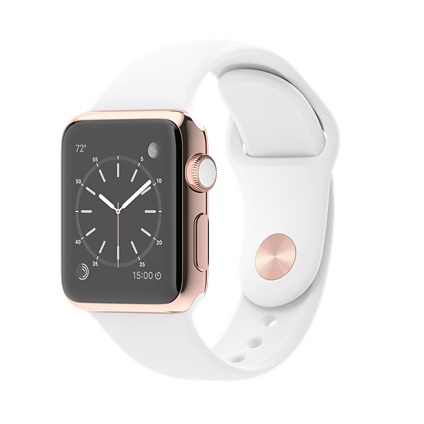
Apple Watch has been much in the headlines lately, and the leading role Apple has long had in fashionable, personal devices explains much of the hype. If Apple enters the product category, then it is ready for mainstream, the conventional wisdom goes. However, in this case Apple’s leadership is not guaranteed.
A smartwatch is possibly even a more personal and intimate device than a smartphone, if such a thing is possible. Rather than pocketed, a watch is tied to your wrist, always just a glance away from the focus of your attention. Granted, many people appear to walk around with their mobile phone constantly in their hand, but that is not the way a phone is originally designed to be used. A wristwatch, on the contrary, is meant to be worn all day long.
A wristwatch is also on your skin. It becomes really intimate part of yourself, and as it is a visible part of one’s attire, it can also be considered as a fashion accessory. Some people invest considerable sums of money to jewelry, and some prefer to make their fashion statements by investing into expensive timepieces. This is one demographic which Apple Watch is aimed at, with its 17 000 dollars top-of-the-line pricing.
One major problem with expensive smartwatches is the speed that information and communication technologies and services evolve. A one year or two years old model might already be obsolete, as it is missing support for some crucial new functionality. A classic wristwatch can be timeless in a manner that a smartwatch never can be.
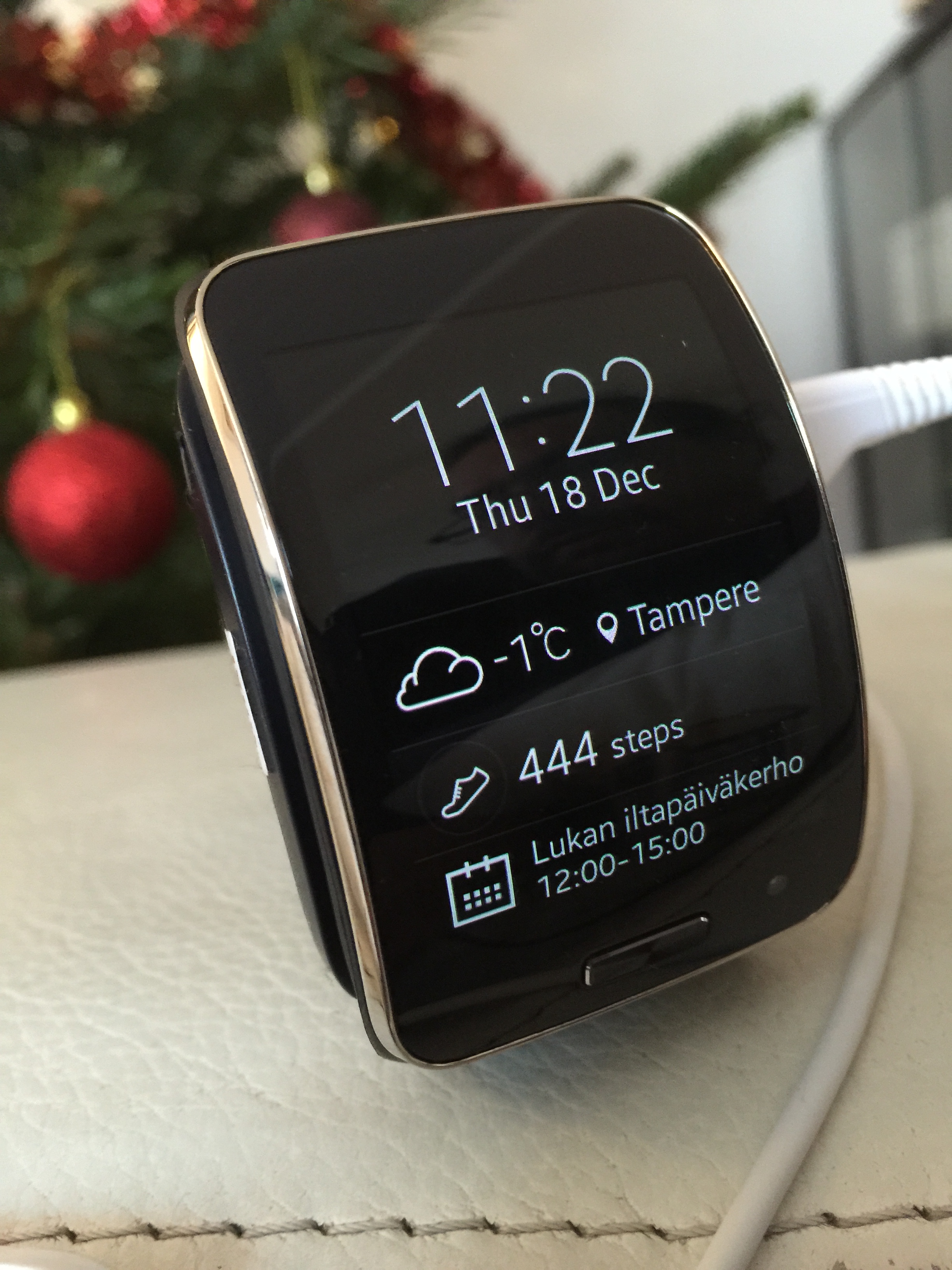
Samsung Gear S
Another key issue is the service ecosystem integration. Currently there are at least three non-compatible app ecosystems that are competing of the souls (and money) of smartwatch users: Android Wear, Samsung Gear (based on Tizen, Samsung’s own Android-competitor), and the Apple Watch OS. I have personally been testing Samsung Gear S watch for some time, and while it has some arguably superior technical features (for a full list, see here), it is seriously lacking in applications that would support and integrate with key information, communication, entertainment and lifestyle services that most people are already committed into, with their smartphones, tablet devices and personal computers. Support of such services is really essential for a smartwatch to survive in the technologically overpopulated media ecology of today. Having unique content that truly benefits and interacts with e.g. the sensors and contextual information of these things (as in next generation pervasive games) will be another necessary step.
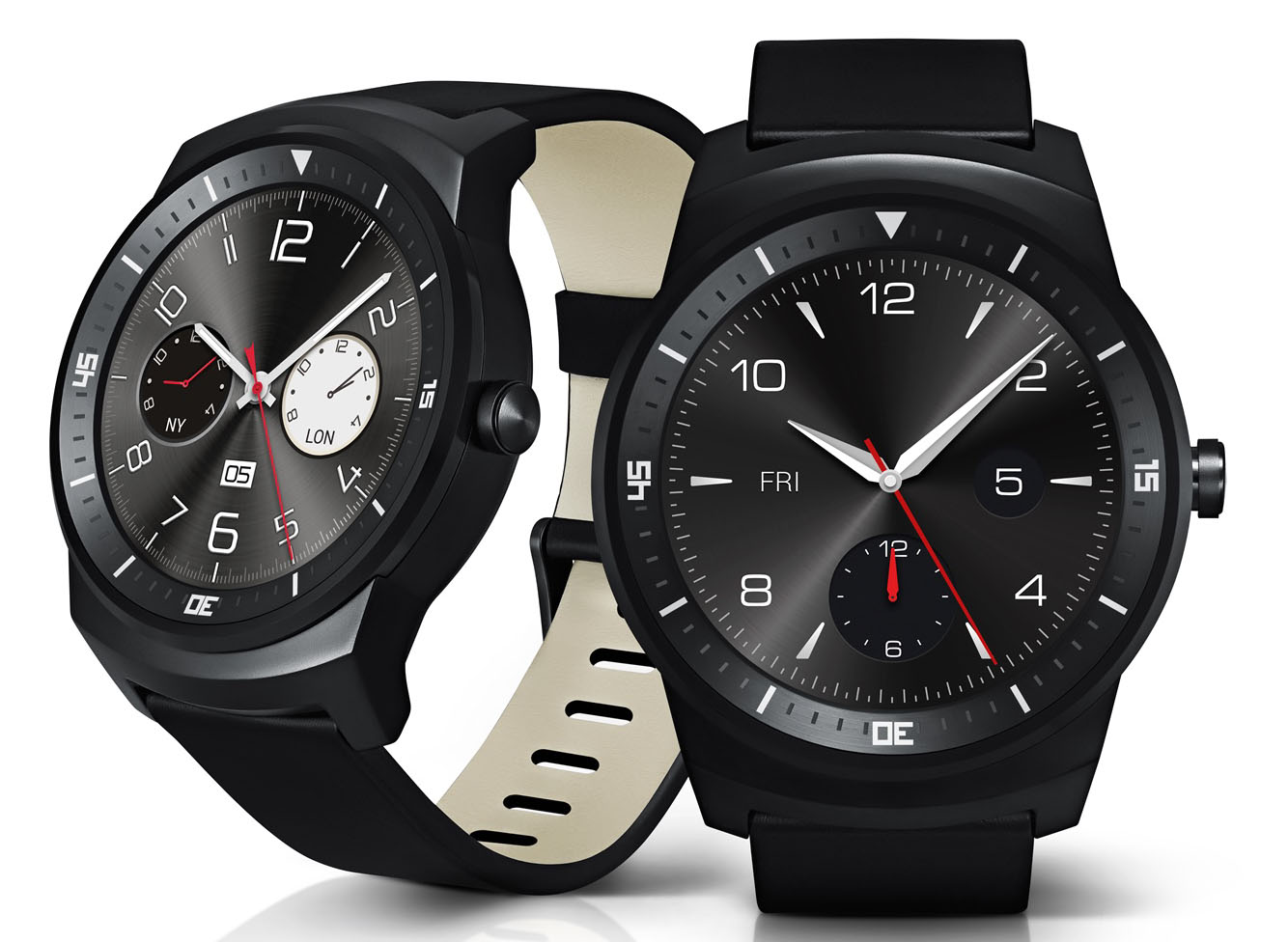
LG G Watch R
It is still too early to declare any winners in this race to colonize the virgin landscape of mainstream wearable space and associated user cultures. If some guesses can be made, though, I’d bet that Apple Watch will be doing rather well particularly in the US, where the existing user base for Apple devices has traditionally been strong, and the benefits of extending that into a smartwatch are therefore strongest. On the other hand, elsewhere I’d bet Android Wear to have advantage. This is due to the obvious benefits available for Google service users: the direct access to the wrist from Google Calendar and Google Now alerts alone is something that would be rather valuable for any busy professional of today. If all your personal and business contacts are in Google system, and you have saved all your important address points to the Google Maps, then it is natural to extend daily navigation, time keeping and communications filtering tasks to a Google-compatible smartwatch. Samsung appears to be weakest in this service integration area, and it might be a good idea for them to join forces e.g. with Microsoft with its large base of Exchange/Outlook users, as without well-integrated and highly automated access to the backbone personal data services a smartwatch is actually a pretty dumb idea.
Master’s Degree Programme in Internet and Game Studies (120 ECTS credits)
Programme: Internet and Game Studies
Specialization: Information Studies and Interactive Media
Admission criteria in 2015
Please see the UTA Admissions website for the IGS admission criteria.
Programme profile
The programme aims to provide an in-depth view to the fundamental character and development of games and Internet. Games have grown into an important form of culture and human interaction, expanding from entertainment to other areas of life. Internet and social media form an increasingly vital part of communication, social life and distribution of media and services.
The programme is particularly targeted at the questions of analysis, design and application of online services and digital games from user- and culturally focused perspectives. The programme directs students to develop academic skills like critical thinking, scientific writing and carrying out research projects while encouraging active and comprehensive involvement with the practical processes and phenomena related to games and Internet.
The programme is offered by the School of Information Sciences. The school has high profile research groups that are focused on Internet and game studies. There has also been a long history of education in hypermedia and in information studies and interactive media that form the basis of this degree programme.
Graduates’ jobs
Graduates typically combine the skills and knowledge derived from the programme with studies and proficiencies that enable them to work as experts of games and Internet in various professional roles, in research, in public sector as well as in industry. The need for knowledgeable workforce is growing in the fields related to games and interactive media, but the students should adopt an active attitude in fashioning their own specific area of expertise and professional profile.
The possible jobs of graduates include researchers, developers, critics and specialists working with the interpretation, evaluation or implementation of games and social media.
The degree also gives a strong basis for and eligibility to take Doctoral studies in the field (available at UTA).
Structure of studies
80 ECTS of advanced studies including the Master’s thesis, 40 ECTS of other studies (including language and complementing studies).
Studies
Studies consist of lectures and seminars on theoretical and methodological questions, and supervised individual research for a Master´s thesis. Studies require active attendance and participation in classes. Some of the course units are organised only once during the programme period. Teaching takes place during daytime and is on-campus contact teaching.
Complementing studies may be required depending on the student’s previous studies.
Language studies in Finnish and English must be included in the programme studies.
With the long tradition of academic freedom at the University of Tampere, students are free to include in their programme studies some course units also in other fields than their specialization, thus enabling a multidisciplinary degree.
Usually there is no need to buy any course books.
The programme requires approximately two years of full-time studies.
Degree awarded
The degree awarded is the Master of Science degree. The degree is a second cycle degree; for more information on Finnish degrees, please see the page on Degrees.
Contact information
If you have questions concerning the admission requirements, study related issues, or programme specific enclosures, please contact the SIS admissions contact person, Ms Kirsi Tuominen.
Knutepunkt (Solmukohta in Finnish) books have for a long time been inspiring mix of role-play theories, artistic manifestoes, and practical, larp design or game-running advice. The Knutepunkt book 2015 is no exception. Here is link to the PDF version (published ahead of the actual event), and outline of the contents:
The Knudepunkt 2015 Companion Book
Eds. Charles Bo Nielsen & Claus Raasted
Long in the making, this highly interesting book on ludification of culture is finally in print and available; it includes also my chapter on the culture and identity of online casual play:
Frissen, Valerie, Sybille Lammes, Michiel de Lange, Jos de Mul, and Joost Raessens, eds. 2015. Playful Identities: The ludification of digital media cultures. Amsterdam: Amsterdam University Press.
Table of Contents
1. Homo ludens 2.0: Play, media, and identity 9
Valerie Frissen, Sybille Lammes, Michiel de Lange, Jos de Mul & Joost Raessens
Part I Play Introduction to Part I 53
Valerie Frissen, Sybille Lammes, Michiel de Lange, Jos de Mul & Joost Raessens
2. Playland: Technology, self, and cultural transformation 55
Kenneth J. Gergen
3. Spiritual play: Encountering the sacred in World of Warcraft 75
Stef Aupers
4. Playful computer interaction 93
Daniel Cermak-Sassenrath
5. Playful identity in game design and open-ended play 111
Menno Deen, Ben Schouten & Tilde Bekker
6. Breaking reality: Exploring pervasive cheating in Foursquare 131
René Glas
7. Playing with bits and bytes: The savage mind in the digital age 149
Valerie Frissen
Part II Media Introduction to Part II 167
Valerie Frissen, Sybille Lammes, Michiel de Lange, Jos de Mul & Joost Raessens
8. Location-based mobile games: Interfaces to urban spaces 169
Adriana de Souza e Silva & Jordan Frith
9. The playful use of mobile phones and its link to social cohesion 181
Rich Ling
10. Digital cartographies as playful practices 199
Sybille Lammes
11. Ludic identities and the magic circle 211
Gordon Calleja
12. Play (for) time 225
Patrick Crogan
13. Playful identity politics: How refugee games affect the player’s identity 245
Joost Raessens
Part III Identity Introduction to Part III 263
Valerie Frissen, Sybille Lammes, Michiel de Lange, Jos de Mul & Joost Raessens
14. Playing out identities and emotions 267
Jeroen Jansz
15. Playing with others: The identity paradoxes of the web as social network 281
Jeroen Timmermans
16. New media, play, and social identities 293
Leopoldina Fortunati
17. Playing life in the metropolis: Mobile media and identity in Jakarta 307
Michiel de Lange
18. The conflicts within the casual: The culture and identity of casual online play 321
Frans Mäyrä
19. Afterplay 337
Jos de Mul
About the authors 347
Index of Names 353
Index of Subjects 359
[Spread the word: Finnish Game Studies Thesis competition, English text below]
Pelialan opinnäytekilpailu 2015
Kolmatta kertaa järjestettävä pelialan opinnäytekilpailu tekee näkyväksi pelien parissa tehtävää korkeatasoista suomalaista koulutus- ja tutkimustyötä. Kilpailun järjestävät yhteistyössä pelitutkimuksen verkosto DiGRA Finland ja Suomen pelialan keskus Neogames. Opinnäytekilpailuun voi osallistua työllä, joka on hyväksytty kalenterivuoden 2014 aikana (1.1.-31.12.2014).
Tunnustukseen sisältyy 800 euron rahapalkinto, joka voidaan jakaa yhden tai useamman palkitun kesken. Palkitun opinnäytteen tekijälle on varattu mahdollisuus esitellä työtään keväällä 2015 järjestettävässä Pelitutkimuksen päivässä.
Kilpailuun hyväksytään niin suomalaisten yliopistojen kuin ammattikorkeakoulujen peliaiheiset opinnäytetyöt. Opinnäytteellä tarkoitetaan tässä yhteydessä perustutkinnon valmistumiseen liittyvää lopputyötä. Kilpailuun ei siten voi osallistua opintoihin muuten liittyvällä projektityöllä tai muulla vastaavalla suorituksella. Samaten väitöskirjat on rajattu kilpailun ulkopuolelle.
Opinnäytteen tulee tavalla tai toisella liittyä peleihin. Tutkimuskohteeksi voivat asettua pelit itsessään, niiden pelaaminen, niiden tekeminen tai jokin muu peleihin elimellisesti liittyvä ilmiö. Työ voi olla otteeltaan esimerkiksi teoreettinen, soveltava tai kokeellinen.
Opinnäytteen voi ilmoittaa ehdokkaaksi 13.2.2015 mennessä. Työn voi asettaa ehdolle joko työn tekijä itse tai vaihtoehtoisesti oppiaine/koulutusohjelma tekijän suostumuksella. Kilpailutyöt lähetetään pdf-muodossa osoitteeseen: digra.finland [at] gmail.com.
Jos lopputyön tarkastajien lausunnot on saatavissa, nämä tulee toimittaa kilpailutyön yhteydessä. Mukaan tulee lisäksi liittää työn tekijän ajantasaiset yhteystiedot. Raadilla on oikeus hylätä myöhässä tai puutteellisina toimitetut ehdotukset.
Lisätietoja kilpailusta antaa kilpailuraadin sihteeri, dosentti Olli Sotamaa (olli.sotamaa [at ] uta.fi).
Game Studies Thesis Competition 2015
In order to parade the excellence of Finnish games research and education DiGRA Finland and Neogames Finland Ry have joined forces to award the best Finnish games related bachelor or master thesis through an annual competition.
Prizes: The best thesis will be awarded a monetary prize (this years’ prize sum is 800 euros that will be split between the winners). In addition, the author of the best thesis will have an opportunity to present her or his work in the Finnish Game Research day organised in the spring 2015.
Requirements: We are looking for an ambitious games-related thesis accepted between 1.1.2014 and 31.12.2014 in a Finnish higher education institution (this includes both universities and the universities of applied sciences). The focus can be e.g. on games themselves, in playing them, or in developing them.
Selection process: The decision is made by a peer review panel of experts co-ordinated by Neogames and DiGRA Finland. Based on the reviews, finalists will be short-listed and awarded by the panel.
Documents for submission: 1) the thesis as a single pdf file, 2) the evaluation statements of the thesis (if available) and 3) up-to-date contact details of the author.
Submission details: Send your submission to digra.finland [at] gmail.com.
Submission deadline: 13.2.2015.
Contact: For further information contact Olli Sotamaa (olli.sotamaa [at] uta.fi).
If you were a techie nerd in the 80s, you might have used a Casio Databank wristwatch: a bulky device that had a small LCD screen, capable of acting as a calculator, address book, as well as a simple gaming device, while also providing advanced clock features. Those watches were (and still do) dividing user opinions, some enjoying their technically advanced, engineer-oriented pleasures, some staying as far as possible from such gadgets. With today’s focus on “smart watches” and “fitness bands”, such bulky appendices may be making a return to thousands of wrists this Christmas.
Another way of looking at these things is to consider them as the coming of the “wristwatch computer”, or manifestations of wearable, pervasive or ubiquitous computing, depending on the more general concept to adopt. As such small, “smart things” start to network and communicate with each other, they are also parts of “Internet of Things”, or “Web of Things” developments. The overall promise is of better services, which are more contextually aware, that provide information and interaction affordances in more convenient ways than the old, “PC-centric” computing paradigm has allowed. Such technologies are on the one hand inherently personal, as they connect with a trusted device (typically your mobile phone), which also may include your calendars, contact information, various social media accounts and other personalization information. On the other, they tap into new types of sensors, location-aware services and proximity beacons to provide novel services and experiences.
The futuristic promises are great, but the reality is still in the making. The current generation of smartwatches are limited in many ways, including unwieldy form factor, limited functionalities, occasional bugs, and typically rather short battery lives. The promise is nevertheless there, and many people appear to be drawn to experiment with such devices on the basis of two key functionalities: accessing smartphone alerts and information from a wristwatch, and for fitness or health information captured by the smartwatch sensors. The more advanced functionalities such as universal NFC payments, or location-based games are still waiting in the future.
My recent experiences on smartwatches are based on setting up the Samsung Galaxy Gear S (apparently a good exercise for your faculties also while lying down with a nasty flu in bed). There are multiple hoops that an early adopter seems to need to hop through: for example, you need to have a particular type of Samsung smartphone in order to use it. Having a custom rom in the phone was also a no-go, so in my case for example, I first had to uninstall the Cyanogenmod 11 I had been using in my Galaxy S4, wipe the phone, install the stock Samsung TouchWiz rom, and after that to proceed to reinstall all my applications, set up all the user accounts and re-authenticate e.g. all two-factor authentication-enabled services – a process that can easily take several hours, and is probably btw enough to turn away few interested testers.
Galaxy Gear S
After inserting a nano-SIM card (this device can also double as a stand-alone gsm phone), and charging the Gear S, it is time to install the necessary Galaxy Gear Manager application into Galaxy S4 from Galaxy Store (this is not available from the Google Play store, even if it is an Android app), which makes it possible to install applications and customize the Gear S. The limited selection of Gear apps is one indication of the somewhat problematic, fragmented character of current wearable ecosystems. Rather than supporting Android Wear, the Google ecosystem for wearables, Gear S is based on Tizen, a different Linux based mobile OS, developed by an association of companies, led by Samsung. Next year, the Apple Watch will arrive, opening up yet another key competing ecosystem. Getting support of e.g. your Google Maps favourites and navigation to Gear S soon does not seem likely in this competitive situation, and if you are having your calendar in Microsoft Exchange 365 server, or iCloud, for example, you first need to figure out how to get that information synchronized to the smartphone that acts as the “base station” for the particular smart device you got your eyes on. Everyone is obviously adopting a gold rush tactic, and try to grab as much land in the emerging user base as possible, trying to lock the users to their own, proprietary wearable ecosystem. From the user perspective, the situation is not optimal.
Thus, while it is nice to see e.g. movement information automatically recorded by Gear S in its S Health app, I am already a user of the leading Runkeeper service, and there is no Runkeeper app in Galaxy Gear S, nor is there a way to integrate S Health data with Runkeeper that I know of. Another handy feature would be to have the daily navigational guidance right at your wrist, when you need it. I have already long adopted the habit of including location information to all my important calendar events, so that when I am on the run, one click on the smartphone calendar will automatically open maps, with navigation, helping to choose whether to walk, pick up public transport or a taxi, which is particularly handy in a foreign country or city. Google Maps is particularly good with the public transportation schedule integration, but also Here Maps (ex-Nokia) is pretty decent in this area, at least here in Finland. Gear S does not support Google Maps/navigation, but Here Maps is supported (in “Beta”). It features turn-by-turn navigation, which appears to work and is a very good service. However, while Gear S has a bright and sharp two-inch AMOLED touch screen, which makes it into a very large wristwatch, it is still painful to use for typing in an address, with the tiny QWERTY keys. It is possible to use “Send to Gear” action from the smartphone version of Here Maps, but this seems to work only for beaming the walking instructions, and the entire operation also somewhat negates what is the key idea of wearables – of not needing to dig up the smartphone in a busy situation, with the smartwatch ready in the wrist. Another way around this would be to use “S Voice” input in Gear, but as the Finnish language is not supported, there is currently no way to just speak the local address to the Gear S. While you can get your meetings’ location information displayed in Gear S by including it into the default calendar in your supported Galaxy smartphone, it does no good trying to tap that address line in Gear S, as it is not currently linked to any navigation action.
It finally boils down to practical things such as battery life and form factor of the device, as well as language and application/service support, which of the emerging smartwatches will be a real success among the users. Based on very limited, first experiences, Galaxy Gear S is a good attempt, but finally a borderline case. The plastic-covered wrist computer is so large that at least my skin gets a bit sweaty and irritated after wearing it for several hours; stylistically, the size alone might be a complete turn-off for many potential users. Getting the notifications from text messages, emails (I opted out of those), Facebook or Twitter messages, or occasional Google Now update into the wrist display are sometimes truly useful alarms, but often distracting interferences. If you already have a tendency to lose your concentration easily, the current wearables might not be for you. On the other hand, if your work life relies on following and responding to the flow of various messages and communications and calendar events quickly and efficiently, you might consider one. I have not yet used actively Gear S for a full working day, but I suspect it should make it through a day even with the clock display turned on (the default behaviour is that it is turned off to save battery, and reacts to the movement of your rising hand by lighting up – which it often did, but also failed to do often enough to become really irritating to me at least).
Our research group has been doing studies into the future user cultures of emerging game and media technologies for years, and the ethics and rationale of design is something that we try to pay special attention with. Wearable smart technology holds promise e.g. in health, social and gamification applications of various kinds, potentially communicating the social presence of our important people literally to “our skin” in real time. It can also be used to remind us to balance our lives better, or to help us achieve our important goals by supportive messages or incentives. Gear S did bring up the S Health Pedometer display every now and then while I was writing this thing, reminding me about my physical inactivity and encouraging me to get up and moving. In my case, that was not probably the most efficient rhetoric Samsung could have adopted, but maybe there will be also other, more playful and less efficiency-oriented apps available in the future. And if not in Galaxy Gear platform, then those interesting experiments will be arriving in some other. (There was one, exploration oriented “POI Nearby” style Gear app I could find, but I could not get it to understand Finnish language or place names, either.) In any case, the door for real-world pervasive computing and play applications is now starting to open.




 frans goes blog
You must be logged in to post a comment.