Gambling in Finland

Gambling in Finland (Gaudeamus)

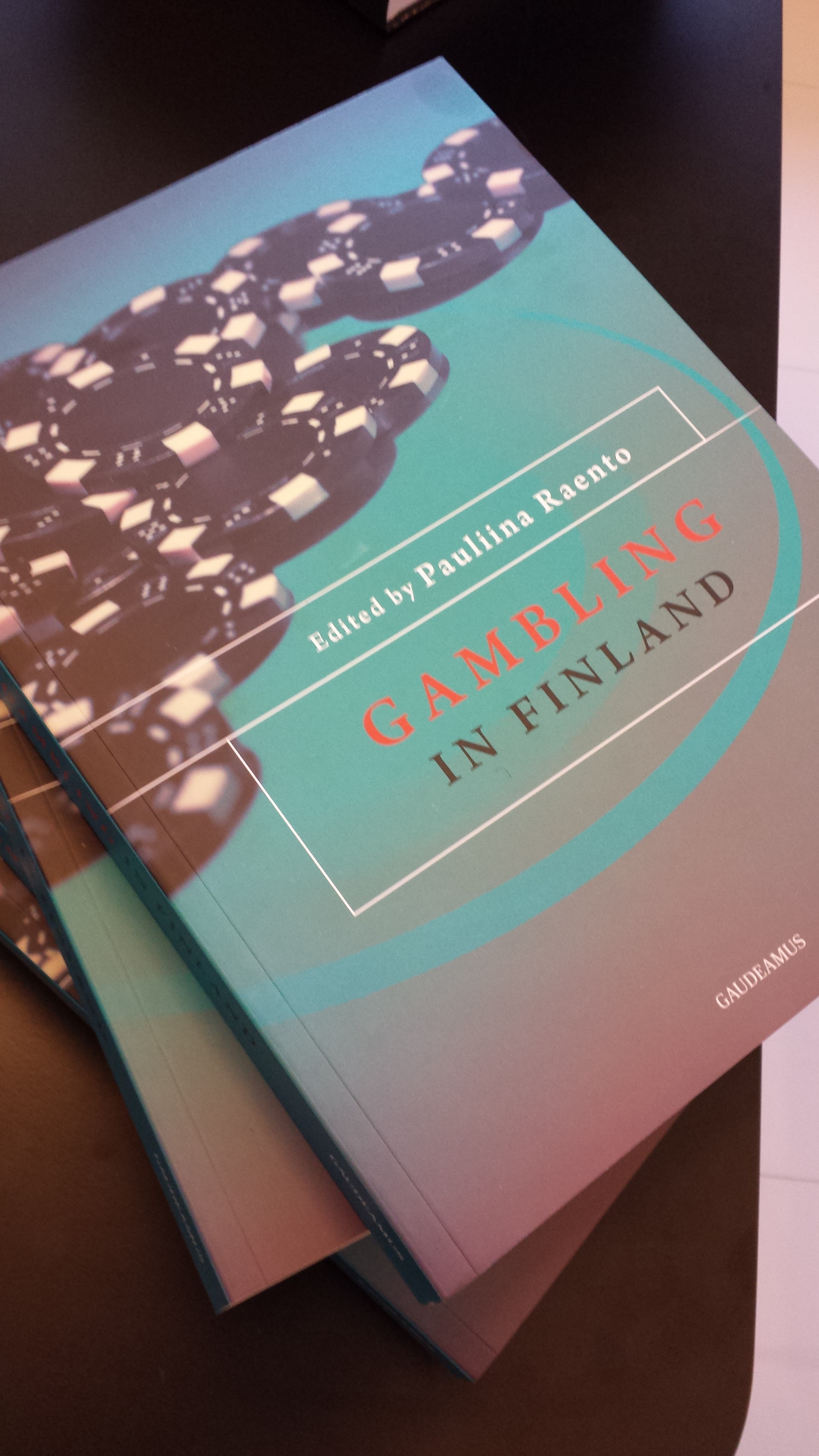
I got my copies of Gambling in Finland: Themes and Data for Qualitative Research (Gaudeamus) today. It is a tightly packed volume of “what” and “how” of gambling studies, showcasing some interesting Finnish research projects and new data sets. Together with Jani Kinnunen, we have a chapter on “Online Gambling and Data” there – you can check more details, including the table of contents from here: http://www.gaudeamus.fi/gambling-in-finland/

OASIS: Season Two

There are no rules (Kati Heljakka)

Today is the opening of Second Season in OASIS, our experimental play/library/living-room space in School of Information Sciences. There will be bubbly wine and heady ideas available in OASIS today, starting 2 pm – welcome! The invitation is here: http://oasis.uta.fi/season-2-opening-oasis/ Pictured: “There are no rules”, playful work of art by Katariina Heljakka.

Pelitaito-hankkeen loppuseminaari

[Final seminar of Pelitaito project] Tiedoksi: pelikulttuuria ja pelilukutaitoa edistämään sekä pelihaittoja ennalta ehkäisemään pyrkinyt Pelitaito-projekti toteuttaa hankkeen loppuseminaarin Helsingissä 6.11.2014. Seminaari on maksuton ja paikalle mahtuu 200 ensimmäisenä ilmoittautunutta. Tässä on linkki ilmoittautumissivulle, sekä loppuseminaarin ohjelma:

Good Game – Pelitaito-projektin loppuseminaari

Torstaina 6.11.2014 klo 9-16

Ostrobotnian juhlasali, Museokatu 10, Helsinki

Seminaarin puheenjohtaja, suunnittelija Tommi Tossavainen, Kansallinen audiovisuaalinen instituutti KAVI

9:00–10:00 Aamukahvi ja ilmoittautuminen

10:00–10:10 Seminaarin avaus: Kari Vuorinen, innovaatio- ja talousjohtaja, EHYT ry
10:10–10:35 Pelihaittatyö – sillanrakennusta vai aitojen pystytystä? Saini Mustalampi, kehittämispäällikkö, THL
10.35–10.40 Keskustelu

10:40–11:05 Mitä on pelisivistys? Mikko Meriläinen, projektiasiantuntija, Pelitaito-projekti
11.05–11:10 Keskustelu
11:10–11:30 Kukkahattu eSportsin tarina: Pelitaito-projekti

11:30–12:30
Lounas

12:30–13:00 Voimaantuminen ja pelit – pelifantasian monet maailmat: Frans Mäyrä, professori, Tampereen yliopisto
13:00–13:15 Kommenttipuheenvuoro: Jonne Arjoranta, pelitutkija, Jyväskylän yliopisto

13:15–13:40 Pelien yhteisöllisyys: Marko Siitonen, yliopistonlehtori (FT), Jyväskylän yliopisto
13:40–13:55 Kommenttipuheenvuoro: SEUL ry:n edustaja
13:55–14:00 Keskustelu

14:00–14:30 Kahvi

14:30–15:30 Paneeli: Parempaa pelaamista – miten edistetään pelikasvatusta ja ehkäistään pelihaittoja?
Paneelissa mukana:
KooPee Hiltunen, johtaja, Neogames ry
Jarmo Kumpulainen, strategia- ja edunvalvontajohtaja, RAY
Mikko Meriläinen, projektiasiantuntija, Pelitaito-projekti
Antti Murto, erikoissuunnittelija, THL
Tero Pasanen, pelitutkija, Jyväskylän yliopisto

15:30–16:00 Loppuyhteenveto: pj. Tommi Tossavainen, suunnittelija KAVI
Kiitokset: Kari Vuorinen, innovaatio- ja talousjohtaja, EHYT ry

16:00 Seminaari päättyy

European Summer School in Games and Play Studies

Next two weeks will be intensive time in Utrecht, the Netherlands, as “Identity and Interdisciplinarity in Games and Play Research”, the joint European Summer School of games and play studies takes place at the Utrecht University. My keynote takes place first in Monday, August 18th, and it is titled “From Interdisciplinarity to Identity and Back: The Dual Character of Academic Game Studies”. More information and full program is available at: http://www.gapsummerschool2014.nl.

Multi.Player 2 conference

Next week there will the Multi.Player 2: Compete, Cooperate, Communicate conference in Münster, Germany. There will be keynotes presented by Richard Bartle, Chris Ferguson, John L. Sherry and myself. The title of my talk is “Mixed Pleasures: Interdisciplinary Perspectives into ‘Social Games'”; you can find more information here: http://www.uni-muenster.de/DigitalGaming/en/Keynote.html#anchor_en_1_7

CFP: Thinking, analysing and designing Expressive Games

Spread the word:

International seminar


Thinking, analysing and designing Expressive Games


24-25 November 2014, METZ, FRANCE
CREM / LORIA, University of Lorraine

Selection Process

Proposals are expected by 1st September 2014. They must be sent in the form of an abstract of 800 – 1000 words (excluding bibliography). Each proposal shall indicate the last name, the first name, the status and the institution the author is affiliated to.
All proposals should be sent to sebastien.genvo@gmail.com Continue reading “CFP: Thinking, analysing and designing Expressive Games”

CFP: Games and Literary Theory 2014

Please find attached the Call for Papers for the Games and Literary Theory 2014 conference, taking place in Amsterdam in November 20-22, 2014. The deadline for abstracts (250-500 words) is August 1, 2014. CFP link: Final CFP International Conference Series in Games and Literary Theory.

Keynote on game studies, Lappeenranta, 3 June 2014

I will be presenting a keynote in YTP2014 (Yhdistetyt tietojenkäsittelyn päivät / The Federated Computer Science Event of Finland) in Tuesday, 3 June 2014. My talk is titled “The Multidisciplinary Study of Games: An Academic Discipline, or A Research Field without an Identity?” and I will be discussing some of the findings from my earlier, sociology of knowledge style work, as well as touching upon some of the interesting themes discussed in the Critical Evaluation of Game Studies seminar in April. Program link: http://www2.it.lut.fi/ytp2014/ohjelma.

Philosophy of Computer Games 2014 CFP: Freedom in Play

8th International Conference on the Philosophy of Computer Games
Freedom in Play

Istanbul, 13-15 November 2014

2014.gamephilosophy.org

—————————————————————————————-

Abstracts deadline: 15 August 2014

—————————————————————————————-

We hereby invite scholars in any field of studies who take a professional interest in the philosophy of computer games to submit papers to the 8th International Conference on the Philosophy of Computer Games, to be held in Istanbul 13-15 November 2014.

The concept of freedom is central in the shaping of game experiences and game cultures. It is a lens through which we can critically evaluate the philosophical, cultural and political relevance of computer games, as an art form and as a way of life. This year we especially invite papers that address the following areas of philosophical investigation:

1. The nature of freedom in games. Which philosophical concepts can help us clarify ontological and metaphysical dimensions of freedom in games and gaming?
2. The experience of freedom in games. How do we describe and evaluate specific experiences of freedom in play? Are certain types of freedoms in games artistically or ethically more desirable than others? In what way may such evaluations collide when people play together, especially in an on-line context?
3. Games and existential concepts of freedom. In what ways are games capable of expressing truths about the human condition? Is there a way in which they are inherently more or less capable of expressing ethical and normative truths than cinema, photography or art? How do we account for the semantic underpinnings of how games can create this sort of knowledge?
4. Political and ethical freedom. In what way can game mechanics or the social roles of gaming provide normative reasons for decision-making with regard to political freedom, gender issues, etc? Do computer games have a particular potential for being either politically conservative, progressive or subversive?

Accepted papers will have a clear focus on philosophy and philosophical issues in relation to computer games. They will refer to specific examples from computer games rather than merely invoke them in general terms.

In addition to papers that are directed at the main theme we invite a smaller number of papers in an “open” category. We are especially interested in papers that aim to continue discussions from earlier conferences in this series.

The abstracts should have a maximum 1000 words including bibliography. Please note if you intend your paper to fit in the “open” category.  The deadline for submissions is Midnight GMT, 15 August, 2014. Please submit your abstract through review.gamephilosophy.org.  All submitted abstracts will be subject to double blind peer review. Notification of accepted submissions will be sent out by 15 September 2014. A full paper draft must then be submitted by 6th November 2014 and will be made available on the conference website.

We also invite proposals for panels/workshops on October 12th. Please contact the programme committee chair if you are interested in organising one.

*

Tonguc Ibrahim Sezen, Istanbul Bilgi University (organising committee chair)
Rune Klevjer, University of Bergen (programme committee chair)

Peter Gabriel in Helsinki

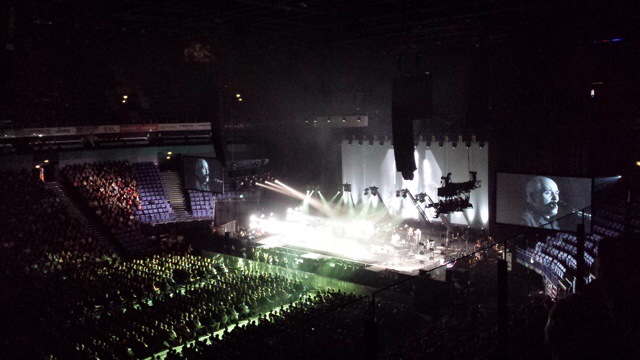
20140521-150836-54516389.jpgPeter Gabriel had his Back to Front tour concert in Helsinki yesterday, which I had the rare pleasure to take part in. I have followed the career and music of Peter for decades, but this was the first live performance I have been in. Even while you count in the music videos and concert DVDs, the real, live concert still remains a different kind of thing.

Since the days of Genesis, Peter Gabriel has been one of the real innovators of rock music, and his solo career has included both chart-leading pop music hits, as well as sombre, politically motivated material, and more experimental music. (My personal favorites include e.g. “Passion”, the album including music produced for The Last Temptation of Christ, the film by Martin Scorsese.) This concert was focused on revisiting his most popular album, “So” (1987), but was in reality much more.

The concert is built into three parts: the first, acoustic session was styled to be more like a band in rehersal (with the harsh, full arena lights shining on the band and the audience). This session included the semi-improvisational opening song, as well as classics such as “Shock the Monkey” (1982). The second part (the more “savoury course”, as Peter introduced in his metaphor of a three-course meal), provided full-blown electronica — distorted guitar and percussion effects, accompanied by black-and-white, often stroboscopic video projections and stage lightning. The colours were introduced only at the final, third part, where all the songs from “So” were played, in their original, recorded order. This was the “dessert”, as introduced by Peter.

It would be easy to be critical about the lack of innovation in the later part of Peter Gabriel, and see the reworking of the hit album in rather trite, commercial terms. For my part, I could only wish to have similar levels of creativity and experimental spirit left at the age of 64. The adaptations of Gabriel’s classic materials were often surprising, and challenged the listener to reconsider his or her previous understanding of the song. Some, reflective parts of the concert were truly touching and moving, some were just staggering, powerful rock experiences. Great concert, overall!