Imatra

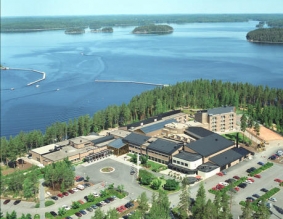
Imatran kylpylä
Imatran kylpylä (Suomen Ilmakuva Oy/ eKarjalan kuvapankki)

I will be talking today about “Playfulness and the Transformation of Learning” (“Pelillisyys, leikillisyys ja oppimisen muodonmuutos”) in teacher education event in Imatra, Eastern Finland. There will be also an opportunity to provide some demonstrations on the most popular digital game genres, where I also will make use and recommend our (Finnish) introductory online course in games genres and literacy at http://pelitieto.net.

CFP: DiGRA 2015

Call for papers: DiGRA 2015

Diversity of play: Games – Cultures – Identities
14-17 May 2015, Lüneburg, Germany
www.digra2015.org

Video game culture has had a self-image of being a distinct cultural form united by participants identifying themselves as ‘gamers’ for many years. Variations in this identity have been perceived either in relation to preferred platform or level of commitment and skill (newbie, casual, core, pro, etc.). Today the popularity of games has increased dramatically, games have become more specialized and gaming is taking place in a number of divergent practices, from e-sport to gamification. In addition, the gamer position includes a number of roles and identities such as: players, learners, time-fillers, users, fans, roleplayers, theory crafters, speed runners, etc. Furthermore, techniques like gamification and game-based learning, as well as the playful use of computer simulation for training purposes, is making it difficult to distinguish games from non-games.

Additionally, video game culture is merging with other forms of popular culture and new mobile technologies are making distinctions between digital and non-digital gaming blurred. Yet, whilst the forms of play seem to have become more diverse, the content of games is often only challenged by independent titles. This is the case despite a maturing audience, some of whom now seem to urge for more diverse themes and representations within games. In the light of increasing criticism of the representations and practices that have dominated much of games culture, it seems that the relationship between the identity of the ‘gamer’ and the content of games is undergoing a change.

Traditionally, game studies has tried to find common ground, seeking shared definitions and epistemologies. DiGRA 2015 seeks to encourage questions about the ‘Diversity of play’, with a focus on the multiple different forms, practices and identities labeled as games and/or game culture. The conference aims to address the challenge of studying and documenting games, gaming and gamers, in a time when these categories are becoming so general and/or contested, that they might risk losing all meaning. Given this, what concepts do we need to develop in order for our research to be cumulative and how do we give justice to the diverse forms of play found in different games and game cultures?

As in the previous year, DiGRA 2015 will accept submissions in five categories: full papers, abstracts, panel, workshops, and events. All submissions will be peer-reviewed using double blind reviewing. In addition, all submissions will receive a meta review and authors of rejected full papers will have the possibility to send a rebuttal if they perceive they have been given biased or uninformed reviewers. The conference welcomes submissions on a wide range of topics, including, but not limited to, the following:

  • Game cultures
  • Games and intersections with other cultural forms
  • Online gaming and communication in game worlds
  • Gender and gaming
  • Games as representation
  • Minority groups and gaming
  • Childhood and gaming
  • The gaming industry and independent games
  • Game journalism
  • Gaming in non-leisure settings
  • Applications of game studies in other domains
  • Gamification
  • System perspectives and mathematical game theory
  • Hybrid games and non-digital games
  • Game design characteristics
  • Technological systems
  • Simulations

Deadlines

  • Submission deadlines 22 January (hard deadline)
  • Acceptance/rejection notification 16 March
  • Rebuttal deadline 19 March
  • Camera ready deadline 14 April

Location & Date

14-17 May 2015

Lüneburg, Germany
At Campus of Leuphana University of Lüneburg
Scharnhorststr. 1
D-21335 Lüneburg
For more information and the latest updates regarding the DiGRA 2015 conference, see www.digra2015.org

Program Chairs
Staffan Björk
Jonas Linderoth

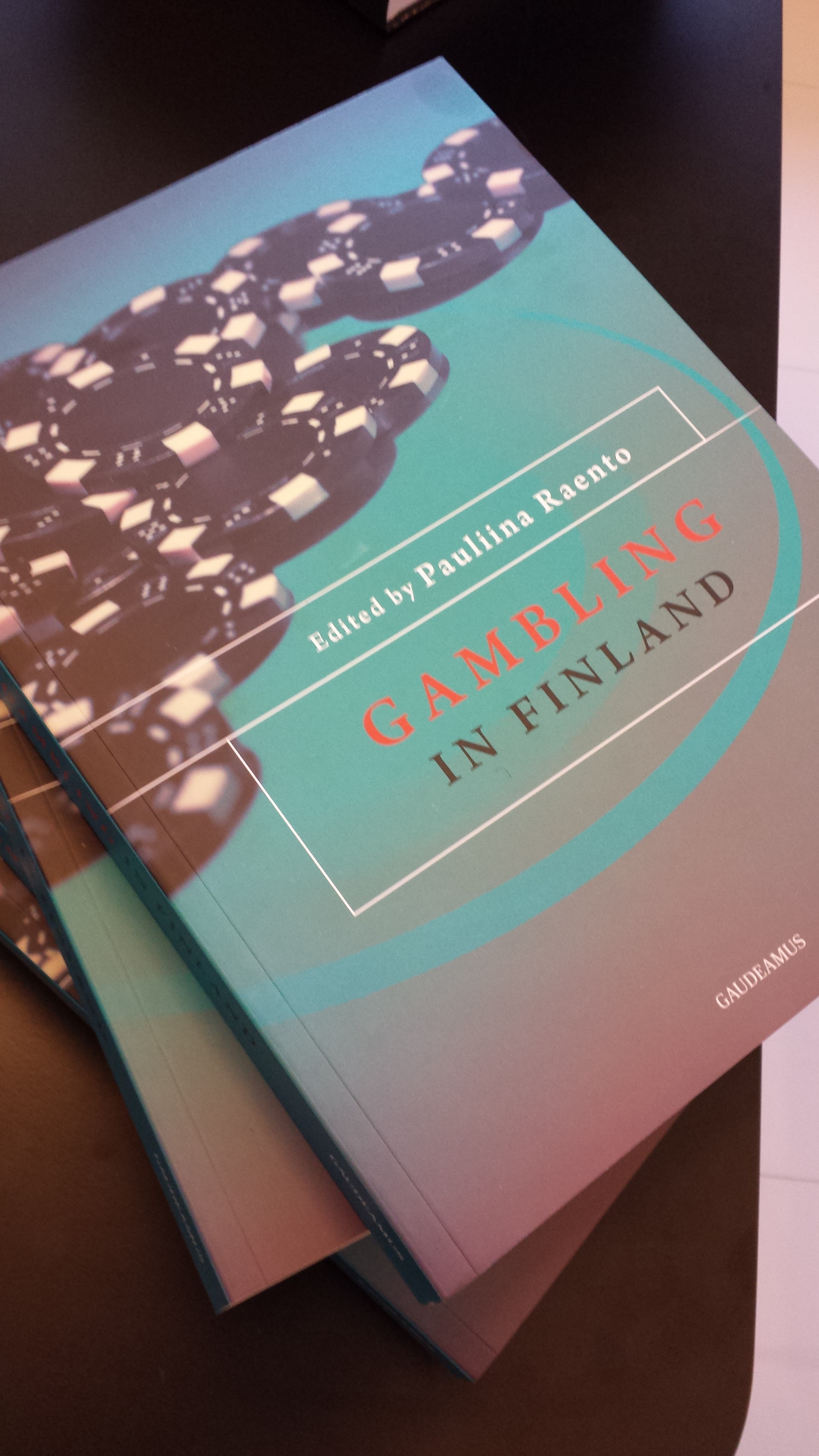
Gambling in Finland

Gambling in Finland (Gaudeamus)

I got my copies of Gambling in Finland: Themes and Data for Qualitative Research (Gaudeamus) today. It is a tightly packed volume of “what” and “how” of gambling studies, showcasing some interesting Finnish research projects and new data sets. Together with Jani Kinnunen, we have a chapter on “Online Gambling and Data” there – you can check more details, including the table of contents from here: http://www.gaudeamus.fi/gambling-in-finland/

OASIS: Season Two

There are no rules (Kati Heljakka)

Today is the opening of Second Season in OASIS, our experimental play/library/living-room space in School of Information Sciences. There will be bubbly wine and heady ideas available in OASIS today, starting 2 pm – welcome! The invitation is here: http://oasis.uta.fi/season-2-opening-oasis/ Pictured: “There are no rules”, playful work of art by Katariina Heljakka.

Pelitaito-hankkeen loppuseminaari

[Final seminar of Pelitaito project] Tiedoksi: pelikulttuuria ja pelilukutaitoa edistämään sekä pelihaittoja ennalta ehkäisemään pyrkinyt Pelitaito-projekti toteuttaa hankkeen loppuseminaarin Helsingissä 6.11.2014. Seminaari on maksuton ja paikalle mahtuu 200 ensimmäisenä ilmoittautunutta. Tässä on linkki ilmoittautumissivulle, sekä loppuseminaarin ohjelma:

Good Game – Pelitaito-projektin loppuseminaari

Torstaina 6.11.2014 klo 9-16

Ostrobotnian juhlasali, Museokatu 10, Helsinki

Seminaarin puheenjohtaja, suunnittelija Tommi Tossavainen, Kansallinen audiovisuaalinen instituutti KAVI

9:00–10:00 Aamukahvi ja ilmoittautuminen

10:00–10:10 Seminaarin avaus: Kari Vuorinen, innovaatio- ja talousjohtaja, EHYT ry
10:10–10:35 Pelihaittatyö – sillanrakennusta vai aitojen pystytystä? Saini Mustalampi, kehittämispäällikkö, THL
10.35–10.40 Keskustelu

10:40–11:05 Mitä on pelisivistys? Mikko Meriläinen, projektiasiantuntija, Pelitaito-projekti
11.05–11:10 Keskustelu
11:10–11:30 Kukkahattu eSportsin tarina: Pelitaito-projekti

11:30–12:30
Lounas

12:30–13:00 Voimaantuminen ja pelit – pelifantasian monet maailmat: Frans Mäyrä, professori, Tampereen yliopisto
13:00–13:15 Kommenttipuheenvuoro: Jonne Arjoranta, pelitutkija, Jyväskylän yliopisto

13:15–13:40 Pelien yhteisöllisyys: Marko Siitonen, yliopistonlehtori (FT), Jyväskylän yliopisto
13:40–13:55 Kommenttipuheenvuoro: SEUL ry:n edustaja
13:55–14:00 Keskustelu

14:00–14:30 Kahvi

14:30–15:30 Paneeli: Parempaa pelaamista – miten edistetään pelikasvatusta ja ehkäistään pelihaittoja?
Paneelissa mukana:
KooPee Hiltunen, johtaja, Neogames ry
Jarmo Kumpulainen, strategia- ja edunvalvontajohtaja, RAY
Mikko Meriläinen, projektiasiantuntija, Pelitaito-projekti
Antti Murto, erikoissuunnittelija, THL
Tero Pasanen, pelitutkija, Jyväskylän yliopisto

15:30–16:00 Loppuyhteenveto: pj. Tommi Tossavainen, suunnittelija KAVI
Kiitokset: Kari Vuorinen, innovaatio- ja talousjohtaja, EHYT ry

16:00 Seminaari päättyy

European Summer School in Games and Play Studies

Next two weeks will be intensive time in Utrecht, the Netherlands, as “Identity and Interdisciplinarity in Games and Play Research”, the joint European Summer School of games and play studies takes place at the Utrecht University. My keynote takes place first in Monday, August 18th, and it is titled “From Interdisciplinarity to Identity and Back: The Dual Character of Academic Game Studies”. More information and full program is available at: http://www.gapsummerschool2014.nl.

Multi.Player 2 conference

Next week there will the Multi.Player 2: Compete, Cooperate, Communicate conference in Münster, Germany. There will be keynotes presented by Richard Bartle, Chris Ferguson, John L. Sherry and myself. The title of my talk is “Mixed Pleasures: Interdisciplinary Perspectives into ‘Social Games'”; you can find more information here: http://www.uni-muenster.de/DigitalGaming/en/Keynote.html#anchor_en_1_7

Analog Game Studies

Analog Game Studies (Dice Photo by Dave Ward)

Digital games are not everything there is in games, far from it. There is now a new journal, Analog Game Studies, for all of us interested in board games, table-top role-playing games, card games — I think that actually means most of contemporary game scholars. There has been long-standing discussion that the name of DiGRA should be changed to “GRA” instead (taking “Digital” away from its dominating position of games research), but information technologies sure has been a catalyst for some interesting developments in the field of game cultures, as well as in industry, of course. When there are more dedicated venues of the different forms which games and play are realized in, then we can more clearly see the universals, as well as the particularities, of these specific forms. Link: http://analoggamestudies.org/ .

CFP: Thinking, analysing and designing Expressive Games

Spread the word:

International seminar


Thinking, analysing and designing Expressive Games


24-25 November 2014, METZ, FRANCE
CREM / LORIA, University of Lorraine

Selection Process

Proposals are expected by 1st September 2014. They must be sent in the form of an abstract of 800 – 1000 words (excluding bibliography). Each proposal shall indicate the last name, the first name, the status and the institution the author is affiliated to.
All proposals should be sent to sebastien.genvo@gmail.com Continue reading “CFP: Thinking, analysing and designing Expressive Games”

CFP: Games and Literary Theory 2014

Please find attached the Call for Papers for the Games and Literary Theory 2014 conference, taking place in Amsterdam in November 20-22, 2014. The deadline for abstracts (250-500 words) is August 1, 2014. CFP link: Final CFP International Conference Series in Games and Literary Theory.