
This Friday I have been invited to present the keynote in the Social Media in Education seminar, organised by TAOKK & TAMK in Tampere. My title is “Mobile and Pervasive Play – the New Potentials for Communication, Information Seeking and Learning” (Mobiili ja kaikkialle levittäytyvä pelillisyys – viestinnän, tiedonhankinnan ja oppimisen uudet mahdollisuudet). You can find the seminar program from here: http://www.tamk.fi/cms/tamk.nsf/($All)/B33A81D7444E0FA7C2257D46001F9A05?OpenDocument .
Category: digital culture
Pelitaito-hankkeen loppuseminaari
[Final seminar of Pelitaito project] Tiedoksi: pelikulttuuria ja pelilukutaitoa edistämään sekä pelihaittoja ennalta ehkäisemään pyrkinyt Pelitaito-projekti toteuttaa hankkeen loppuseminaarin Helsingissä 6.11.2014. Seminaari on maksuton ja paikalle mahtuu 200 ensimmäisenä ilmoittautunutta. Tässä on linkki ilmoittautumissivulle, sekä loppuseminaarin ohjelma:
Good Game – Pelitaito-projektin loppuseminaari
Torstaina 6.11.2014 klo 9-16
Ostrobotnian juhlasali, Museokatu 10, Helsinki
Seminaarin puheenjohtaja, suunnittelija Tommi Tossavainen, Kansallinen audiovisuaalinen instituutti KAVI
9:00–10:00 Aamukahvi ja ilmoittautuminen
10:00–10:10 Seminaarin avaus: Kari Vuorinen, innovaatio- ja talousjohtaja, EHYT ry
10:10–10:35 Pelihaittatyö – sillanrakennusta vai aitojen pystytystä? Saini Mustalampi, kehittämispäällikkö, THL
10.35–10.40 Keskustelu
10:40–11:05 Mitä on pelisivistys? Mikko Meriläinen, projektiasiantuntija, Pelitaito-projekti
11.05–11:10 Keskustelu
11:10–11:30 Kukkahattu eSportsin tarina: Pelitaito-projekti
11:30–12:30 Lounas
12:30–13:00 Voimaantuminen ja pelit – pelifantasian monet maailmat: Frans Mäyrä, professori, Tampereen yliopisto
13:00–13:15 Kommenttipuheenvuoro: Jonne Arjoranta, pelitutkija, Jyväskylän yliopisto
13:15–13:40 Pelien yhteisöllisyys: Marko Siitonen, yliopistonlehtori (FT), Jyväskylän yliopisto
13:40–13:55 Kommenttipuheenvuoro: SEUL ry:n edustaja
13:55–14:00 Keskustelu
14:00–14:30 Kahvi
14:30–15:30 Paneeli: Parempaa pelaamista – miten edistetään pelikasvatusta ja ehkäistään pelihaittoja?
Paneelissa mukana:
KooPee Hiltunen, johtaja, Neogames ry
Jarmo Kumpulainen, strategia- ja edunvalvontajohtaja, RAY
Mikko Meriläinen, projektiasiantuntija, Pelitaito-projekti
Antti Murto, erikoissuunnittelija, THL
Tero Pasanen, pelitutkija, Jyväskylän yliopisto
15:30–16:00 Loppuyhteenveto: pj. Tommi Tossavainen, suunnittelija KAVI
Kiitokset: Kari Vuorinen, innovaatio- ja talousjohtaja, EHYT ry
16:00 Seminaari päättyy
European Summer School in Games and Play Studies
Next two weeks will be intensive time in Utrecht, the Netherlands, as “Identity and Interdisciplinarity in Games and Play Research”, the joint European Summer School of games and play studies takes place at the Utrecht University. My keynote takes place first in Monday, August 18th, and it is titled “From Interdisciplinarity to Identity and Back: The Dual Character of Academic Game Studies”. More information and full program is available at: http://www.gapsummerschool2014.nl.
Analog Game Studies
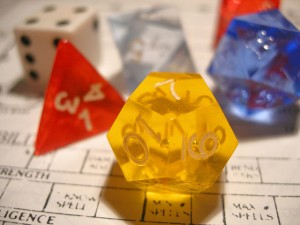
Digital games are not everything there is in games, far from it. There is now a new journal, Analog Game Studies, for all of us interested in board games, table-top role-playing games, card games — I think that actually means most of contemporary game scholars. There has been long-standing discussion that the name of DiGRA should be changed to “GRA” instead (taking “Digital” away from its dominating position of games research), but information technologies sure has been a catalyst for some interesting developments in the field of game cultures, as well as in industry, of course. When there are more dedicated venues of the different forms which games and play are realized in, then we can more clearly see the universals, as well as the particularities, of these specific forms. Link: http://analoggamestudies.org/ .
CFP: Games and Literary Theory 2014
Please find attached the Call for Papers for the Games and Literary Theory 2014 conference, taking place in Amsterdam in November 20-22, 2014. The deadline for abstracts (250-500 words) is August 1, 2014. CFP link: Final CFP International Conference Series in Games and Literary Theory.
Philosophy of Computer Games 2014 CFP: Freedom in Play
8th International Conference on the Philosophy of Computer Games
Freedom in Play
Istanbul, 13-15 November 2014
2014.gamephilosophy.org
—————————————————————————————-
Abstracts deadline: 15 August 2014
—————————————————————————————-
We hereby invite scholars in any field of studies who take a professional interest in the philosophy of computer games to submit papers to the 8th International Conference on the Philosophy of Computer Games, to be held in Istanbul 13-15 November 2014.
The concept of freedom is central in the shaping of game experiences and game cultures. It is a lens through which we can critically evaluate the philosophical, cultural and political relevance of computer games, as an art form and as a way of life. This year we especially invite papers that address the following areas of philosophical investigation:
1. The nature of freedom in games. Which philosophical concepts can help us clarify ontological and metaphysical dimensions of freedom in games and gaming?
2. The experience of freedom in games. How do we describe and evaluate specific experiences of freedom in play? Are certain types of freedoms in games artistically or ethically more desirable than others? In what way may such evaluations collide when people play together, especially in an on-line context?
3. Games and existential concepts of freedom. In what ways are games capable of expressing truths about the human condition? Is there a way in which they are inherently more or less capable of expressing ethical and normative truths than cinema, photography or art? How do we account for the semantic underpinnings of how games can create this sort of knowledge?
4. Political and ethical freedom. In what way can game mechanics or the social roles of gaming provide normative reasons for decision-making with regard to political freedom, gender issues, etc? Do computer games have a particular potential for being either politically conservative, progressive or subversive?
Accepted papers will have a clear focus on philosophy and philosophical issues in relation to computer games. They will refer to specific examples from computer games rather than merely invoke them in general terms.
In addition to papers that are directed at the main theme we invite a smaller number of papers in an “open” category. We are especially interested in papers that aim to continue discussions from earlier conferences in this series.
The abstracts should have a maximum 1000 words including bibliography. Please note if you intend your paper to fit in the “open” category. The deadline for submissions is Midnight GMT, 15 August, 2014. Please submit your abstract through review.gamephilosophy.org. All submitted abstracts will be subject to double blind peer review. Notification of accepted submissions will be sent out by 15 September 2014. A full paper draft must then be submitted by 6th November 2014 and will be made available on the conference website.
We also invite proposals for panels/workshops on October 12th. Please contact the programme committee chair if you are interested in organising one.
*
Tonguc Ibrahim Sezen, Istanbul Bilgi University (organising committee chair)
Rune Klevjer, University of Bergen (programme committee chair)
Game Studies: a polyphonic discipline?
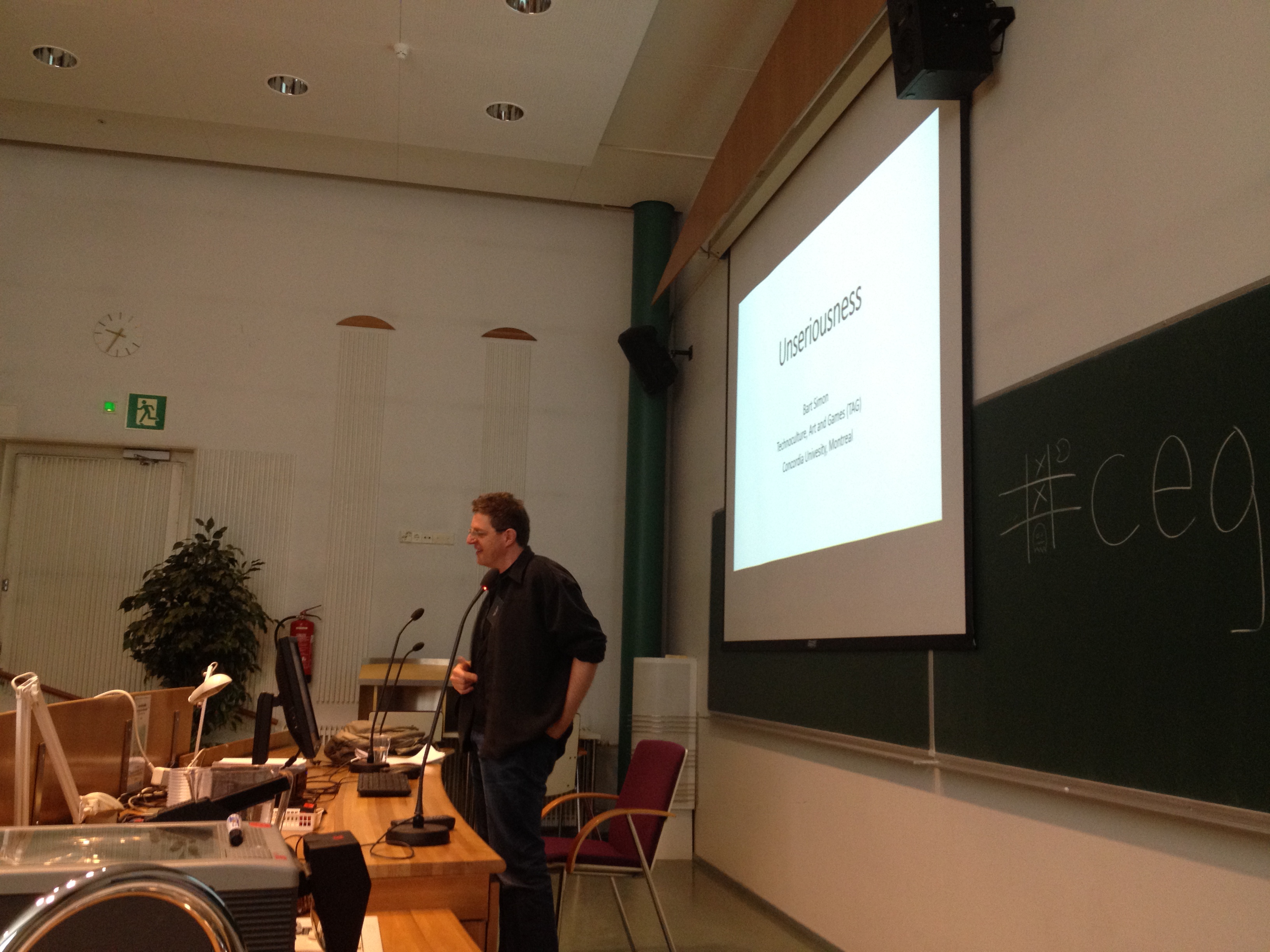
The Critical Evaluation of Game Studies seminar closed today, leaving a full house of tired but intellectually stimulated games scholars to debate and reflect on the outcomes and overall synthesis of the varied papers and discussions. One of the threads of the discussion concerned the identity and character of Game Studies (or “game studies”, or: games research? Or: ludology, even?) In his keynote, Espen Aarseth talked about Game Studies as a field, and argued (with explicit comment against my earlier published views) that a “discipline” is something that he particularly does not want to see Game Studies developing into.
This particular, anti-disciplinary view can in a way be grounded on the existing polyphony in this field: there has not emerged any single, unified school of thought that would encompass everything that is going around games and play in academia. On the other hand, one could also – again following Espen – argue that a discipline that produces its own undergraduates as well as postgraduates would need a more solid methodological basis, and also more established work market to guarantee the employment of such “native graduates”. (Sebastian Deterding had an interesting analysis and proposal in his paper, suggesting that since there are not much guarantees of employment, or not so many well-established publication venues in the “core” areas of Game Studies, people are escaping back to more established academic fields, such as HCI or Communication Studies, which have already opened up for games related research, and provide more institutional work opportunities – and that Game Studies should merge with Design Research so that it would have better opportunities for survival.) Or, one could follow Bart Simon who in his speech talked about the “unseriousness” inherent in games and play as an object of study, and go against the instrumentalization and reification of disciplinary knowledge by principle.
While I see the point of all these, well-grounded arguments, I just want to emphasize again that Game Studies needs both dimensions and movements: both the elements that pull people towards each other and focus at organizing the knowledge production and educational activities in Game Studies into some, hopefully rather unified wholes, as well as more interdisciplinary elements that fertilize and stimulate the growth of new approaches and innovations – both within Game Studies, as well as in other fields of learning. While there is enough anarchist in most game scholars today to make us stand up and go against any attempt at governance or “central control” in this daring, iconoclastic intellectual project that has been set into motion, it is also important, I think, to carry enough responsibility to aim at positive conditions for such project, and sometimes this will also require setting up “disciplinary versions” of the fast-moving research field, so that it can engage with various academic institutions and neighbouring disciplines at even terms. While such “freeze frame” simplifications of the field probably always do some violence to the plurality, coverage and dynamism of Game Studies, they are probably necessary illusions that we also need. Textbooks, lectures and articles are all good places to construct such, identity creating moments of Game Studies, as well as for deconstructing and questioning them. After the seminar, I think that the deconstructionist momentum is currently stronger than the constructivist one, but it just may be my impression.
In any case, I came out of the seminar invigorated and energized, believing even more that before to the need and enormous potential Game Studies has to offer, not only to academia, but also to the surrounding society. If we do not try to fit together and negotiate the multiple aspects that complicate the superficial, commonplace perceptions of what games are, or what game playing means, who is going to do that? Also, I do not think that the other academic disciplines that I know about are that much more unified, or less polyphonic than Game Studies is, actually. As years and decades go past, academics tend to question the truths of their fields from multiple angles, and come up with dozens of different, mutually competing and incompatible theories and approaches into their fields of inquiry. And that is a very good thing. Long live Game Studies, one and many!
Keynote: Tulevaisuus haastaa oppimisen
[Keynote on the future of learning in Jyväskylä] Olen kutsuttuna puhujana Peda.net-tapahtumassa Jyväskylässä ensi viikolla. “Tulevaisuus haastaa oppimisen ja verkko-opettajan” -seminaarissa 28.3. puhun otsikolla “Pelillisyys ja oppiminen – murrosten aika”. Linkki ohjelmaan: http://peda.net/veraja/tulevaisuushaastaaoppimisen/ohjelma
First issue of Fafnir, science fiction studies journal is out
Spread the word: the first issue of Fafnir – Nordic Journal of Science Fiction and Fantasy Research is now out. Here is the table of contents:
Table of Contents: Fafnir 1/2014

And Siegfried thought he killed Fafnir. How wrong he was…! (From Wikimedia Commons)
- Editorial
- Opposing Forces and Ethical Judgments in Samuel Delany’s Stars in My Pocket like Grains of Sand (Päivi Väätänen)
- Agents or Pawns? Power Relations in William Gibson’s Bigend Trilogy (Esko Suoranta)
- What is it that Fanfiction Opposes? The Shared and Communal Features of Firefly/Serenity Fanfiction (Hanna-Riikka Roine)
- Good and Evil in J.R.R. Tolkien’s Legendarium: Concerning Dichotomy between Visible and Invisible (Jyrki Korpua)
- Scholars Opposing Forces: Report on FINFAR 2013 Meeting (Katja Kontturi)
- FINFAR: A Gift from Fandom to Academia (Liisa Rantalaiho)
- Peeking into the Neighbouring Grove: Speculative Fiction in the Work of Mainstream Scholars (Merja Polvinen)
- Call for Papers for the 3/2014 issue of Fafnir
The full journal is available at: http://journal.finfar.org/
Windows 8 ergonomics

I have been testing and using Windows 8 (and now 8.1) in most of my Windows PCs for some time now, and while I mostly fail to find any real use for the Metro style apps, there are some nice improvements (most of them “under the hood”) that make Windows 8 preferable to Windows 7, for me, at the moment. However, there remains some issues that mostly relate to how to manage the new gesture controls of Windows 8, when only one of my Windows laptops is an actual touch-screen device. Swipes from the sides of the screen need to be carried out by pointing and clicking with a mouse, which is cumbersome, or through a touchpad, which have their benefits and downsides.
The attached picture shows by current cavalcade of optional pointing and gesturing devices that are connected and available next to the keyboard in my Windows 8.1 desktop workstation. These include the Logitech Touchpad T650, Apple Wireless Touchpad, Logitech Marble Trackball and Microsoft Sculpt Comfort Mouse, the most recent addition. The traditional mouse (with the optional Win8 button/touch area) is the most precise for pointing, the Marble trackball provides overall best ergonomics, and T650 is best compatible and supported in Windows 8 of the two touchpads (no surprises there, really). What really irritates me, is that after using one of them, there is aways some shortcoming which forces me to move to another device for a while: the touchpad is great for gestures and skimming through web pages, for example, but whenever multiple files need to be manipulated precisely, I find myself getting hold of the mouse or the trackball. And when my fingers and wrist get tired of rotating and swiping with a mouse, then I need to move a touchpad back to the mousepad.
A mobile device does not suffer from similar schizophrenia – you just use the mobile-optimized apps through a mobile-optimized UI. The touch gestures in Windows 8/8.1 desktop mode are a problem mostly since they are almost useful, so that once you have started to use them, it is hard to go back — yet, on the other hand, they do not naturally fit the desktop computer control devices capabilities. You are stuck in the middle.
And my carpal tunnel syndrome gets worse, again.
 frans goes blog
You must be logged in to post a comment.