MEC 2015: Midnight Sun conference on media education, ICT and games

Spread the word of this interesting conference – I am one of the keynotes and the call for papers is now open:

Welcome to the MEC 2015!

Media Education Conference – MEC 2015 (former NBE) is an informal and friendly conference which participants attend to exchange ideas and information dealing with media education, educational use of ICTs and learning environments. MEC is organized on 15-17 June 2015 in Sallatunturi with the theme In the Light of the Midnight Sun. The event organizer is the Centre for Media Pedagogy at the University of Lapland (CMP).

Keynote Speakers:
Professor Roger Säljö, Department of Education, University of Gothenburg, Sweden
Associate Dean Sandi Feaster, School of Medicine, Standford University, USA
Professor Frans Mäyrä, School of Information Sciences, University of Tampere, Finland

Important Dates and Deadlines:
Deadline for abstract submissions: 2 February 2015
Notifications of acceptance sent to authors by 16 February 2015
Deadline for paper submission of accepted abstracts: 13 April 2015
Deadline for early-bird registration: 30 April 2015
Review results notified to authors by 11 May 2015
Deadline for camera-ready papers: 29 May 2015

Please check the conference website for full details of programme, keynotes, paper submission and registration: http://www.ulapland.fi/MEC2015

Please forward this message to all the persons and organizations you think will be interested in the conference.

Looking forward to seeing you in Salla in June!

MEC 2015 Organizers

Professor Heli Ruokamo, Director, Chair
Ph.D. Päivi Rasi, University lecturer, Title of Docent
Ph.D. Mari Maasilta, University lecturer
Ph.D. Hanna Vuojärvi, University lecturer
MA (Education) Tuulikki Keskitalo, Researcher
Marja-Leena Porsanger, Conference Coordinator, Rovaniemi-Lapland Congresses, University of Lapland

Ystävällisin terveisin / With best regards,

Marja-Leena Porsanger
Konferenssisuunnittelija / Conference Coordinator

Postiosoite / Mailing address:
Lapin yliopisto / University of Lapland
Rovaniemi-Lapland Congresses
PL 122 / PO Box 122
96101 Rovaniemi, Finland

Käyntiosoite / Visiting address:
Hallituskatu 20 A, 96100 Rovaniemi

Tel. +358 (0)40 721 8260
Fax +358 (0)16 362 940
Marja-Leena.Porsanger@ulapland.fi and congress@ulapland.fi
www.ulapland.fi/kongressipalvelu

Kutsu: Pelitutkimuksen vuosikirja 2015, uusi päätoimittaja

[Finnish Yearbook of Game Studies, call for 2015] Pelitutkimuksen vuosikirja jatkaa toimintaansa edelleen myös ensi vuonna. Päätoimittaja vaihtuu: vuosikirjan perustamisesta vuodesta 2009 suuren työn tehnyt professori Jaakko Suominen luovuttaa valtikan Jyväskylän yliopiston nykykulttuurin professorille Raine Koskimaalle, joka aloittaa vuoden alusta vuosikirjan uutena päätoimittajana. Vertaisarvioitu, suomenkielinen tiedejulkaisu on edelleen kiinnostunut julkaisemaan mielenkiintoisia uusia tutkimusartikkeleita, katsauksia ja kirja-arvioita; ks. kutsu: http://www.pelitutkimus.fi/vuosikirja-2015

Pelitutkimuksen vuosikirja 2014

Tiedoksi, runsaasti uutta pelitutkimustietoa on jälleen ilmaiseksi tarjolla:

Pelitutkimuksen kenttä laajenee — uusi Pelitutkimuksen vuosikirja
ilmestynyt

Pelitutkimuksen vuosikirja 2014 on ilmestynyt sähköisenä osoitteessa
http://www.pelitutkimus.fi/vuosikirja-2014

Vuosikirjassa tarkastellaan niin pelaamisen historiaa, nykytilannetta
kuin tulevaisuuttakin.

Pelitutkimuksen vuosikirja on vertaisarvioitu, avoin
tiedejulkaisu.Pelitutkimus on sekä monitieteinen tutkimusala että nuori
akateeminen oppiaine, jonka parissa toimivien tutkijoiden huomion
keskiössä on digitaalisten pelien erityisluonne. Nyt julkaistussa,
järjestyksessään kuudennessa vuosikirjassa, käsitellään varhaisen
suomalaisen tietokonepelin, Chesmacin (1979) historiaa ja löytämistä,
peliväkivallan suhdetta pelejä koskeviin moraalipaniikkeihin,
johtamiskäytäntöjä verkkopeleissä, uutispelejä, Macaon
rahapelikulttuureja, pelejä ja oppimista sekä pelivideoita.

Pelitutkimuksen vuosikirjan 2014 avaa Tero Pasasen artikkeli
väkivallasta pelikohujen arkkityyppinä. Pasanen käsittelee
artikkelissaan myös seksuaaliseen väkivaltaan, muukalaisvihaan ja
naisvihaan liittyviä pelikohuja ja toteaa, että pelikohujen
synnyttämillä moraalipaniikeilla on keskeinen merkitys interaktiivisen
median yhteiskunnallisessa kehityksessä.

Jukka Jouhkin tutkimuskohteena on Kiinan erityistalousalueen Macaon
rahapelaaminen. Hän lähestyy aihetta erityisesti macaolaisten
moraalisten asenteiden kautta keskittyen alueella tapahtuneen
rahapelaamisen ja rahapeliturismin nopean kasvun vaikutuksiin.

Marko Siitonen ja Sanna-Kaisa Launonen tutkivat uutispeleihin eli
pelillistettyyn journalismiin liittyviä käyttäjäkokemuksia. Heidän
tutkimuksestaan käy ilmi, miten uutisten aiheet vaikuttavat siihen,
voiko niitä tukea pelillistämisellä lainkaan ja miten pelillistäminen
kannattaa tehdä.

Mikko Vesan ja J. Tuomas Harviaisen artikkelin tavoitteena on esittää
malleja, joiden avulla verkkopeliympäristöissä tapahtuvaa johtamista voi
tutkia. Vesa ja Harviainen tutkivat World of Warcraft -pelin niin
kutsuttuja raidiyhteisöjä ja niissä tapahtuvia johtamisen käytäntöjä.

Veli-Matti Nurkkalan ja tutkimusryhmän artikkeli pelaajien biometrisesta
testaamisesta soveltaa systeemisen psykologian näkökulmaa. Artikkeli on
herättänyt keskustelua jo ennen julkaisua ja kriittinen kommentti, sekä
kirjoittajien vastine kommenttiin on julkaistu Vuosikirjan osana.

Pelitutkimuksen vuosikirjan päätoimittaja on professori Jaakko Suominen
Turun yliopistosta. Toimituskuntaan kuuluvat lisäksi professorit Raine
Koskimaa (Jyväskylän yliopisto) sekä Frans Mäyrä (Tampereen yliopisto),
yliopistonlehtori Petri Saarikoski (Turun yliopisto) ja yliopistotutkija
Olli Sotamaa (Tampereen yliopisto).

Lisätietoja: Jaakko Suominen, jaakko.suominen@utu.fi, 02-333 8100

Pelitutkimuksen vuosikirjan 2014 sisällys

Johdanto

Toimituskunta: Pelimaailmoista maailman pelillistymiseen —
pelitutkimuksen ja pelikulttuurin muutoslinjoja
<http://www.pelitutkimus.fi/vuosikirja2014/ptvk2014-01.pdf>. 3-7.

Artikkelit

1. Tero Pasanen: Murhasimulaattoreista poliittiseen korrektiuteen:
Väkivalta pelikohujen arkkityyppinä
<http://www.pelitutkimus.fi/vuosikirja2014/ptvk2014-02.pdf>. 8-23.
2. Jukka Jouhki: Pelaamisen moraali Macaossa: Havaintoja
rahapeliteollisuuden nopean nousun kokeneiden macaolaisten
moraalisten näkemysten narratiivisesta rakentumisesta
<http://www.pelitutkimus.fi/vuosikirja2014/ptvk2014-03.pdf>. 24-40.
3. Marko Siitonen ja Sanna-Kaisa Launonen: Viihteen ja vakavuuden
rajoilla — käyttäjien kokemuksia uutispeleistä
<http://www.pelitutkimus.fi/vuosikirja2014/ptvk2014-04.pdf>. 41-50
4. Mikko Vesa ja J. Tuomas Harviainen: Strategiset käytännöt
verkkoroolipeliympäristöissä: Merkityksiä pelitutkimukselle.
<http://www.pelitutkimus.fi/vuosikirja2014/ptvk2014-05.pdf> 51-62.
5. Veli-Matti Nurkkala, Kyösti Koskela, Jonna Kalermo, Petri Ruuskanen,
Niina Karvinen ja Timo Järvilehto: Biometrinen testaaminen ja
pelikäyttäytymisen psykofysiologinen teoria: Systeemisen psykologian
näkökulma
<http://www.pelitutkimus.fi/vuosikirja2014/ptvk2014-06.pdf>. 63-71.
Kommentti artikkeliin (Simo Järvelä ja J. Matias Kivikangas). 72.
Kirjoittajien vastine kommenttiin. 73.

Katsaukset

1. Markku Reunanen ja Manu Pärssinen: Chesmac: ensimmäinen suomalainen
kaupallinen tietokonepeli — jälleen
<http://www.pelitutkimus.fi/vuosikirja2014/ptvk2014-07.pdf>. 76-80.
2. Tero Kerttula: Peli jota ei voi pelata — pelivideoiden kulttuuri
<http://www.pelitutkimus.fi/vuosikirja2014/ptvk2014-08.pdf>. 81-87.
3. Katri Kuusisto: Hyöty ja huvi — kaupallisten pelien anti
opetuspeleihin
<http://www.pelitutkimus.fi/vuosikirja2014/ptvk2014-09.pdf>. 88-96.

Esittelyt ja arviot

1. Juho Karvinen: Siltaa sosiologian ja leikin tutkimuksen välille —
Thomas S. Henricksin Play Reconsidered: Sociological Perspectives on
Human Expression
<http://www.pelitutkimus.fi/vuosikirja2014/ptvk2014-10.pdf>. 97-99.
2. Miikka Lehtonen, Miikka Junnila ja Elina Koivisto: Pelitutkimuksen
paikat, osa 2: Aalto-yliopiston pelitutkimuksen ja -opetuksen
nykytila
<http://www.pelitutkimus.fi/vuosikirja2014/ptvk2014-11.pdf>. 100-105.

DiGRA 2016

Spreading the word: The School of Arts, Media and Computer Games at Abertay University is pleased to announce that it will be hosting the 2016 International DiGRA Conference in Dundee, Scotland, tentatively scheduled for August 3 – 6, 2016.

Abertay University is the home of the Europe’s oldest computer games program and the UK’s first university Centre for Excellence in Computer Games Education, offering undergraduate and post-graduate degrees in games technology, game design and production management, and computer arts. The city of Dundee has been a major hub for game development since the release of Lemmings in 1991 by DMA – now known as Rockstar North.

Dundee is less than an hour away by train from the city centre of Edinburgh, and the 2016 conference will be held in the week immediately preceding the Edinburgh Festival (including the Fringe), the largest annual cultural festival in the world. Abertay also hosts the Dare Protoplay festival, one of the largest indie games festivals in the UK, and the Dare to be Digital game design competition, which will be held just before the conference.

As a reminder, DiGRA’s 2015 conference will take place 14-17 May 2015 at Lüneburg, Germany. The call for papers is currently open (deadline is January 22, 2015). Further information is available here: http://www.digra2015.org/

New articles in Games and Culture

There are again some interesting, new research articles published in the Online First area of Games and Culture journal:

Shallow Gamification: Testing Psychological Effects of Framing an Activity as a Game

Andreas Lieberoth


The Role of Visual Design in Game Design

Asaf Friedman


Emitexts and Paratexts

Marcus Carter


Play and Productivity: The Constitution of Ageing Adults in Research on Digital Games

Sara Mosberg Iversen

ToDiGRA special issue: Physical and Digital in Games and Play

Spreading the word: we have now published the special issue of DiGRA “Transactions” journal (ToDiGRA), on Physical and Digital in Games and Play, many thanks to authors, reviewers and specially to my co-editors Anu Seisto and Katriina Heljakka:

Vol 1, No 3 (2014)

Special issue, chief editor Frans Mäyrä

Table of Contents

Special issue: Physical and Digital in Games and Play

Editors’ Introduction to the Special Issue HTML PDF
Frans Mäyrä, Katriina Heljakka, Anu Seisto
Building Material: Exploring Playfulness of 3D Printers HTML PDF
Stephanie de Smale
Game Design in an Internet of Things HTML PDF
Paul Coulton, Dan Burnett, Adrian Gradinar, David Gullick, Emma Murphy
From the board to the streets: a case study of Local Property Trader HTML PDF
Mark Lochrie
SimCity and the Creative Class: Place, Urban Planning and the Pursuit of Happiness HTML PDF
Frederika A Eilers
“That’s not a secure area”– physical-digital sound links in commercial locative games HTML PDF
Inger Ekman
The Case for Computer-Augmented Games HTML PDF
Karl Bergström, Staffan Björk
The Roll of the Dice in Warhammer 40,000 HTML PDF
Marcus Carter

Link to the journal site: http://todigra.org/index.php/todigra/issue/view/3

Three invited talks

I will be giving three invited talks on games and culture this week:

There is also a public video stream available online for the last seminar, accessible from the above linked seminar pages. See you at the seminar(s)!

New research into ludification and gamification

[Reposted research news from the University of Tampere:]

“Pervasive ludification and gamification, as well as the spreading of interactive media and online services are changing social interaction and the practices of work, learning and leisure as we speak,” says Professor Frans Mäyrä from the University of Tampere.

“That is why we need wide-ranging interdisciplinary studies in this area.”

The research into ludification in the society includes research into playfulness as an attitude that is also possible for adults, as well as into the different applications of gamification meaning the application of game elements in non-entertainment contexts. These, and several other themes are investigated in a new research project that is carried out in collaboration between three Finnish universities. The four-year research project Ludification and the emergence of playful culture is a joint effort of researchers of the digital culture at the universities of Tampere, Jyväskylä and Turku. Professor Frans Mäyrä is heading the research that is funded by the Academy of Finland.

Ludification at a more general level, and gamification in its more specific applications is a direction of development that is renewing the culture, society and businesses and it is also the common theme in three other research projects, which Professor Mäyrä and his research team have started.

Gamification is analysed in more detail in the research projects called the Neuroeconomics of Gaming and Koukku, which are collaborative efforts with the researchers at the Aalto University. In these projects, the focus is on the psychological aspects of buying and selling games and of the ethical issues involved. These projects are a part of the Skene Research Programme funded by Tekes, the Finnish Funding Agency for Innovation.

OASIS is a project that applies games as an integral part of university research and instruction and develops and studies a novel, playful and creative learning environment that supports a culture of informal information sharing and sense of community. This project is funded by the Finnish Work Environment Fund.

For more information, please contact:
Professor Frans Mäyrä,
frans.mayra@uta.fi, tel. +358 50 336 7650
School of Information Sciences, TRIM / Game Research Lab

Source: http://blogs.uta.fi/news/2014/10/08/ludification-renews-the-culture-society-and-businesses-a-wide-ranging-new-research-project-starts/

Keynote on Pervasive Play & Social Media

This Friday I have been invited to present the keynote in the Social Media in Education seminar, organised by TAOKK & TAMK in Tampere. My title is “Mobile and Pervasive Play – the New Potentials for Communication, Information Seeking and Learning” (Mobiili ja kaikkialle levittäytyvä pelillisyys – viestinnän, tiedonhankinnan ja oppimisen uudet mahdollisuudet). You can find the seminar program from here: http://www.tamk.fi/cms/tamk.nsf/($All)/B33A81D7444E0FA7C2257D46001F9A05?OpenDocument .

Imatra

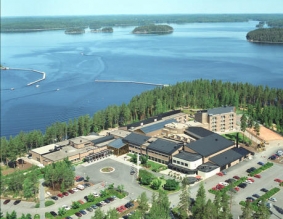
Imatran kylpylä
Imatran kylpylä (Suomen Ilmakuva Oy/ eKarjalan kuvapankki)

I will be talking today about “Playfulness and the Transformation of Learning” (“Pelillisyys, leikillisyys ja oppimisen muodonmuutos”) in teacher education event in Imatra, Eastern Finland. There will be also an opportunity to provide some demonstrations on the most popular digital game genres, where I also will make use and recommend our (Finnish) introductory online course in games genres and literacy at http://pelitieto.net.