
Pelialan opinnäytekilpailu 2015 / Game Studies Thesis Competition 2015

[Spread the word: Finnish Game Studies Thesis competition, English text below]

Pelialan opinnäytekilpailu 2015
Kolmatta kertaa järjestettävä pelialan opinnäytekilpailu tekee näkyväksi pelien parissa tehtävää korkeatasoista suomalaista koulutus- ja tutkimustyötä. Kilpailun järjestävät yhteistyössä pelitutkimuksen verkosto DiGRA Finland ja Suomen pelialan keskus Neogames. Opinnäytekilpailuun voi osallistua työllä, joka on hyväksytty kalenterivuoden 2014 aikana (1.1.-31.12.2014).

Tunnustukseen sisältyy 800 euron rahapalkinto, joka voidaan jakaa yhden tai useamman palkitun kesken. Palkitun opinnäytteen tekijälle on varattu mahdollisuus esitellä työtään keväällä 2015 järjestettävässä Pelitutkimuksen päivässä.

Kilpailuun hyväksytään niin suomalaisten yliopistojen kuin ammattikorkeakoulujen peliaiheiset opinnäytetyöt. Opinnäytteellä tarkoitetaan tässä yhteydessä perustutkinnon valmistumiseen liittyvää lopputyötä. Kilpailuun ei siten voi osallistua opintoihin muuten liittyvällä projektityöllä tai muulla vastaavalla suorituksella. Samaten väitöskirjat on rajattu kilpailun ulkopuolelle.

Opinnäytteen tulee tavalla tai toisella liittyä peleihin. Tutkimuskohteeksi voivat asettua pelit itsessään, niiden pelaaminen, niiden tekeminen tai jokin muu peleihin elimellisesti liittyvä ilmiö. Työ voi olla otteeltaan esimerkiksi teoreettinen, soveltava tai kokeellinen.

Opinnäytteen voi ilmoittaa ehdokkaaksi 13.2.2015 mennessä. Työn voi asettaa ehdolle joko työn tekijä itse tai vaihtoehtoisesti oppiaine/koulutusohjelma tekijän suostumuksella. Kilpailutyöt lähetetään pdf-muodossa osoitteeseen: digra.finland [at] gmail.com.

Jos lopputyön tarkastajien lausunnot on saatavissa, nämä tulee toimittaa kilpailutyön yhteydessä. Mukaan tulee lisäksi liittää työn tekijän ajantasaiset yhteystiedot. Raadilla on oikeus hylätä myöhässä tai puutteellisina toimitetut ehdotukset.

Lisätietoja kilpailusta antaa kilpailuraadin sihteeri, dosentti Olli Sotamaa (olli.sotamaa [at ] uta.fi).

Game Studies Thesis Competition 2015

In order to parade the excellence of Finnish games research and education DiGRA Finland and Neogames Finland Ry have joined forces to award the best Finnish games related bachelor or master thesis through an annual competition.

Prizes: The best thesis will be awarded a monetary prize (this years’ prize sum is 800 euros that will be split between the winners). In addition, the author of the best thesis will have an opportunity to present her or his work in the Finnish Game Research day organised in the spring 2015.

Requirements: We are looking for an ambitious games-related thesis accepted between 1.1.2014 and 31.12.2014 in a Finnish higher education institution (this includes both universities and the universities of applied sciences). The focus can be e.g. on games themselves, in playing them, or in developing them.

Selection process: The decision is made by a peer review panel of experts co-ordinated by Neogames and DiGRA Finland. Based on the reviews, finalists will be short-listed and awarded by the panel.

Documents for submission: 1) the thesis as a single pdf file, 2) the evaluation statements of the thesis (if available) and 3) up-to-date contact details of the author.

Submission details: Send your submission to digra.finland [at] gmail.com.

Submission deadline: 13.2.2015.

Contact: For further information contact Olli Sotamaa (olli.sotamaa [at] uta.fi).

Crossposted from: https://digrafinland.wordpress.com/
Tieteen päivät: peliteollisuussessio

[Session about Finnish game industry in Tieteen päivät 2015 event] Tervetuloa ilmaiseen tiedetapahtumaan: Tieteen päivät 2015 -tapahtuma sisältää myös session “Demoskeneä vai Tekes-tukea – suomalaisen peliteollisuuden menestystekijät”, jonka puheenjohtajana toimin. Asiantuntijanäkökulmia tarjoaa kolme puhujaa: Olli Sotamaa, Sonja Ängeslevä ja Jani Niipola. Tarkemmat tiedot sessiosta löytyvät ohjelmasivulta: http://www.tieteenpaivat.fi/fi/tieteen-paivat-2015/ohjelma/lauantai-101/demoskene%C3%A4-vai-tekes-tukea-%E2%80%93-suomalaisen-peliteollisuuden

MEC 2015: Midnight Sun conference on media education, ICT and games

Spread the word of this interesting conference – I am one of the keynotes and the call for papers is now open:

Welcome to the MEC 2015!

Media Education Conference – MEC 2015 (former NBE) is an informal and friendly conference which participants attend to exchange ideas and information dealing with media education, educational use of ICTs and learning environments. MEC is organized on 15-17 June 2015 in Sallatunturi with the theme In the Light of the Midnight Sun. The event organizer is the Centre for Media Pedagogy at the University of Lapland (CMP).

Keynote Speakers:
Professor Roger Säljö, Department of Education, University of Gothenburg, Sweden
Associate Dean Sandi Feaster, School of Medicine, Standford University, USA
Professor Frans Mäyrä, School of Information Sciences, University of Tampere, Finland

Important Dates and Deadlines:
Deadline for abstract submissions: 2 February 2015
Notifications of acceptance sent to authors by 16 February 2015
Deadline for paper submission of accepted abstracts: 13 April 2015
Deadline for early-bird registration: 30 April 2015
Review results notified to authors by 11 May 2015
Deadline for camera-ready papers: 29 May 2015

Please check the conference website for full details of programme, keynotes, paper submission and registration: http://www.ulapland.fi/MEC2015

Please forward this message to all the persons and organizations you think will be interested in the conference.

Looking forward to seeing you in Salla in June!

MEC 2015 Organizers

Professor Heli Ruokamo, Director, Chair
Ph.D. Päivi Rasi, University lecturer, Title of Docent
Ph.D. Mari Maasilta, University lecturer
Ph.D. Hanna Vuojärvi, University lecturer
MA (Education) Tuulikki Keskitalo, Researcher
Marja-Leena Porsanger, Conference Coordinator, Rovaniemi-Lapland Congresses, University of Lapland

Ystävällisin terveisin / With best regards,

Marja-Leena Porsanger
Konferenssisuunnittelija / Conference Coordinator

Postiosoite / Mailing address:
Lapin yliopisto / University of Lapland
Rovaniemi-Lapland Congresses
PL 122 / PO Box 122
96101 Rovaniemi, Finland

Käyntiosoite / Visiting address:
Hallituskatu 20 A, 96100 Rovaniemi

Tel. +358 (0)40 721 8260
Fax +358 (0)16 362 940
Marja-Leena.Porsanger@ulapland.fi and congress@ulapland.fi
www.ulapland.fi/kongressipalvelu

DiGRA 2016

Spreading the word: The School of Arts, Media and Computer Games at Abertay University is pleased to announce that it will be hosting the 2016 International DiGRA Conference in Dundee, Scotland, tentatively scheduled for August 3 – 6, 2016.

Abertay University is the home of the Europe’s oldest computer games program and the UK’s first university Centre for Excellence in Computer Games Education, offering undergraduate and post-graduate degrees in games technology, game design and production management, and computer arts. The city of Dundee has been a major hub for game development since the release of Lemmings in 1991 by DMA – now known as Rockstar North.

Dundee is less than an hour away by train from the city centre of Edinburgh, and the 2016 conference will be held in the week immediately preceding the Edinburgh Festival (including the Fringe), the largest annual cultural festival in the world. Abertay also hosts the Dare Protoplay festival, one of the largest indie games festivals in the UK, and the Dare to be Digital game design competition, which will be held just before the conference.

As a reminder, DiGRA’s 2015 conference will take place 14-17 May 2015 at Lüneburg, Germany. The call for papers is currently open (deadline is January 22, 2015). Further information is available here: http://www.digra2015.org/

ToDiGRA special issue: Physical and Digital in Games and Play

Spreading the word: we have now published the special issue of DiGRA “Transactions” journal (ToDiGRA), on Physical and Digital in Games and Play, many thanks to authors, reviewers and specially to my co-editors Anu Seisto and Katriina Heljakka:

Vol 1, No 3 (2014)

Special issue, chief editor Frans Mäyrä

Table of Contents

Special issue: Physical and Digital in Games and Play

Editors’ Introduction to the Special Issue HTML PDF
Frans Mäyrä, Katriina Heljakka, Anu Seisto
Building Material: Exploring Playfulness of 3D Printers HTML PDF
Stephanie de Smale
Game Design in an Internet of Things HTML PDF
Paul Coulton, Dan Burnett, Adrian Gradinar, David Gullick, Emma Murphy
From the board to the streets: a case study of Local Property Trader HTML PDF
Mark Lochrie
SimCity and the Creative Class: Place, Urban Planning and the Pursuit of Happiness HTML PDF
Frederika A Eilers
“That’s not a secure area”– physical-digital sound links in commercial locative games HTML PDF
Inger Ekman
The Case for Computer-Augmented Games HTML PDF
Karl Bergström, Staffan Björk
The Roll of the Dice in Warhammer 40,000 HTML PDF
Marcus Carter

Link to the journal site: http://todigra.org/index.php/todigra/issue/view/3

Three invited talks

I will be giving three invited talks on games and culture this week:

There is also a public video stream available online for the last seminar, accessible from the above linked seminar pages. See you at the seminar(s)!

New research into ludification and gamification

[Reposted research news from the University of Tampere:]

“Pervasive ludification and gamification, as well as the spreading of interactive media and online services are changing social interaction and the practices of work, learning and leisure as we speak,” says Professor Frans Mäyrä from the University of Tampere.

“That is why we need wide-ranging interdisciplinary studies in this area.”

The research into ludification in the society includes research into playfulness as an attitude that is also possible for adults, as well as into the different applications of gamification meaning the application of game elements in non-entertainment contexts. These, and several other themes are investigated in a new research project that is carried out in collaboration between three Finnish universities. The four-year research project Ludification and the emergence of playful culture is a joint effort of researchers of the digital culture at the universities of Tampere, Jyväskylä and Turku. Professor Frans Mäyrä is heading the research that is funded by the Academy of Finland.

Ludification at a more general level, and gamification in its more specific applications is a direction of development that is renewing the culture, society and businesses and it is also the common theme in three other research projects, which Professor Mäyrä and his research team have started.

Gamification is analysed in more detail in the research projects called the Neuroeconomics of Gaming and Koukku, which are collaborative efforts with the researchers at the Aalto University. In these projects, the focus is on the psychological aspects of buying and selling games and of the ethical issues involved. These projects are a part of the Skene Research Programme funded by Tekes, the Finnish Funding Agency for Innovation.

OASIS is a project that applies games as an integral part of university research and instruction and develops and studies a novel, playful and creative learning environment that supports a culture of informal information sharing and sense of community. This project is funded by the Finnish Work Environment Fund.

For more information, please contact:
Professor Frans Mäyrä,
frans.mayra@uta.fi, tel. +358 50 336 7650
School of Information Sciences, TRIM / Game Research Lab

Source: http://blogs.uta.fi/news/2014/10/08/ludification-renews-the-culture-society-and-businesses-a-wide-ranging-new-research-project-starts/

Keynote on Pervasive Play & Social Media

This Friday I have been invited to present the keynote in the Social Media in Education seminar, organised by TAOKK & TAMK in Tampere. My title is “Mobile and Pervasive Play – the New Potentials for Communication, Information Seeking and Learning” (Mobiili ja kaikkialle levittäytyvä pelillisyys – viestinnän, tiedonhankinnan ja oppimisen uudet mahdollisuudet). You can find the seminar program from here: http://www.tamk.fi/cms/tamk.nsf/($All)/B33A81D7444E0FA7C2257D46001F9A05?OpenDocument .

Imatra

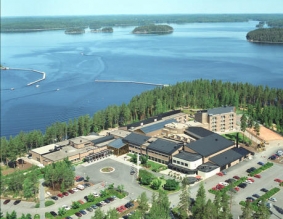
Imatran kylpylä
Imatran kylpylä (Suomen Ilmakuva Oy/ eKarjalan kuvapankki)

I will be talking today about “Playfulness and the Transformation of Learning” (“Pelillisyys, leikillisyys ja oppimisen muodonmuutos”) in teacher education event in Imatra, Eastern Finland. There will be also an opportunity to provide some demonstrations on the most popular digital game genres, where I also will make use and recommend our (Finnish) introductory online course in games genres and literacy at http://pelitieto.net.

CFP: DiGRA 2015

Call for papers: DiGRA 2015

Diversity of play: Games – Cultures – Identities
14-17 May 2015, Lüneburg, Germany
www.digra2015.org

Video game culture has had a self-image of being a distinct cultural form united by participants identifying themselves as ‘gamers’ for many years. Variations in this identity have been perceived either in relation to preferred platform or level of commitment and skill (newbie, casual, core, pro, etc.). Today the popularity of games has increased dramatically, games have become more specialized and gaming is taking place in a number of divergent practices, from e-sport to gamification. In addition, the gamer position includes a number of roles and identities such as: players, learners, time-fillers, users, fans, roleplayers, theory crafters, speed runners, etc. Furthermore, techniques like gamification and game-based learning, as well as the playful use of computer simulation for training purposes, is making it difficult to distinguish games from non-games.

Additionally, video game culture is merging with other forms of popular culture and new mobile technologies are making distinctions between digital and non-digital gaming blurred. Yet, whilst the forms of play seem to have become more diverse, the content of games is often only challenged by independent titles. This is the case despite a maturing audience, some of whom now seem to urge for more diverse themes and representations within games. In the light of increasing criticism of the representations and practices that have dominated much of games culture, it seems that the relationship between the identity of the ‘gamer’ and the content of games is undergoing a change.

Traditionally, game studies has tried to find common ground, seeking shared definitions and epistemologies. DiGRA 2015 seeks to encourage questions about the ‘Diversity of play’, with a focus on the multiple different forms, practices and identities labeled as games and/or game culture. The conference aims to address the challenge of studying and documenting games, gaming and gamers, in a time when these categories are becoming so general and/or contested, that they might risk losing all meaning. Given this, what concepts do we need to develop in order for our research to be cumulative and how do we give justice to the diverse forms of play found in different games and game cultures?

As in the previous year, DiGRA 2015 will accept submissions in five categories: full papers, abstracts, panel, workshops, and events. All submissions will be peer-reviewed using double blind reviewing. In addition, all submissions will receive a meta review and authors of rejected full papers will have the possibility to send a rebuttal if they perceive they have been given biased or uninformed reviewers. The conference welcomes submissions on a wide range of topics, including, but not limited to, the following:

  • Game cultures
  • Games and intersections with other cultural forms
  • Online gaming and communication in game worlds
  • Gender and gaming
  • Games as representation
  • Minority groups and gaming
  • Childhood and gaming
  • The gaming industry and independent games
  • Game journalism
  • Gaming in non-leisure settings
  • Applications of game studies in other domains
  • Gamification
  • System perspectives and mathematical game theory
  • Hybrid games and non-digital games
  • Game design characteristics
  • Technological systems
  • Simulations

Deadlines

  • Submission deadlines 22 January (hard deadline)
  • Acceptance/rejection notification 16 March
  • Rebuttal deadline 19 March
  • Camera ready deadline 14 April

Location & Date

14-17 May 2015

Lüneburg, Germany
At Campus of Leuphana University of Lüneburg
Scharnhorststr. 1
D-21335 Lüneburg
For more information and the latest updates regarding the DiGRA 2015 conference, see www.digra2015.org

Program Chairs
Staffan Björk
Jonas Linderoth